Pull a vocal cleanly off a finished record and you can flip it into a bootleg, a DJ edit or a full remix without begging a label for the acapella. That used to take a dedicated tool, a trained ear and a lot of patience with artifacts. This week it became something your main DAW just does.
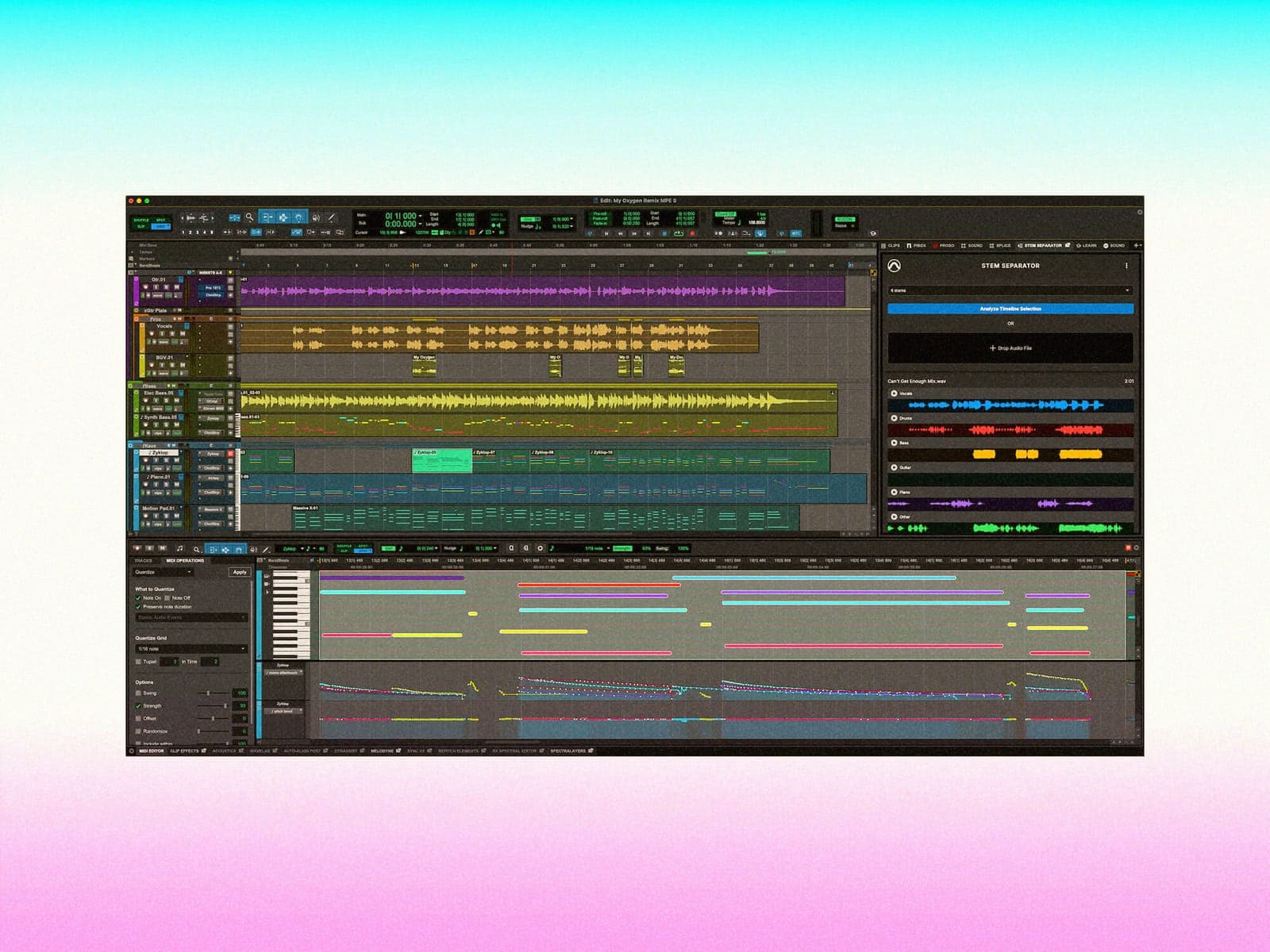
On November 4, Steinberg shipped Cubase 16 with an upgraded Stem Separation engine that pulls six stems out of a mixed track: vocals, drums, bass, piano, guitar and a catch-all "other" layer. The same day, iZotope released Photon, a standalone app and ARA plugin that runs entirely on the user's own GPU, no cloud upload required, powered by 12 custom-trained models. Its Music 4-Stems Ultra mode handles vocals, bass, drums and other; a dedicated drums model goes further, splitting a kit into kick, snare, hi-hat, toms and cymbals individually. A day later, on November 5, Avid rolled its own AI Stem Separator into Pro Tools 2026.11, built on a new "Pro Tools Extensions" format that lets a tool run inside the session without being locked to a single track.
Why does three-in-a-week matter more than any one of them?
A single company shipping stem separation is a product update. Three competitors shipping it in the same 48 hours, unprompted by each other, is a market signal: this stopped being a premium differentiator and became table stakes, the way pitch correction or basic noise reduction did before it. Steinberg, iZotope and Avid between them cover a huge share of working producers, from bedroom techno heads on Cubase to post-production houses running Pro Tools. None of them wanted to be the DAW still missing the feature once the other two had it.
What does this actually change for house and techno production?
Sample flipping, edits and bootlegs have always been part of house and techno's DNA, from disco-edit culture through to the current wave of unofficial acapella flips circulating on SoundCloud. The barrier was never taste, it was tooling: isolating a vocal or a bassline cleanly from a finished track required specialist software (or a cracked copy of one) and real skill to avoid washy, phasey artifacts. Built-in, accurate separation inside the DAW a producer already owns lowers that barrier to near zero. Expect more bootleg remixes, more unofficial edits circulating at a higher technical quality, and more producers quietly lifting drum stems for sample-based beats, legal grey areas and all. It also changes DJ practice: a clean a cappella or drum stem pulled in minutes makes mashups and live re-edits a soundcheck-afternoon job rather than a weekend one.
Stem separation just moved from "thing you pay a specialist plugin for" to "thing your DAW does on export."
What's the business story behind iZotope's move?
Photon is notable beyond its feature set: it's the first product to ship under iZotope's new ownership, the audio-tools group Boris FX, which has previously grown mainly through visual-effects and post-production software. A GPU-local, no-cloud stem separator aimed squarely at music producers signals Boris FX wants iZotope's music-production identity to keep driving the roadmap rather than folding it purely into post-production tooling.
Why it matters
When the industry's three biggest DAWs converge on the same AI feature in the same week, it stops being a gimmick and becomes assumed infrastructure, which will accelerate how fast remix, edit and sample-flip culture moves and forces labels to think harder about acapella licensing and stem-based releases.
What we think
This is the quiet version of the generative-AI story in music: not a model writing a track, but automation collapsing a skill that used to separate hobbyists from working producers. Good for access, messier for who owns what once a bootleg sounds broadcast-ready.