Three days before this piece runs, the organizers behind one of Europe's oldest new-music institutions handed their closing slot to a sound built for Tanzanian street parties, not concert halls.
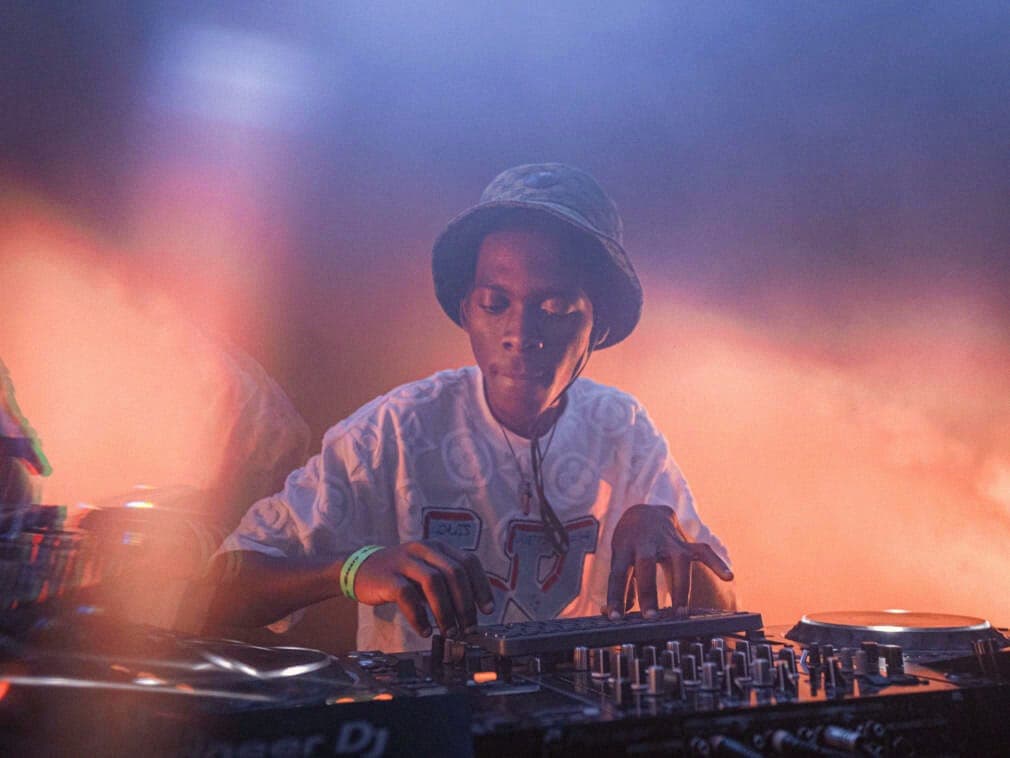
On October 24, Jay Mitta, DJ Travella and Pili Pili Girls played a two-hour set titled "Singeli Spirit" at Teatro alle Tese, closing the 70th Biennale Musica in Venice, curated this year by composer Caterina Barbieri under the theme "A Child of Sound." It is the kind of booking that would have sounded absurd a decade ago: a genre that runs faster than gabber, made on cracked laptops in a Dar es Salaam neighborhood with patchy electricity, headlining the same festival circuit that platforms Morton Feldman revivals and modular-synth premieres.
What actually is singeli?
Singeli came out of Dar es Salaam's working-class districts in the early 2000s: DJs pitching up taarab, bongo flava and dancehall samples until the tracks ran past 200, sometimes 300 beats per minute, with MCs rapping over them in rapid-fire Swahili. It started as a strictly local, street-party sound, something you'd hear blasting from a speaker stack at a wedding or a block party, not something built for export.
The hub was Sisso's studio in the Mburahati district, roughly fifteen years old now, where a loose crew of producers including Jay Mitta built out the genre's template. Kampala-based label Nyege Nyege Tapes picked it up, and its Sounds Of Sisso compilation, followed by Duke's 2019 album Uingizaji Hewa and more recently Sisso & Maiko's Singeli Ya Maajabu, carried the sound to European dancefloors and, now, to Venice.
"Dar es Salaam has been a hub for electronic music innovation for the last 15 years. Now for the first time a genre of electronic music from Dar es Salaam has garnered interest from the underground music community in the West."
That's Nyege Nyege co-founder Arlen Dilsizian, and it undersells where the genre has landed since: not just the underground, but a festival that has historically been a launchpad for the European avant-garde.
Why is Europe suddenly booking singeli?
Venice isn't a one-off. Berlin's CTM Festival has been pulling from the Nyege Nyege roster since 2020, and put Jay Mitta on its 2023 bill alongside panels on singeli production. This September, Nyege Nyege staged Mirror World, its first European festival edition, at La Fabriek CityGate in Brussels, more than 40 artists across three stages built to anchor future European touring and get visas sorted a year out instead of scrambling.
DJ Travella, born Hamadi Hassani, is the clearest case of how fast that pipeline now moves. He started as a teenage, self-taught, laptop-only producer playing Nyege Nyege's own festival on the banks of the Nile. This July, Resident Advisor ran his hour-long "Elevator Music" set as its Mix of the Day; DJ Mag put him on its 2026 artists-to-watch list. None of that required him to soften the tempo.
What the Biennale booking adds is institutional weight. A contemporary-music festival with a seven-decade history and a classical-adjacent audience just told that audience that singeli belongs in the same conversation as the rest of its program, not as a novelty act but as one of three distinct strands of the genre on display: Jay Mitta's polished, melodic take, DJ Travella's laptop-built futurism, and Pili Pili Girls's choreographed, classic street-rave version.
Why it matters
Every Western festival booking is also leverage: visa officers, promoters and booking agents take a Biennale credit more seriously than a Boiler Room clip, and that credit compounds into more stages, better fees and more reliable touring routes for a scene that still runs largely on cassette-era infrastructure back home.
What we think
This is a genuinely good booking, not a token one: the Biennale put three different takes on the same genre side by side instead of flattening it into one "African electronic" slot. The thing to watch now is whether the money and the attention loop back to Mburahati and Sisso's studio, or whether Dar es Salaam stays the source material while Europe keeps the festival credits.