Soundcraft just put "connected" in the name of its next analog console line. For anyone running FOH on a Dante or AVB rig, that word raises an obvious question, and the answer matters more than the press release lets on.
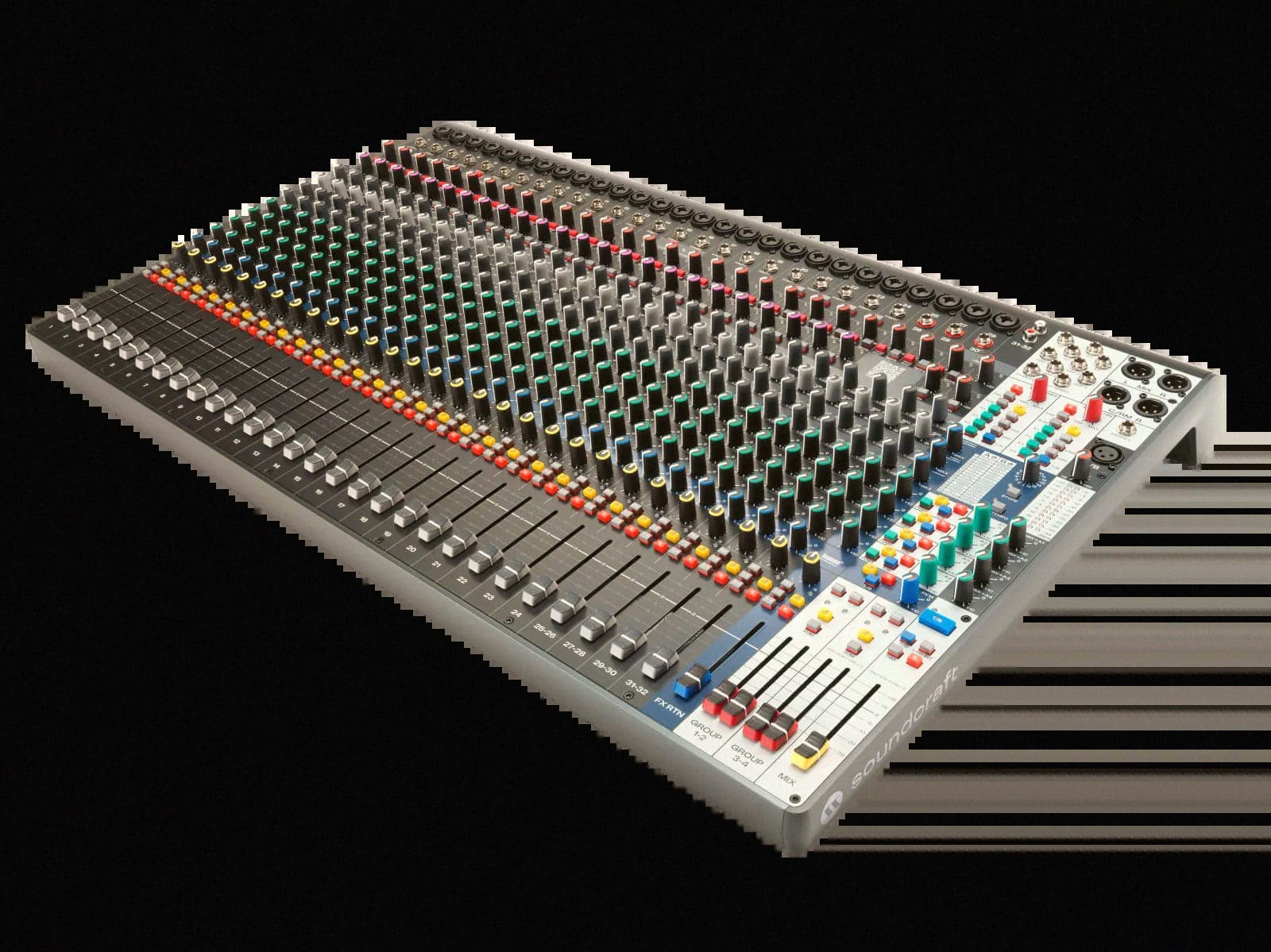
The Soundcraft Signature Plus series ships in four sizes, the 12, 16, 22 and 32, all sharing the same feature set regardless of channel count. Street prices run from $799 for the smallest to $1,499 for the 32-channel flagship. HARMAN Professional Solutions, Soundcraft's parent, announced the line on September 8.
What does "connected" actually mean here?
Not what a touring engineer used to networked consoles would assume. There is no Dante card, no AVB, no dLive-style remote app for pulling gain from an iPad across the room. "Analog Connected" is Soundcraft's name for a 4x4 USB-C interface running at 192kHz, built into the console so it can record and play back multitrack audio to and from a laptop or phone without an outboard box.
That is a genuinely useful feature for a small club or a support-slot engineer who wants to capture a set or run a click track off a laptop, and it is one fewer piece of gear to carry. It is not a networking upgrade. If a venue is already running a Dante backbone between stageboxes and an amp rack, this console does not talk to any of it.
What's actually in the analog signal path?
The rest of the console is a straight evolution of the existing Signature line rather than a reinvention. Each channel runs through a Soundcraft Ghost mic preamp and Sapphyre EQ, with a dbx one-knob compressor that adds harmonic enhancement rather than just clamping peaks. An onboard Lexicon hardware effects processor now gets a preset store and tap tempo, useful for a working engineer moving between rooms without re-dialing reverb times by ear every soundcheck.
"Developing this new series was first and foremost driven from listening closely to what engineers and content creators needed," said Scott Wood, Soundcraft's product manager for mixers.
Does this change anything for a working system tech?
For the audience that actually loads these into a van, the honest read is: it is a smarter analog desk with recording built in, not a networked live-sound platform. The 12 and 16-channel models keep rack ears for a compact FOH position or a DJ booth backline, which is where a lot of these will land, small clubs and support stages that don't need or budget for a full digital surface. The USB-C interface removes the usual second box for archiving a set or running virtual soundcheck-style playback.
What it doesn't do is replace a digital console for anyone who needs remote gain control from the crowd, scene recall, or integration with an existing network-audio install. Iain Gregory, HARMAN's senior director of product management for retail, called the line the "perfect intersection of performance and value," and on price alone that holds up. Just don't buy it expecting a networked rig.