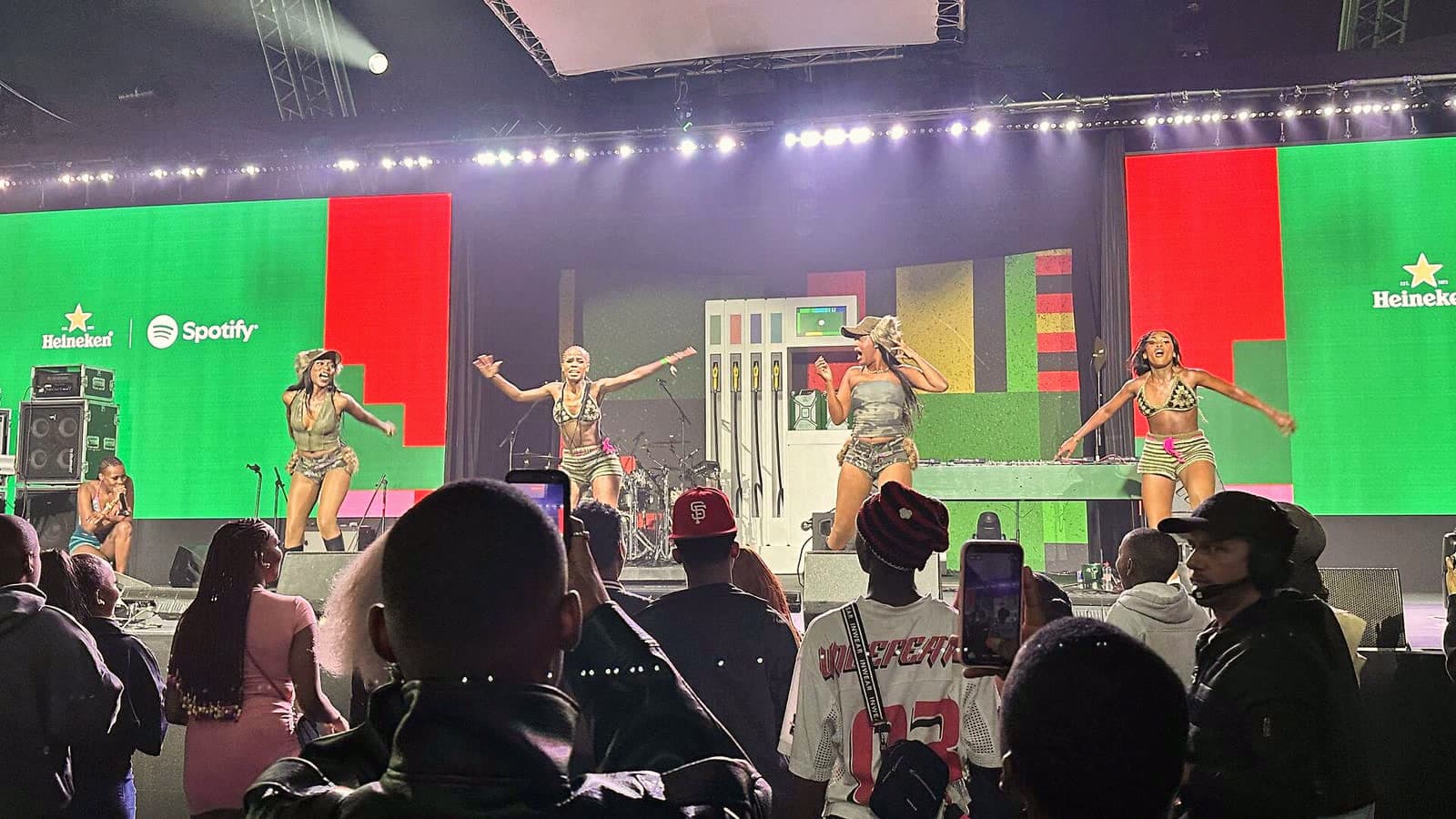
Heineken House landed at The Globe inside Suncoast Casino on November 14 and 15, 2026, and for the first time the brand's Durban edition had a streaming platform attached to the booking sheet. Spotify did not just sponsor the weekend, it curated it: a bill of more than a dozen regional artists split across gqom, amapiano, afro-house, maskandi, R&B and hip-hop, with Kususa's afro-house set doing the heavy lifting for the dance-music crowd alongside gqom producers Campmasters.
What did Spotify actually curate?
According to Athandiwe Ntshinga, Spotify's editor for Southern Africa, the lineup was shaped by both streaming data and what she called cultural observation, pairing the platform's listening numbers with on-the-ground read of what Durban's scene is actually playing. That resulted in a bill stretching from Kususa's afro-house and Campmasters' gqom to Mzukulu's maskandi and Shekhinah's R&B, all packaged as one regional snapshot. The companion playlist, Gcwalisa Dubane, extends that snapshot into a 50-track compilation built around the same spread: gqom, maskandi and R&B designed to soundtrack the rest of the Durban summer, from beach runs to braais.
"Our line-up's curation balances data and cultural observation," Ntshinga said.
Who actually gets something out of this?
Here's the tension nobody in the press copy says out loud. Durban's gqom and amapiano scene did not need Spotify to exist. Kususa has been a fixture on South Africa's afro house charts for close to a decade, and Campmasters have been shaping gqom's sound well before any platform put a Southern Africa editor on staff. What Spotify gets from a weekend like this is obvious: a live-event halo, a reason to say it is 'discovering' Durban, and fifty tracks worth of playlist inventory stamped with cultural credibility it did not build. What the Durban artists get is real too, a global catalog placement and a push onto a flagship local playlist, but it is Spotify's platform, Spotify's framing and Spotify's name on the partnership, not the other way round. 'Data and cultural observation' is a tidy way of saying the platform watched a scene work for years, then showed up to brand the moment it finally paid attention.
Why does the gqom and amapiano framing matter?
Heineken House Durban could have been just another branded party with a DJ bill. Running it through Spotify's editorial desk, with a named curator and a launch playlist, turns a one-off event into a reusable piece of catalog content, which is exactly the point: a weekend becomes a 50-track asset that keeps earning attention long after the Globe's doors close.