Steinberg invented the plugin format that every producer, on every DAW, still opens without thinking about it. Thirty years after the Hamburg company shipped the first VST instrument in 1996, it is marking the anniversary by giving a chunk of its back catalogue away for free rather than just running a sale.
What's actually free now?
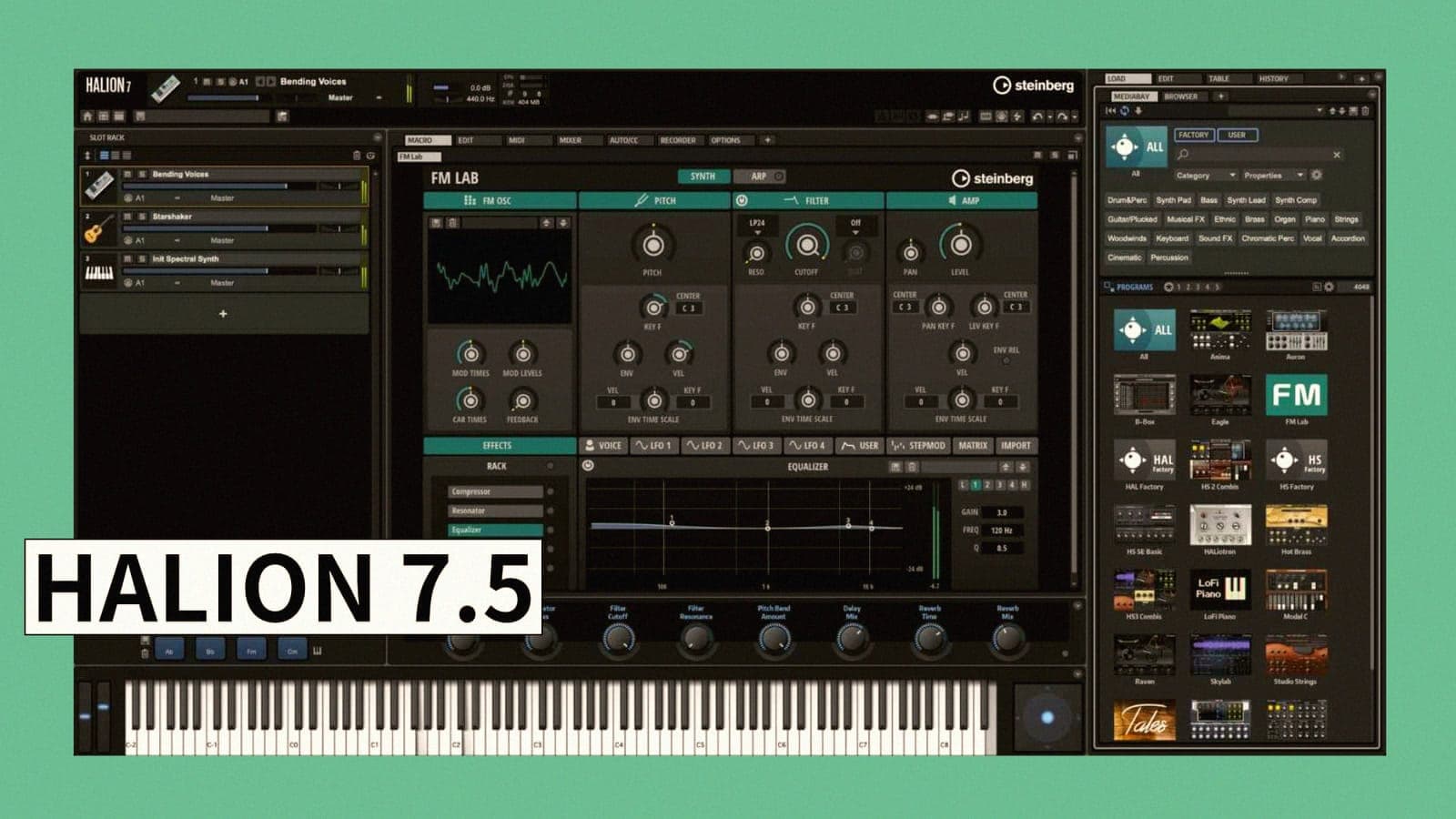
Steinberg pushed HALion 7.5 out as a free update for existing HALion owners, according to Synth Anatomy and Sonic State. It adds MPE (MIDI Polyphonic Expression) support, so the sampler can respond to per-note pitch bend and pressure on MPE controllers, plus two new real-time features: Decompose and Spectral Snapshot, both built around spectral analysis of incoming audio. Sonic State also notes general workflow improvements bundled into the same update. Separately, five instruments from Steinberg's earliest VST era, the LM7 drum sampler, CS-40 synth, Neon (billed as the first virtual analog synth), VB-1 bass instrument and Karlette tape delay, are back as free, VST3-compatible plugins under the Steinberg Classics name for macOS and Windows.
Why revive LM7, CS-40, Neon, VB-1 and Karlette specifically?
These five were among the first VST instruments Steinberg ever shipped, the plugins that effectively proved the format worked. Rather than rebuild them with modern synthesis engines, Steinberg kept the original 1990s and 2000s character intact and simply wrapped it in VST3 compatibility, so the plugins run in current hosts without the crackly, dated integration older VST2 tools suffer from. It is a nostalgia play, but a functional one: producers get period-correct drum machine and synth sounds that would otherwise require hunting down archived installers.
Why does a 30-year-old plugin format still matter?
VST is the reason a synth built for Cubase also runs in Ableton Live, Logic, FL Studio or Bitwig. Steinberg created that portability in 1996 and never fully cashed in on owning the standard the way it could have, competitors built entire businesses on top of a format Steinberg gave the industry for free. Bundling that history into the anniversary, alongside HALion's own quieter 25th birthday, turns what could have been a routine update announcement into a reminder of who actually built the plumbing under nearly every producer's setup.
Steinberg maintained the original character of the Classics instruments rather than modernizing them: as Synth Anatomy put it, sometimes "only vintage plugins have the best sound."
The anniversary sale runs alongside the free releases, August 4 through 24, with 50 to 60% off HALion and a wider range of Steinberg VST instruments. The Classics plugins themselves are free but gated behind a Steinberg account, a newsletter subscription and the Steinberg Download Assistant, a minor friction point for producers used to a straight download link.