Tim Exile has spent the better part of two decades building instruments nobody else could touch: bespoke Reaktor rigs wired for one specific live set, granular MetaSynth experiments, sequencers with silly pet names like Duffy and Roisin. Karst is that same instinct, finally packaged for anyone with a browser tab and an idea for an acid line.
What is Karst, exactly?
Karst is Tim Exile's own node-based, Reaktor-style modular audio environment, currently running as a private beta (v0.1) inside the browser. Access costs 69 pounds, a 30% discount off the 99-pound price it will carry once it leaves beta, and there is a free trial for anyone who wants to poke around before paying. Systems save to the cloud, so a patch built at home is there again on a laptop at soundcheck.
Why cableless by default, and where do cables come back in?
Reaktor and VCV Rack both start from a blank patch bay: nothing makes sound until you've wired it. Karst flips that. Drop an instrument or an effect into the workspace and it auto-connects into the signal chain immediately, so a usable sound exists within seconds of opening the app. Cables haven't disappeared, though: Karst still supports manual patching for the routing auto-connect can't guess, like clock chains or splitting an audio signal across multiple destinations. It's a system built to be playable first and patchable second, not the other way round.
"Music production feels pointless now." Tim Exile, quoted by CDM on why he'd rather build instruments than finish tracks the conventional way.
That line, from CDM's earlier coverage of his Reaktor-based New Modular System (NMS) project, is the philosophy Karst inherits: flow over finishing, a continuous creative loop from first patch to live stage.
What's actually inside it, and does it replace my plugins?
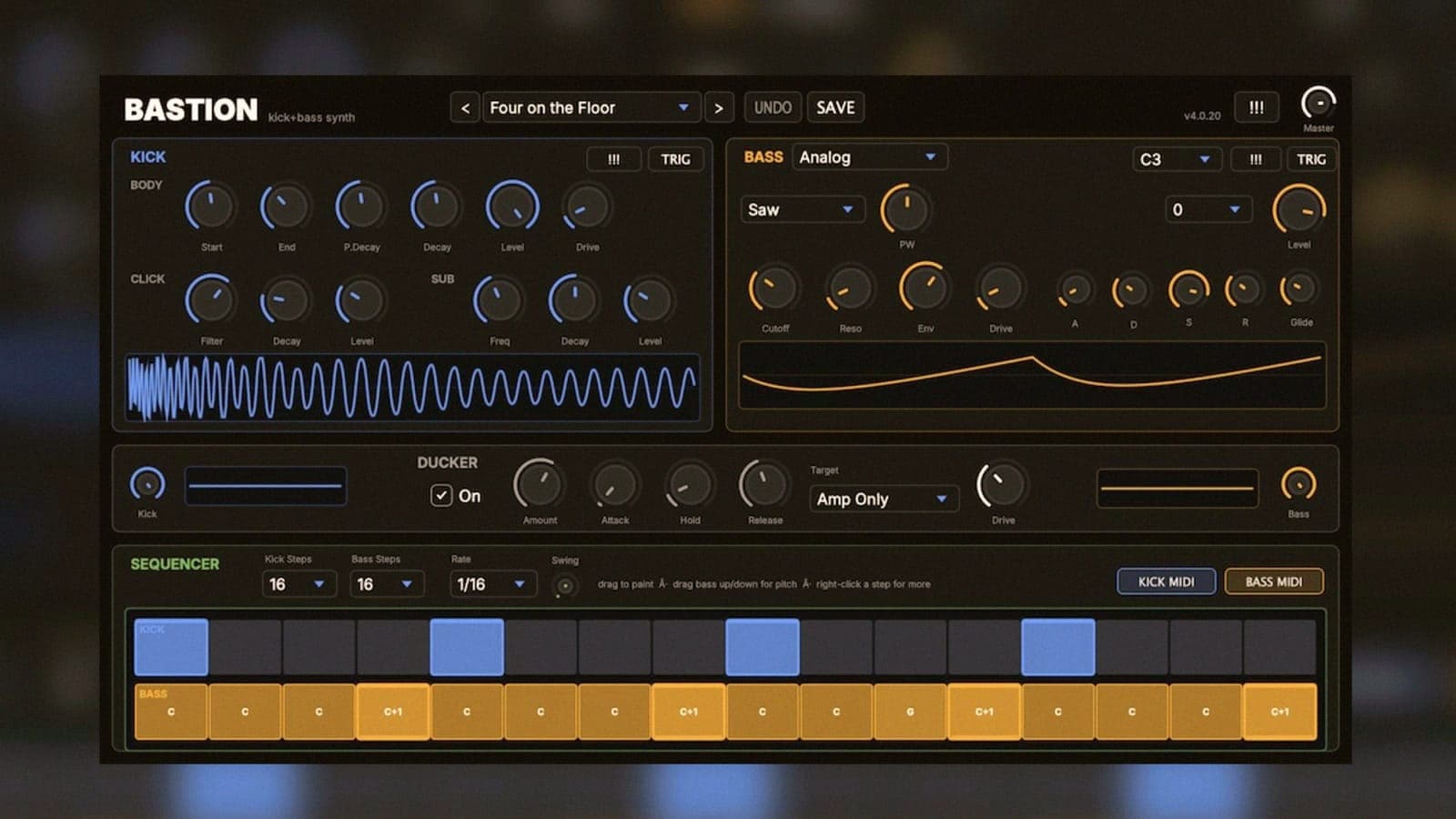
Karst currently ships with an acid bass generator, a chord generator, kick and snare drum machines, a resonator, and a mod reverb, and Tim Exile is adding new machines on a weekly cadence. Two extras carry it past a toy: Generative DNA, algorithms that build evolving sequences without manual event scheduling, and 24 global macro controls built for steering a whole system live. Crucially, Karst also hosts a producer's own VST or AU plugins inside the system, so an existing synth or effect can sit alongside Karst's native machines and inherit its generative and modulation routing, rather than forcing a rebuild from scratch.
Where does this go next?
Karst is desktop browser only for now. Tim Exile has committed to a standalone app and a VST3 plugin for Q4 2026, which would let Karst run offline and drop directly into a DAW session rather than a browser tab. Anyone who already backed his earlier Reaktor-only New Modular System, which required a full Reaktor 6.5 license and launched at a 49-pound prototype price, gets Karst for free: Tim Exile's framing is that Karst supersedes NMS, not that it's a separate product line.