AlphaTheta has never published a spec for Pro DJ Link, the protocol that lets AlphaTheta CDJs and mixers find each other on a network, trade tempo and beat-grid data, and let one deck's screen browse another deck's USB stick. It is the glue that makes a four-CDJ club booth work as one instrument, and it is also, not coincidentally, the reason that booth is built entirely out of AlphaTheta hardware. Nobody outside the company has ever been handed the rulebook.
Samuel Prevost didn't wait for one. He built TriMixxx, a working CDJ on a Raspberry Pi 4, by watching his own gear talk to itself.
How do you reverse-engineer a protocol nobody will explain?
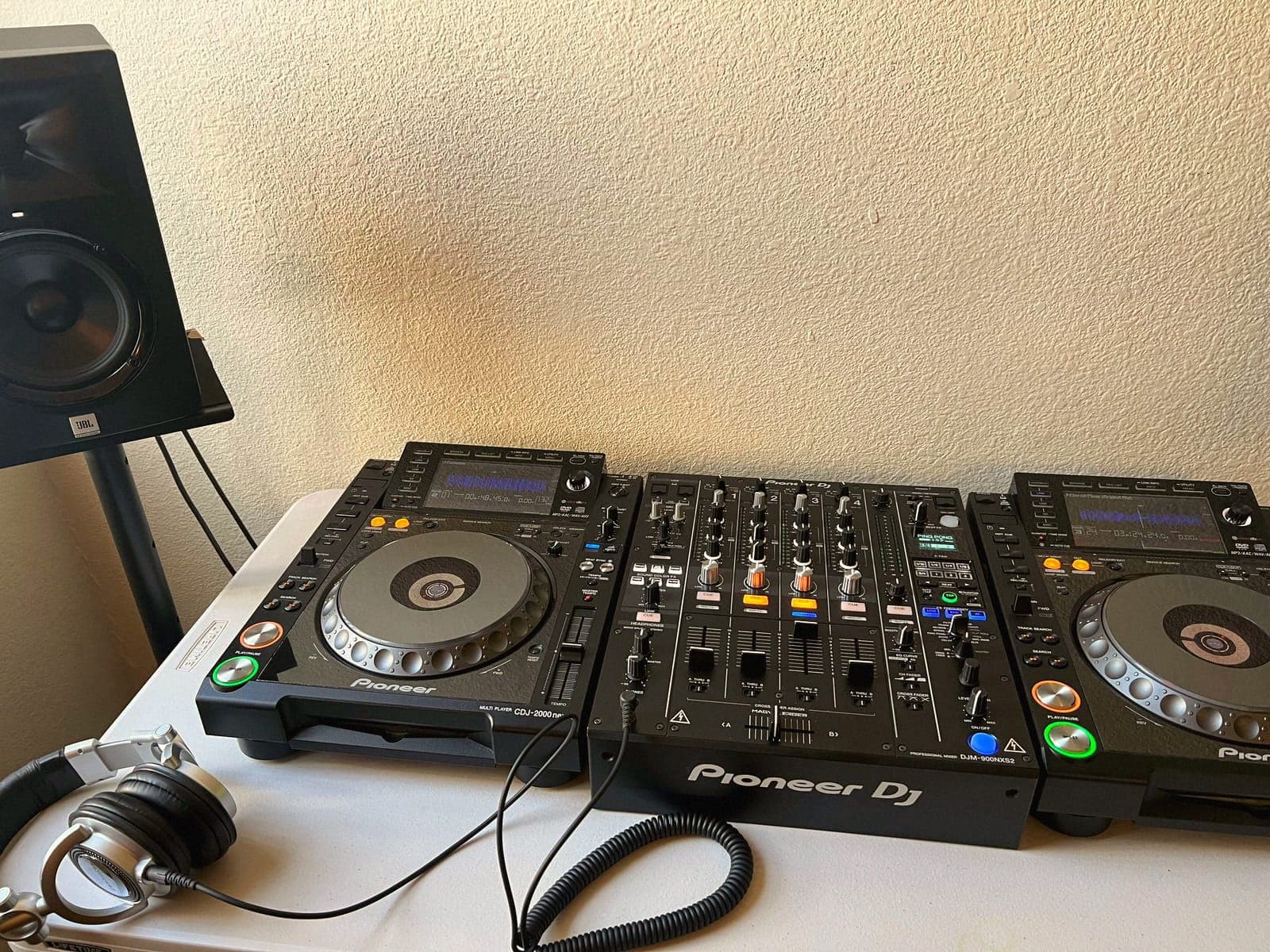
Prevost ran two CDJ-2000NXS units on a private network and captured the packets they threw at each other: track metadata, tempo, beat position, player state. Piece by piece, he rebuilt enough of Pro DJ Link that a piece of software running on a Pi could join that conversation as a genuine peer, not a translator sitting outside it. The project leans on real precedent: James Elliott's Beat Link library cracked parts of the same protocol years earlier so lighting and visual rigs could read CDJ tempo and beat data, and tools like dysentery did the same groundwork for the DJ software world. Prevost pushed further, far enough that a CDJ doesn't just listen to TriMixxx. It treats it as another deck.
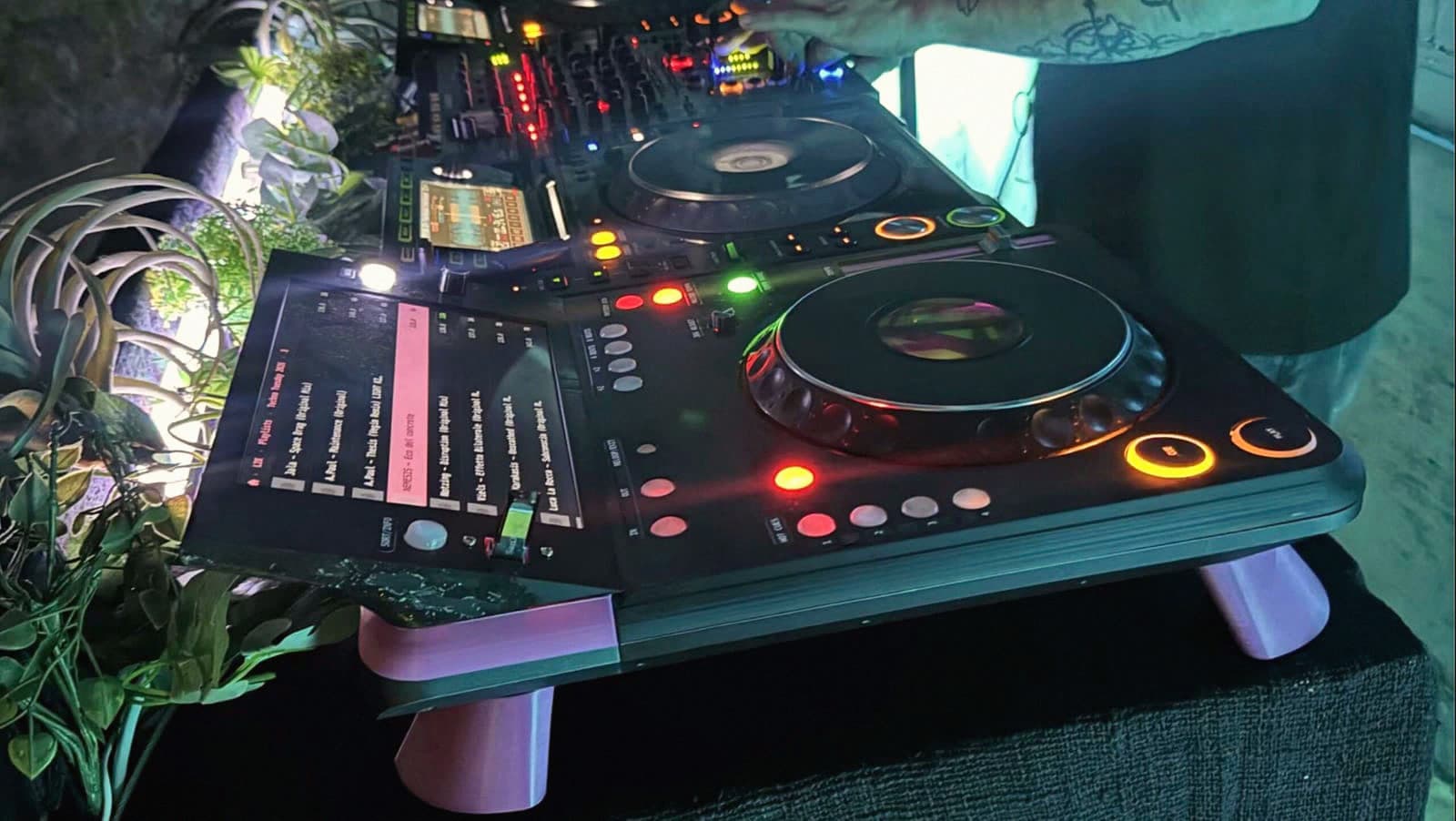
The hardware is scrappy on purpose. A 10.1-inch touchscreen runs a forked build of Mixxx 2.5.6 skinned to look and behave like a CDJ. An ESP32-S3 reads the jog wheel, tempo fader and buttons over MIDI; separate RISC-V boards drive thirteen RGB pads. The jog wheel itself isn't a cheap substitute: it's the actual 210mm platter salvaged from a CDJ-1000MK3, spinning out 12,960 counts per rotation, so the feel under your hand is the real thing. Audio goes out through a Behringer UCA222, a budget 16-bit interface that Prevost is upfront will not match a CDJ-3000's internal converters on a serious system.
What happened when it hit a real booth?
On October 4, 2026, TriMixxx played a full night at Technobase in Amsterdam as a third deck, wired over Ethernet into the club's existing CDJs and an Xone mixer, on the venue's own Pro DJ Link network. The other CDJs could browse TriMixxx's library and pull tracks off it like it was any other player. Sync worked in both directions. At one point, dialed to minus 3.05 percent, a club CDJ followed TriMixxx's tempo down to 116.34 BPM, matched to the hundredth. The one real failure of the night: an 18-second freeze loading a large AIFF file off a slow USB stick, a bug Prevost says he fixed within four days.
"Sticks mount read-only, so yanking one mid-set can't corrupt the library."
Why does a hobby build threaten a $3,000 ecosystem?
A retail CDJ-3000 runs about $2,999, and a working club setup needs at least two, plus a compatible mixer, all speaking a protocol the manufacturer has never licensed or documented. That closed loop is a large part of why AlphaTheta's gear dominates professional booths: once a club standardizes on Pro DJ Link, every new deck has to be AlphaTheta's own, at AlphaTheta's own price. TriMixxx doesn't replace a CDJ-3000's build quality or its converters, and Prevost isn't selling it. But he has put the full bill of materials, the firmware and the network code on GitHub, along with an emulator that lets anyone test Pro DJ Link compatibility on a laptop without owning a single piece of club gear. That is the part that matters more than the Pi: a closed protocol that gatekeeps a multi-thousand-dollar hardware category just got a public, working reference implementation, for free.