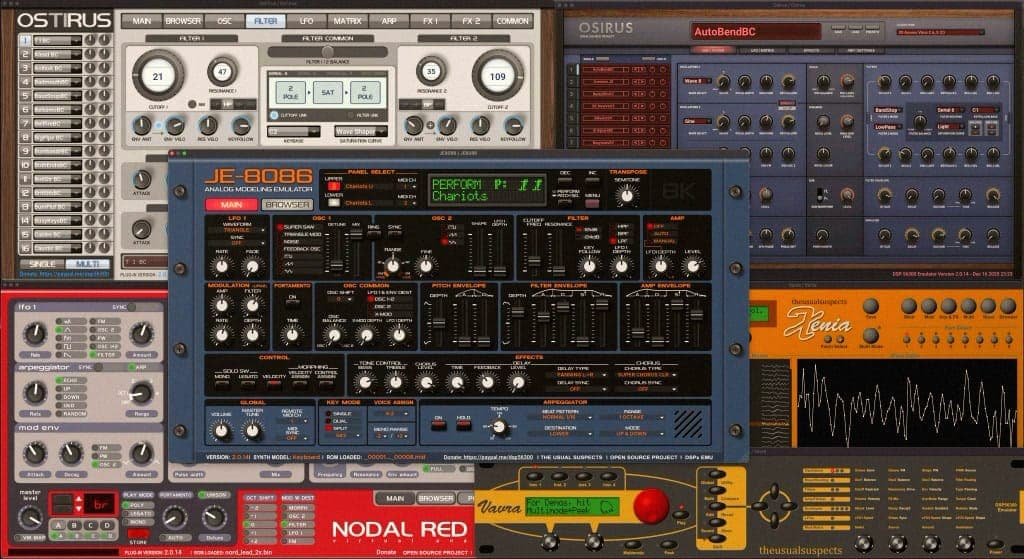
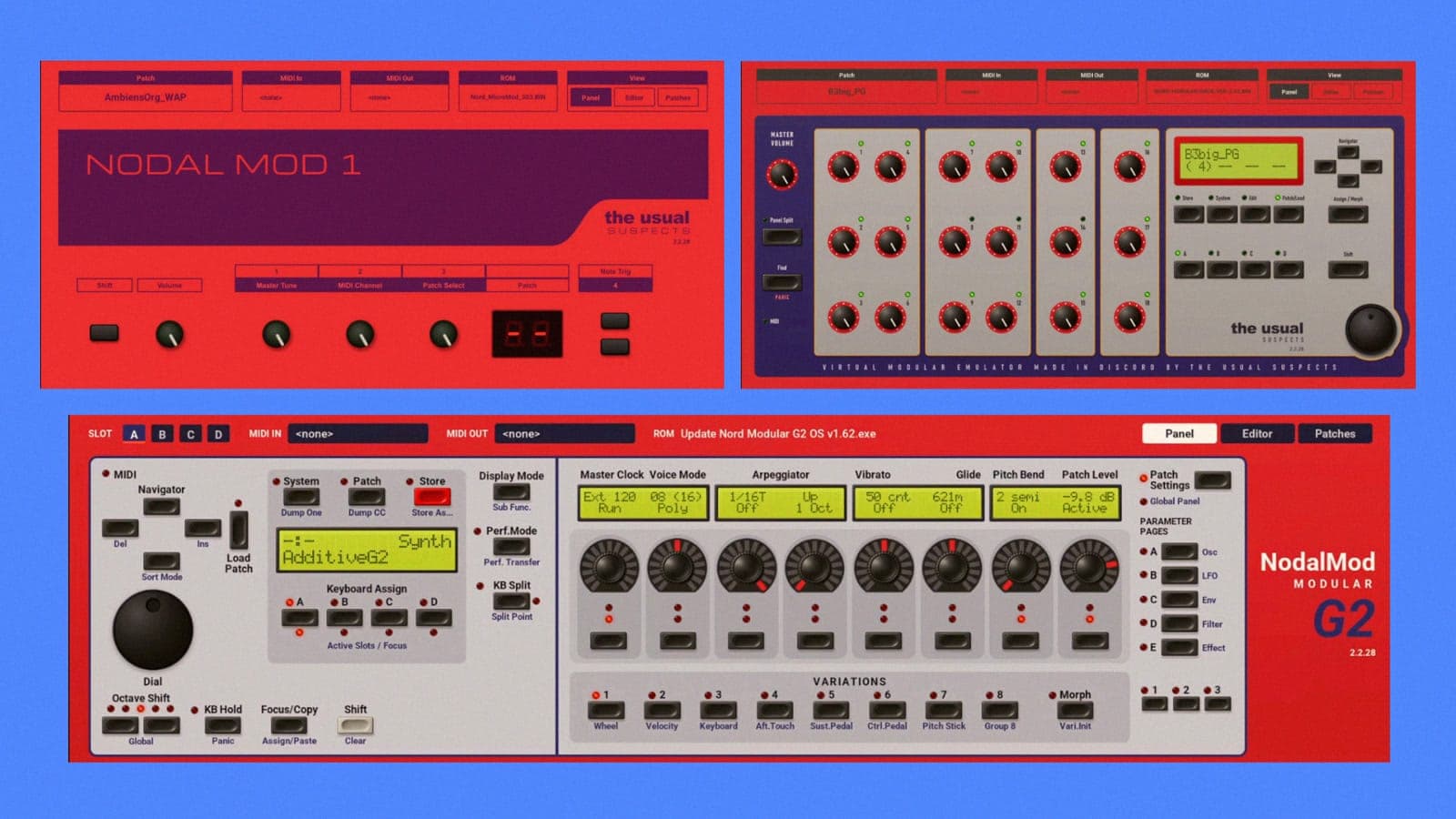
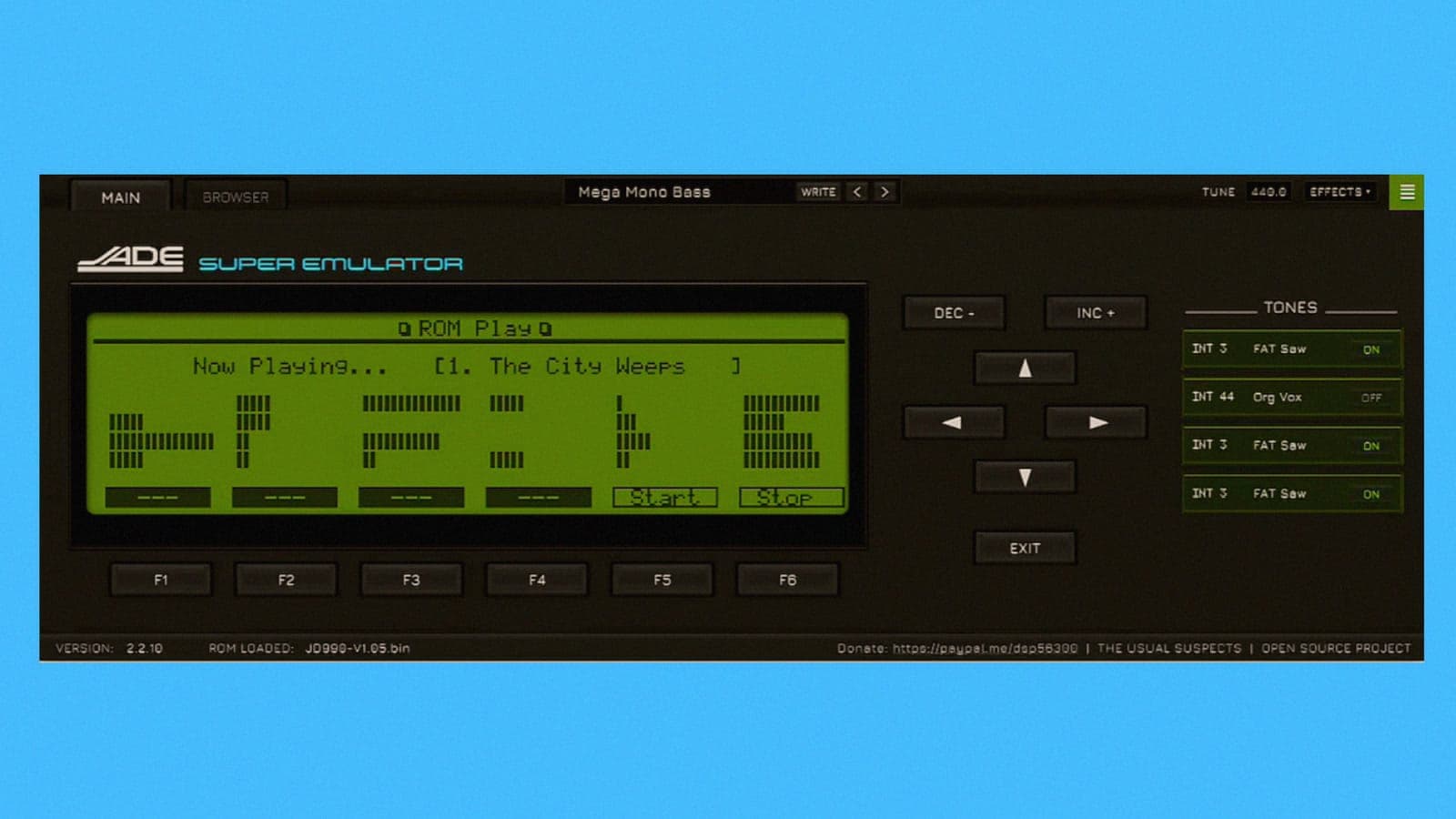
Three pieces of studio hardware that most producers only know from eBay listings and old rack photos have just been resurrected as plugins, all from the same developer, all in the space of a few weeks.
What exactly do these three plugins recreate?
The Usual Suspects is working through what's shaping up as a small catalogue of dead-hardware resurrections, and this trio covers three very different eras of studio sound. Blue Giant rebuilds the Novation Supernova II, the British virtual-analog synth from 2000 that layered digital oscillators over an analog-modelled filter path and became a staple rack unit for trance and progressive producers before it went out of production. 88emu goes back further, to the Roland SC-88 Pro, the 1996 Sound Canvas rompler that defined a whole generation of MIDI production and General MIDI playback long before soft synths took over. R-330 covers the Roland SRV-330, a rack reverb processor built for studios that needed clean, programmable space without hauling a plate or a chamber into the room.
How do the emulators actually work?
This isn't modelling in the usual sense of a plugin approximating a sound by ear. Blue Giant runs nine separate DSP simulations, eight of the Supernova II's DSP56362 chips plus its single DSP56303, reproducing the synth's internal signal path chip for chip. 88emu goes even further and runs the SC-88 Pro's original firmware, preserving its full bank of 1,117 presets and 42 drum kits exactly as Roland shipped them. That level of accuracy comes with a catch: each plugin needs the user's own dumped ROM from a real Supernova II, SC-88 Pro or SRV-330 to actually produce sound, which is why these ship free of the hardware manufacturers' original code and land in a legal grey zone the emulator community has worked around for years.
Why does this matter for house and techno producers now?
Deep, minimal and organic house producers lean hard on exactly the kind of sonic signatures these three units carry: the Supernova II's slightly grainy digital-analog hybrid tone, the SC-88 Pro's General MIDI patches that have become their own lo-fi, nostalgia-coded texture in sample-based house and ambient work, and studio-grade reverb tails that don't sound like a modern convolution plugin. Original units are increasingly hard to source, expensive when they do turn up secondhand, and prone to failing capacitors and dying displays after two to three decades of use. A pay-what-you-want plugin with a £20 floor puts all three sounds back within reach of a bedroom studio, provided the producer can still get hold of, or already owns, the source hardware to pull a ROM from.
Three plugins, three decades of Roland and Novation history, one Discord server.
Why it matters
The release wave shows how much of the underground's production toolkit is quietly migrating away from aging, failure-prone rack hardware into software that preserves the exact chips and firmware rather than just their sound, which matters for anyone still chasing a specific era's texture rather than a generic "vintage" preset.
What we think
This is the right way to keep 1990s and 2000s studio hardware alive: not a clone that guesses at the sound, but a bit-accurate simulation that still asks you to own or source the real ROM. It's more honest than a plugin that just claims to "capture the vibe," and the pay-what-you-want model with a real minimum is fair for the amount of reverse-engineering three separate chipsets clearly took.