How big a piece of Délicieuse did Warner actually buy?
That depends which trade outlet you trust. Music Business Worldwide, Music Ally and Digital Music News all frame the deal, announced the week of November 8, as an "investment" in an "independent firm," the kind of language majors use when they take a stake and let a smaller operator keep its name on the door. The French site electronlibre.info goes further, quoting the deal as explicitly "not a classic absorption." Then there is Zimbalam, the French distributor and trade outlet, which reported flatly that Warner acquired 100 percent of Délicieuse Musique's capital. Nobody has put a number on the price, and Warner Music France has not corrected either version in public.
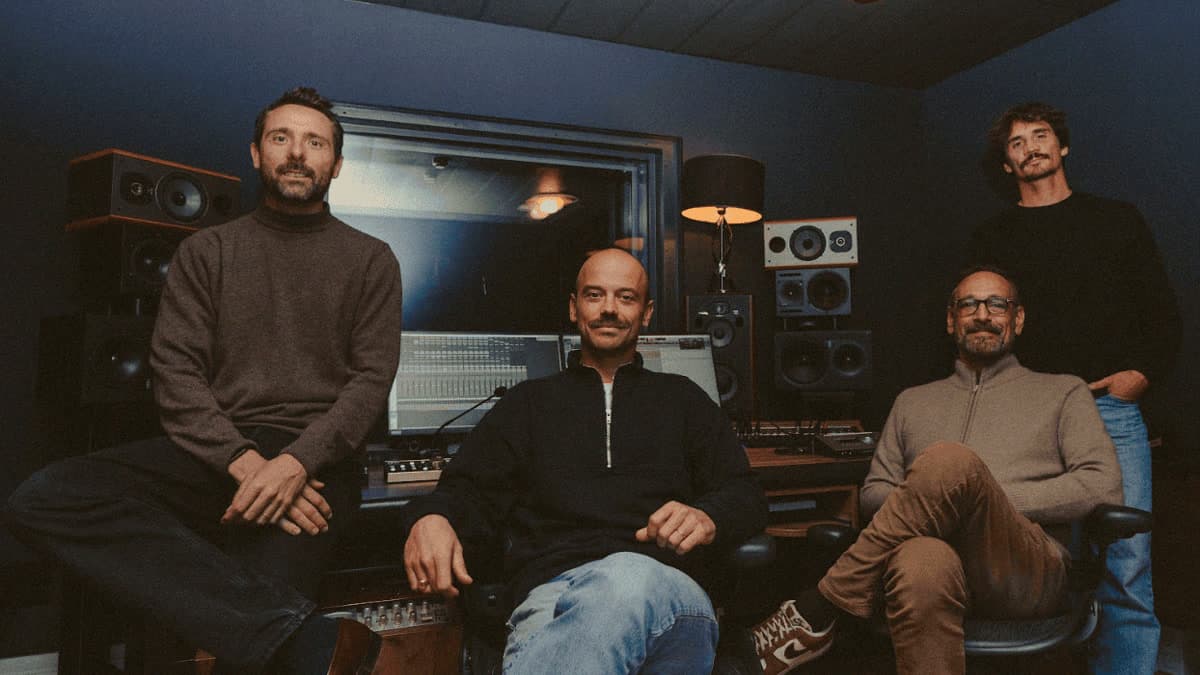
The gap matters because it is not really a disagreement about facts, it is a disagreement about what "independent" still means once a major owns the company. Even Zimbalam's own reporting carries the same reassurance as the other outlets: the Bordeaux team stays in place, the co-founders keep running it, nothing changes day to day. That is the standard script majors use whether they bought 10 percent or 100, because the artists and the press need to hear it either way. Délicieuse Musique's co-founders Mathieu Léglise and Gautier de Bosredon put it this way in their own statement: the partnership lets them "plug our international roster into a world-class distribution and marketing network while preserving the independent ethos." That line survives intact whether Warner owns a slice or the whole thing.
What does a 1,200-artist label group from Bordeaux actually look like?
Délicieuse Musique has been building this roster quietly since 2012, away from Paris, across roughly ten specialized imprints, among them Délicieuse Records, Nice Guys, Noire & Blanche, Egoplanet, Crosswalk and Hip Dozer. The genre spread is the real story here: deep house, chill and jazz house sit next to indie pop under the same roof, and the group's biggest wins came from acts that blurred that line rather than staying in one lane. Lost Frequencies, Ofenbach and Kungs all got early support from the Bordeaux team before turning into radio and festival-main-stage names, alongside Bakermat and Folamour. That track record, house-rooted artists who crossed over without losing the dancefloor entirely, is exactly the kind of catalog a major wants on tap without having to run the A&R itself.
Why does a major circling a Bordeaux house label matter to the underground?
Warner gets digital distribution muscle, global marketing, sync licensing and brand-partnership money pointed at a catalog that already has proven crossover hits, without having taken any of the early risk on Lost Frequencies or Kungs when they were unknowns on house-leaning imprints. That is the pattern worth watching, not this single deal: majors increasingly buy into the independent groups that already did the unglamorous work of breaking artists out of the underground, rather than building that pipeline themselves.
"Partnering with Warner Music France allows us to plug our international roster into a world-class distribution and marketing network while preserving the independent ethos.", Délicieuse Musique co-founders
For artists on Délicieuse's smaller house and chill imprints, the practical question is whether Warner's marketing budget actually reaches them or stops at the acts already big enough to justify it.