What's actually inside Shrub?
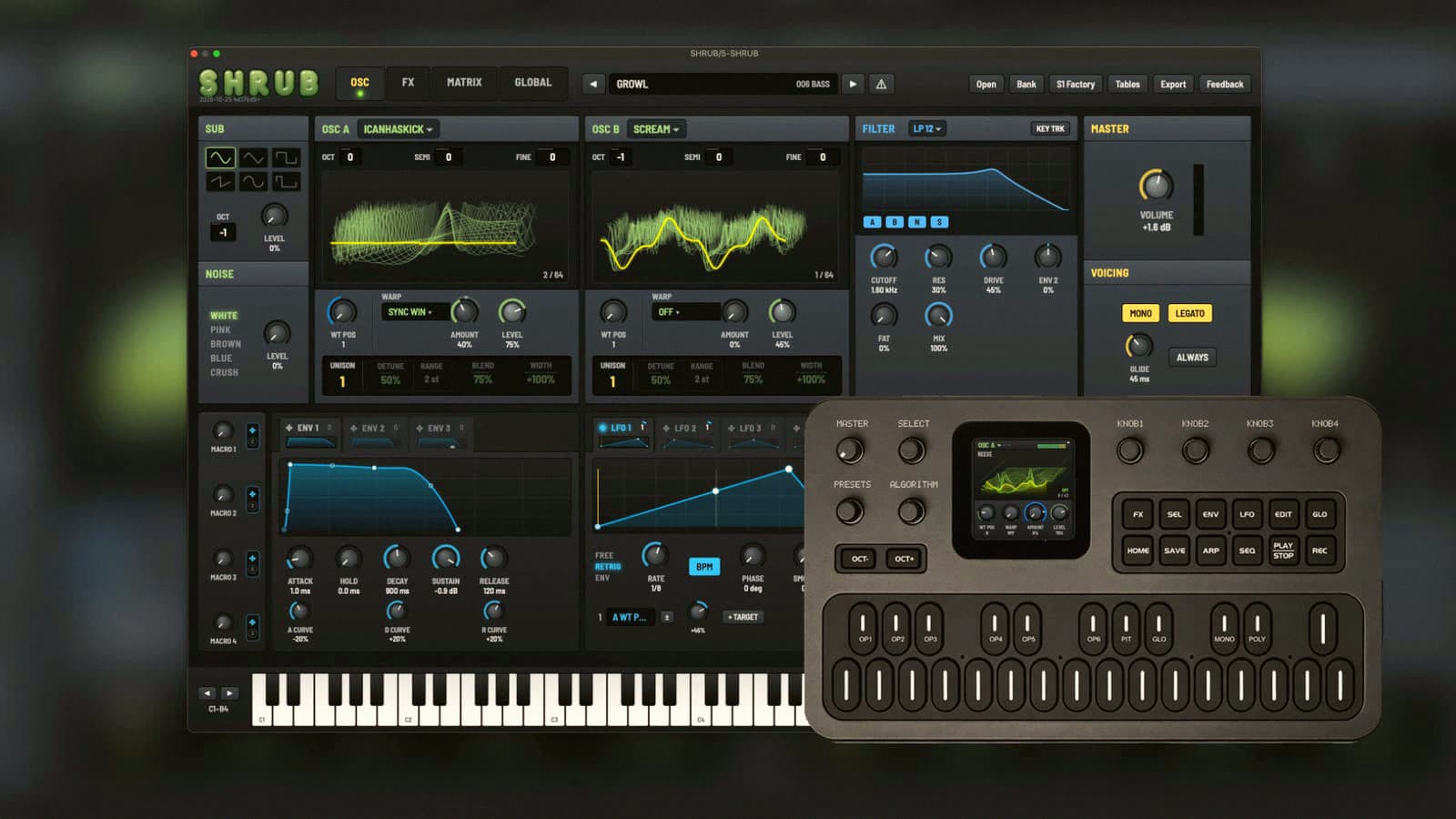
Shrub runs two wavetable oscillators plus a sub and a noise generator, backed by three envelopes, four LFOs with drawable shapes and two chaos sources feeding a 16-slot modulation matrix. There's a filter section, a seven-module effects rack carried over from Serum 1 (distortion, delay, reverb, a compressor with an OTT mode), and a preset browser that can pull in and translate Serum 1 patches on the fly (Serum 2 presets don't convert). Xfer Records ships it as a VST3 plugin for macOS on both Intel and Apple Silicon, Windows x64 and Linux on ARM64 and x64, with zero price tag attached.
Why is a piece of Serum free now?
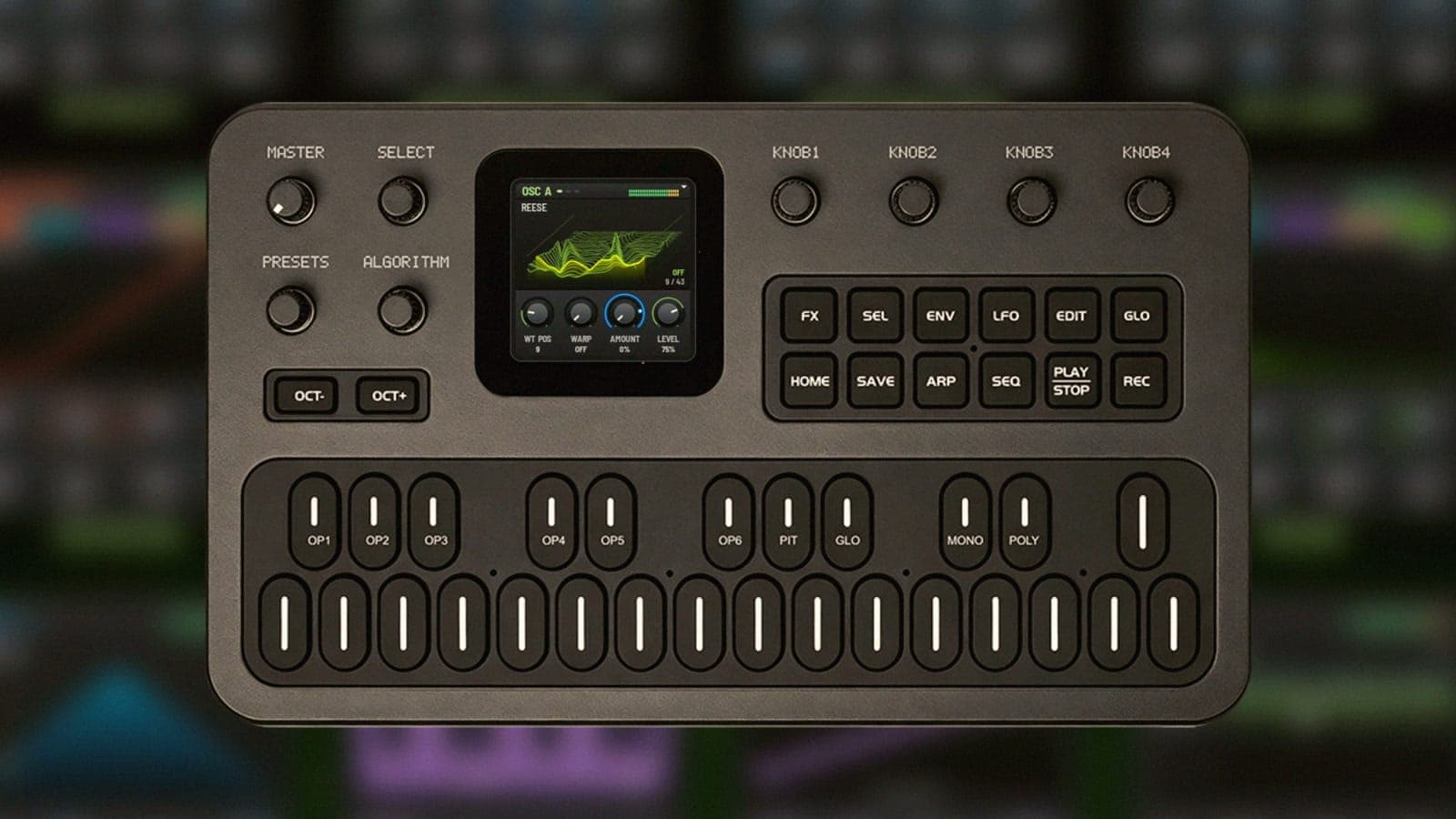
Shrub didn't start life as a plugin. Xfer founder Steve Duda built it as alternative firmware for the M-VAVE FM-1, a roughly $70 pocket hardware synth that recently opened itself up to outside developers.
"A stripped-down version of Serum for the M-VAVE FM-1."
That's how Duda has described the project, and the desktop VST3 release is the same engine freed from the hardware box, playable in any DAW without flashing a $70 device first. For a bedroom producer priced out of Serum, or a club producer who just wants a second wavetable layer without opening their wallet, that's the real headline: a working slice of one of the genre's most-used synthesis engines, at zero cost.
What did Xfer leave out?
The compromises are the price of fitting inside hardware limits even on desktop. Shrub caps polyphony at four notes pulled from a 16-voice pool, and every one of those notes shares a single stereo filter rather than getting its own, so the kind of per-note filter sweep across a chord that Serum handles natively isn't on the table here. Preset compatibility only runs one way: Serum 1 patches translate, Serum 2 patches don't. None of that erases what Shrub actually is, a real, usable wavetable engine built on Serum's own code, given away for free.