What does Chaotic Good actually do?
Founded in February 2025 by Jesse Coren and Andrew Spelman, two former managers who ran the artist company Mutual Friends, Chaotic Good Projects sells what it calls trend simulation. The method is blunt: build a sprawling network of TikTok accounts, fan pages, meme pages, clip channels, then push a client's track through all of them at once until the algorithm reads the noise as a real groundswell. Spelman described it on Billboard's On the Record podcast, recorded at SXSW on 14 March 2026: the agency studies what is working organically and recreates it 'at scale inorganically.' The office, he said, is 'overrun with iPhones.' The point is volume, posting enough across enough accounts with enough impressions to simulate the idea that a song is trending.
The second front is the comment section. 'Most people see a video about an album that came out, and that first comment they see becomes their opinion,' Spelman said. So you seed that first comment. The second an SNL set lands at midnight, you post a hundred times that it was the best performance of the year. Coren's summary was almost cheerful: 'Unfortunately, a lot of the internet is manipulation.'
Does this mean the artists are frauds?
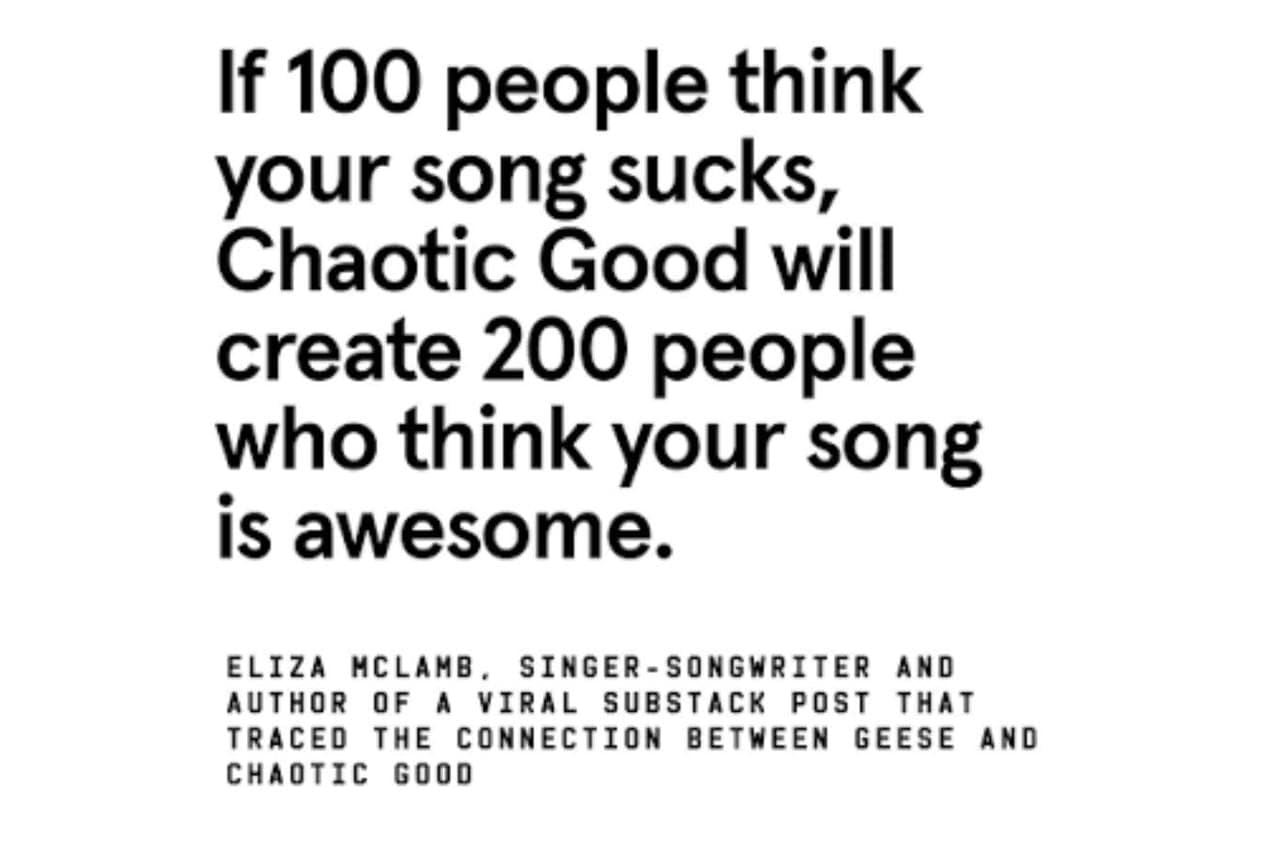
No, and that is the uncomfortable part. None of this fabricates the streams, and it does not make the music bad. The acts whose names surfaced, from Geese and Cameron Winter to Dijon and Oklou, are genuinely good, and the tactic would not work if they were not. What is manufactured is the conversation around them, the sense that a crowd discovered something on its own and could not stop talking about it. The agency confirmed a Geese campaign to WIRED; other names appeared on Chaotic Good's own client roster, which it quietly scrubbed, along with its Narrative Campaign page, one day after the writer Eliza McLamb published an essay tracing its fingerprints. The Internet Archive preserved the list.
When you scroll into the comments and everyone is losing their mind over a new artist, you deserve to know whether you are looking at people or at a payroll.
The honest worry is not 'industry plant.' It is subtler. The cold start, the algorithmic hell every new artist used to claw through, can now be bought, and the organic co-sign, the single most trusted signal in music, can be faked at scale.
Why should house and techno care?
Because dance music runs on the same plumbing. Roughly 84% of the tracks on Billboard's Global 200 now break on TikTok first, and 'TikTok techno' is already a running joke with a real edge. The underground sold itself on the opposite of all this: a record that earns its status on the floor, a dubplate passed hand to hand, a name that spreads because a trusted DJ keeps playing it out. Manufactured virality is genre agnostic. The same machine that can mint an indie darling can just as easily mint a buzzy new house 'hero,' a 'sold-out' narrative, a wall of comments swearing a mediocre edit is the track of the summer. When the groundswell can be bought, the one thing that separated the underground from pop marketing, trust in the crowd, starts to corrode.