What did Mayuzumi actually build at NHK in 1955?
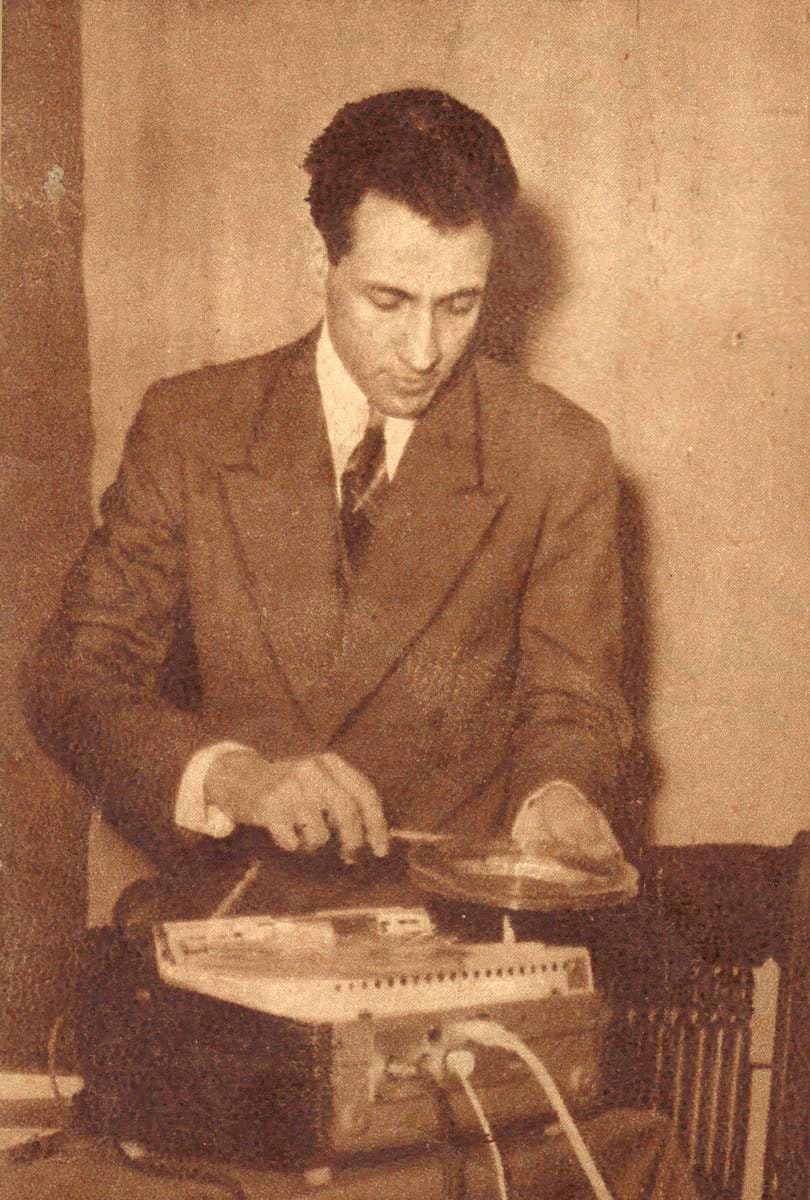
Toshiro Mayuzumi studied composition in Tokyo, then traveled to Paris in 1952, where he caught a concert of Pierre Schaeffer's musique concrète. He came home converted. Japan's national broadcaster, NHK, had just finished building a studio modeled directly on the WDR facility in Cologne, the lab that gave the world Stockhausen. It opened in 1955 stocked with six stepped sine-wave oscillators, three continuously variable ones, tape recorders, two ring modulators and a 32-band filter bank. Mayuzumi used it to cut three short pieces the same year: “Music for Sine Waves by Sequences of Prime Number Ratios,” “Music for Modulated Wave by Proportion of Prime Numbers,” and “Invention for Square Wave and Saw-tooth Wave.” No samples, no recorded sound, just raw waveforms generated on lab equipment and assembled on tape, months before most of the world had heard the term “electronic music.”
Why did a Tokyo broadcaster get there before almost anyone else?
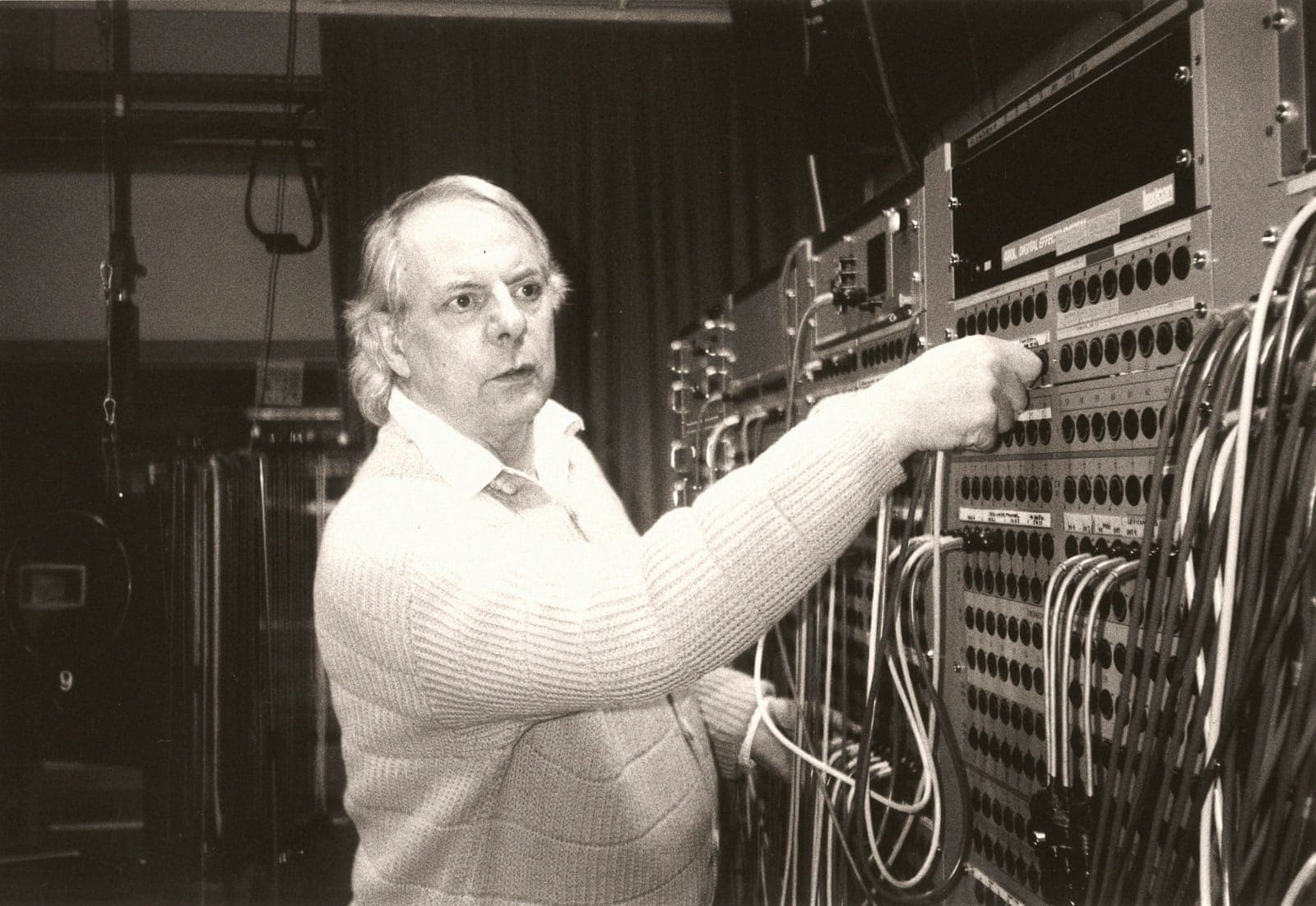
NHK's engineers reportedly translated the entire WDR mission statement from German into Japanese before they built anything, then treated the studio less like an art project than an engineering one. That approach mattered more than it sounds: within a year, Makoto Moroi, Toru Takemitsu, Minao Shibata, Toshi Ichiyanagi and Joji Yuasa had all worked through the same space, and by 1966 the studio was serious enough that Stockhausen came to make “Telemusik” there with NHK's Hiroshi Shiotani. A state broadcaster's engineering budget, not a bohemian scene, is what got Japan an electronic music studio before most of Europe had one running.
How does a 1955 tape studio connect to Yellow Magic Orchestra?
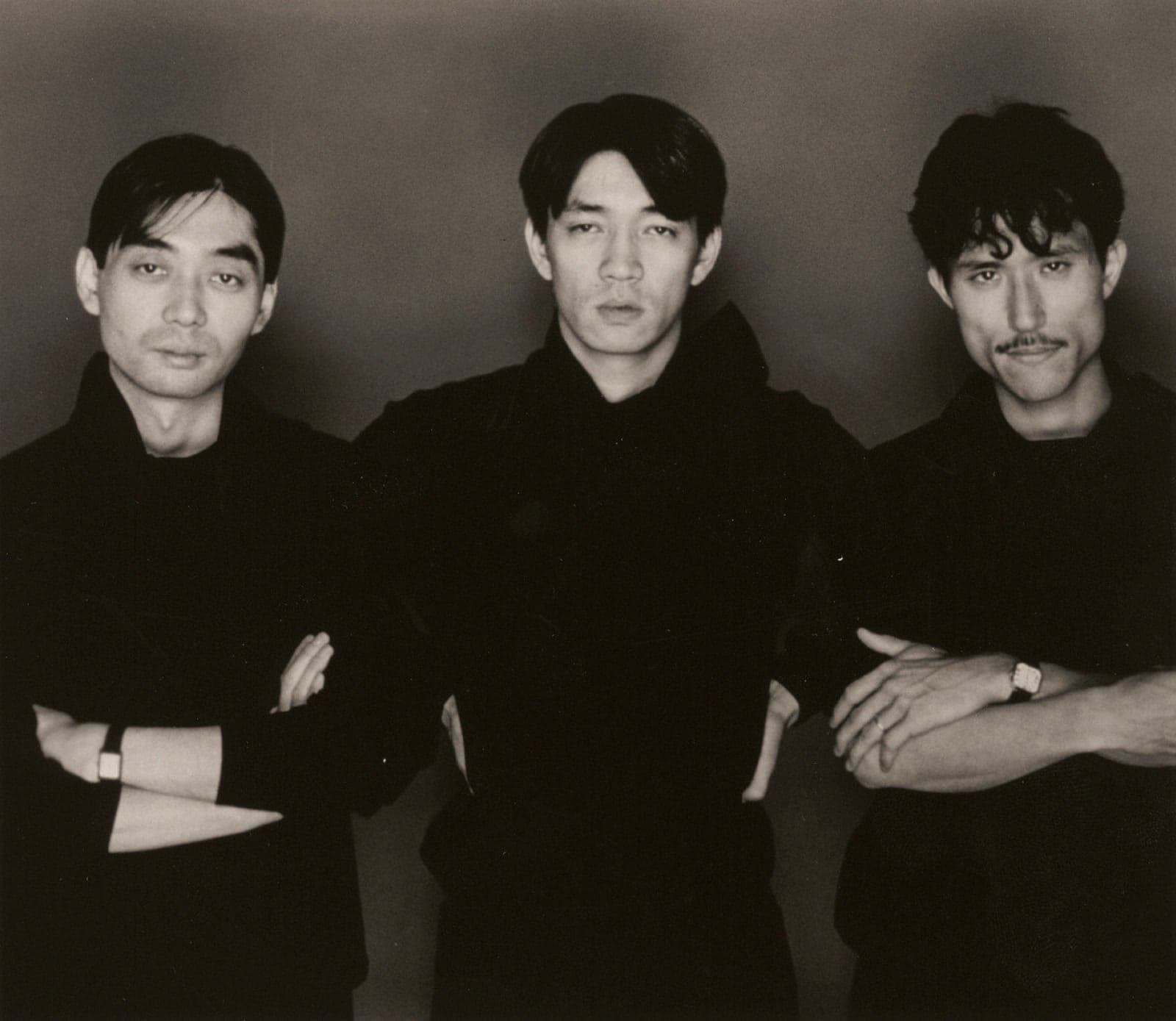
It doesn't connect through a straight paper trail; no interview has Hosono or Sakamoto naming Mayuzumi. But it is the same country's industrial and broadcast culture that, twenty-three years later, produced Yellow Magic Orchestra. Haruomi Hosono, Ryuichi Sakamoto and Yukihiro Takahashi formed the group in 1978 and were fast tagged as techno's other godfathers alongside Kraftwerk. Detroit's Belleville Three, Juan Atkins, Derrick May and Kevin Saunderson, have said Yellow Magic Orchestra was part of the mix DJ Electrifying Mojo spun on Detroit radio in their teenage years, right alongside Kraftwerk and Parliament. YMO then went further than listening distance: they were among the first artists to play live with Roland's new TR-808 drum machine, on “1000 Knives” in 1980, and their 1981 album “BGM” was the first full record built around it. Sakamoto's own “B-2 Unit,” also from 1980, helped push the 808 into Japanese pop the same year.
A national broadcaster's tape lab in 1955 and a Chicago warehouse's kick drum forty years later both come out of the same country's engineering habit: build the machine first, argue about the art after.
Did the connection go beyond one drum machine?
Yes. Roland and Yamaha, the two Japanese manufacturers that built the TR-808, the TR-909, the TB-303 and the DX7, turned Japan into the actual hardware supplier for house and techno, not just an early adopter of it. Every 909 kick and every 303 acid squelch that has ever driven a dancefloor runs on circuitry designed in the same country that opened an electronic music studio in a broadcasting house in 1955.