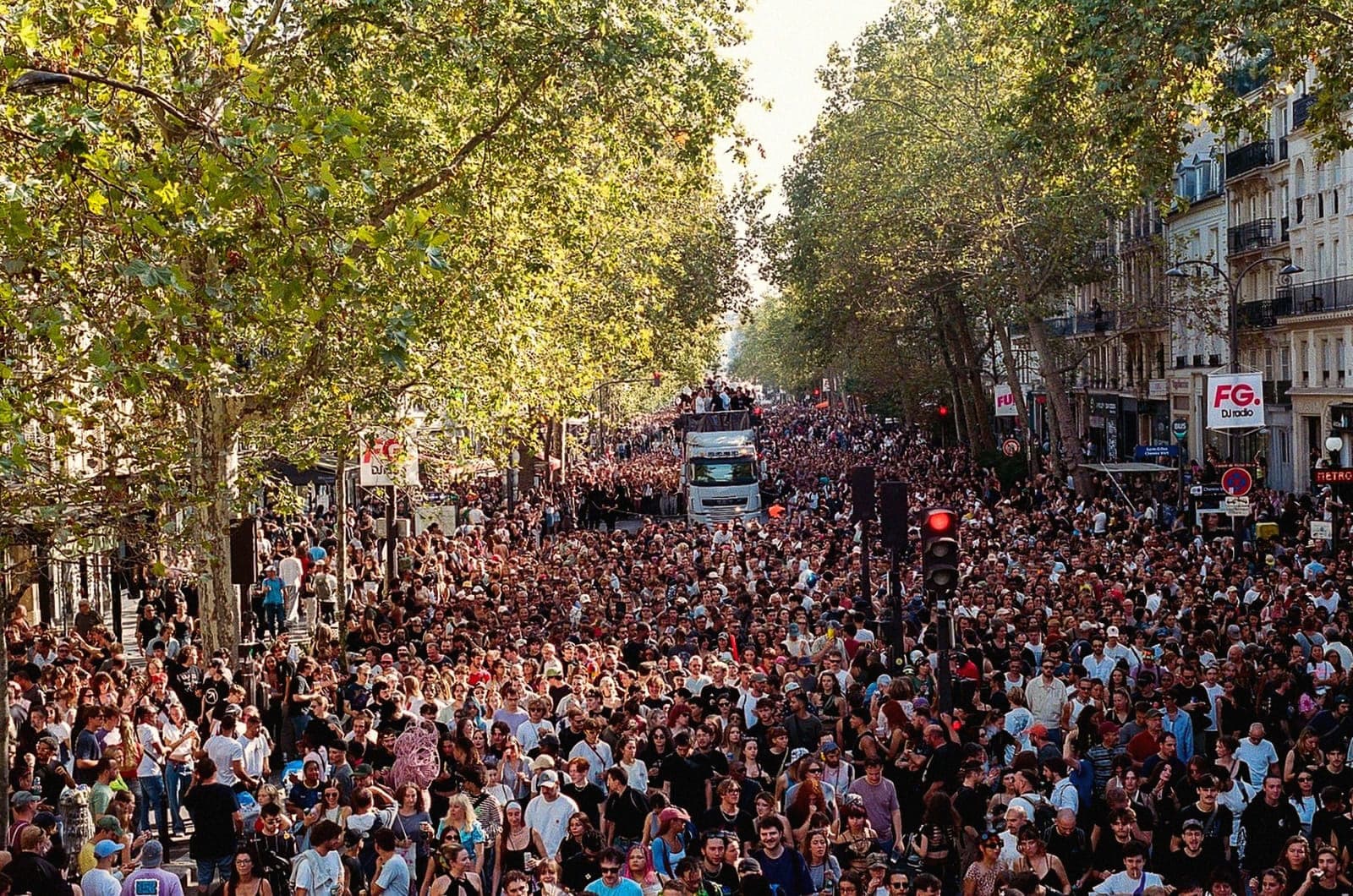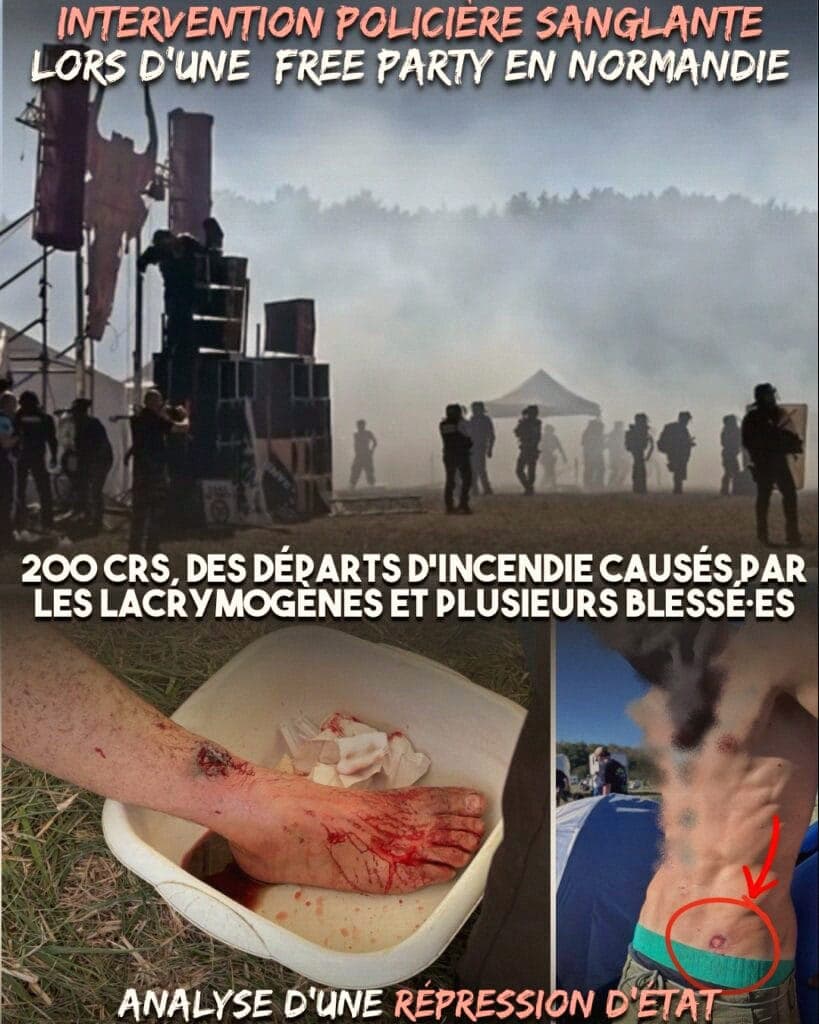
RIPOST's backers spent months promising that the new law would be enforced with restraint. The first big test of that promise, a field near Falaise in Normandy on the night of September 12, produced tear gas fires, flash-ball injuries and medics turned away at the gate.
About 200 CRS officers moved on a multi-system free party in Calvados, according to Technopol's reporting partners and Contre Attaque's account of the raid. Tear gas grenades landed in dry grass and set small fires. Police fired LBD rounds, the rubber-ball launchers French riot squads have used on gilets jaunes and pension protesters for years, and the rounds caused multiple injuries on site. Officers seized the sound equipment, the usual end point of a free party raid, but this time the physical toll came first.
Why does the medical block matter more than the raid itself?
Because it broke the one part of French rave policing that both sides had more or less agreed on. Harm-reduction associations, Techno+, Nautilus and Les Veilleuses among them, operate on site at free parties specifically because the state has long accepted that someone needs to be there for bad trips, dehydration and drug-checking regardless of a party's legal status. At Falaise, those teams were kept off the site for the entire night. People hurt by flash-ball rounds and by fires lit by the police's own tear gas had nobody there whose job was to help them.
Did RIPOST's own rules apply yet?
Not formally. The Calvados prefect posted about the operation as a win on social media before RIPOST's implementation decrees had been published, meaning the raid ran ahead of the very framework meant to define proportionate enforcement under the law.
RIPOST itself, which Time To House has already covered as 350,000 people marched against it in Paris, cuts the mandatory declaration threshold for a party from 500 attendees to 250, and sets penalties of up to two years in prison and a 30,000 euro fine for organizers, six months and 7,500 euros for attendees. One organizer going by IRL put the exposure in blunt terms to Dazed: "If you add up all the parties I've ever thrown, I would face 40 years in jail."
"What justifies flash balls on young people?" asks human rights lawyer Sophie Mazas.
DJ Paul Seul called the law "a new tool of mass control" in the same piece. Falaise is the fact pattern that turns that line from rhetoric into something with a date, a location and a casualty count.