What actually makes the MD-7's knobs different?
Most synths give you a potentiometer: turn it, watch a number change on a screen, hope you stopped where you meant to. Mach Devices has swapped that for two motorized discs built on field-oriented control (FOC), the same motor-driving technique used in high-end servo systems. The discs turn smoothly for continuous parameters like filter cutoff, but the moment you land on something with fixed states, say oscillator waveshapes, the motor stiffens and clicks the disc through rigid, switch-like detents. Push a value to its ceiling or floor and the disc locks hard in that direction. Per Synth Anatomy, the pitch is that you can feel exactly where you are in a patch without ever looking down, which matters more than it sounds on a dark stage or a cramped desk where eyes are already on a mixer or a laptop.
Why is a brand-new company giving away its source code?
Mach Devices is a young, Hong Kong-based outfit with no back catalog to protect, and it's leaning into that by open-sourcing the parts that usually stay locked: the DSP engine, the modulation matrix and the sequencer will all live on GitHub. That's a different bet than the walled-garden approach most hardware synth makers take. It hands the MD-7's actual sound-generation code to anyone who wants to read it, patch it or replace it outright, closer to how Mutable Instruments built a following by open-sourcing its Eurorack firmware than how most pocket-synth makers operate. For a company trying to build trust fast on a genuinely new interface idea, giving hobbyist developers a reason to build for the platform is as much a growth strategy as a design philosophy.
What else is in the box, and when can you actually buy one?
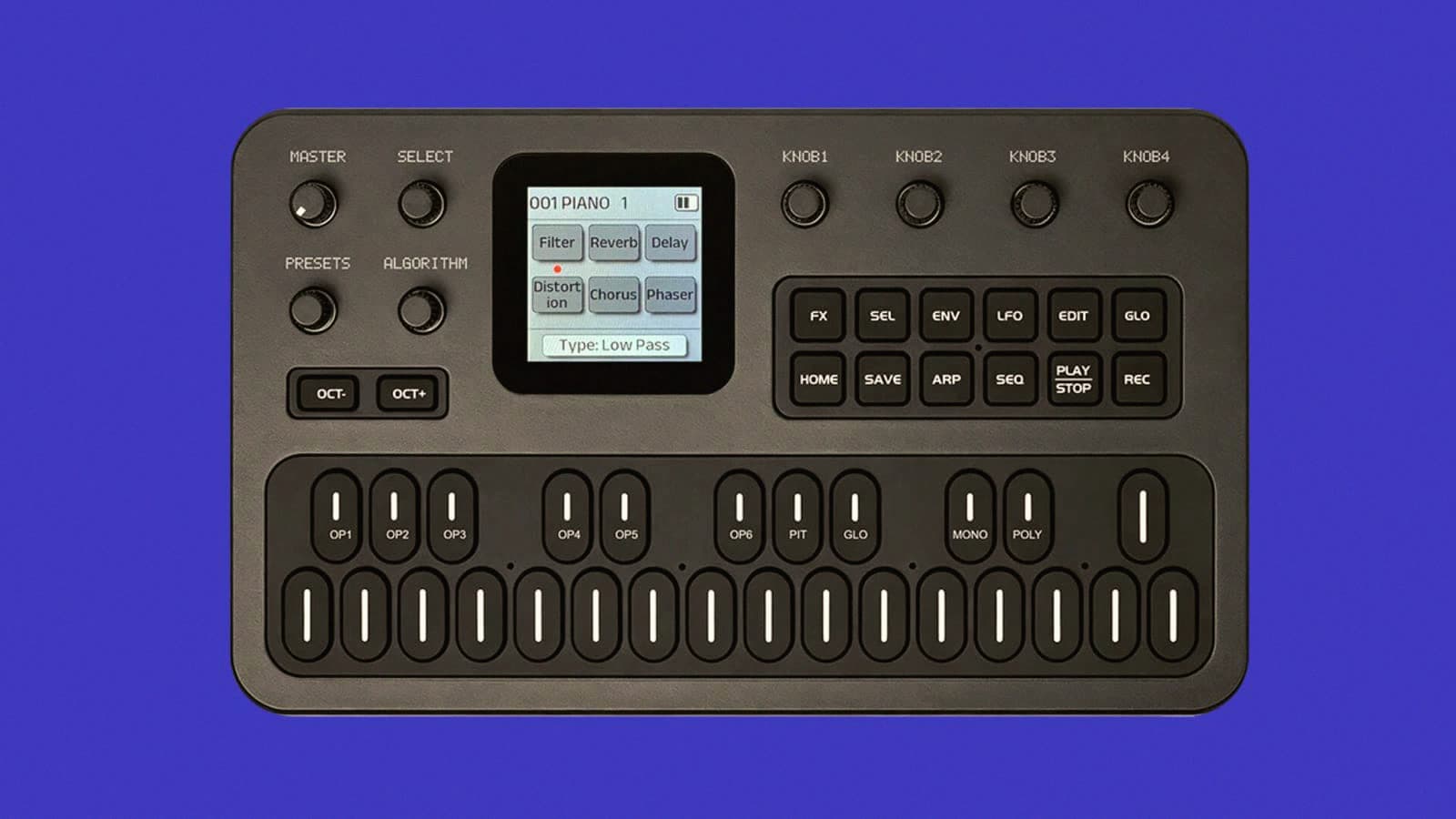
Beyond the haptic discs, the MD-7 folds in a programmable drum looper with multiple channels, a microSD slot for sample and project storage, and dual USB-C ports split between MIDI/audio I/O and charging, on top of the 13-key button keyboard and IPS display Gearnews describes in its hands-on. Mach Devices has set a price of EUR 267.95, cheap for anything with motors inside it, but has not given a firm ship date. That gap between announcement and availability is the real risk here: a first hardware product from an unproven company, with moving parts that have never shipped at consumer volume before.
Mach Devices is betting a pocket synth's knobs can do more than turn: they can tell you, physically, when to stop.