So… are we really arguing about where house music comes from again?
Apparently, yes.
And honestly, we’re glad we are.
Few things will get house heads typing faster than telling Chicago that house music might actually have come from somewhere else.
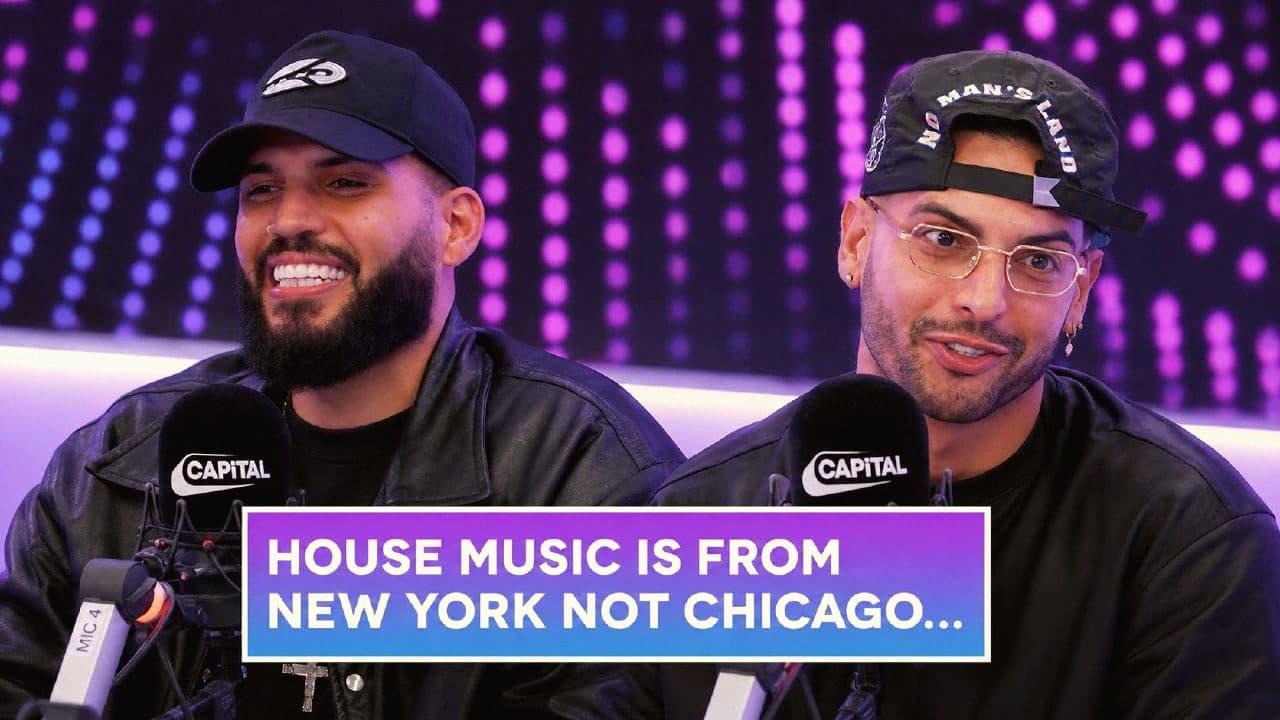
The latest round began with The Martinez Brothers, who raised an argument that has circulated through dance music circles for years: Chicago unquestionably gave house its name, but was New York already making the music before Chicago?
Their reasoning is not completely out of left field.
They grew up surrounded by New York’s older dance-music generation and point toward a lineage that includes Larry Levan, Timmy Regisford, Boyd Jarvis and Colonel Abrams. Their argument is essentially that before Chicago’s famous house records arrived, New York musicians were already working with drum machines, synthesizers, repetitive grooves and underground club productions that, played today, sound an awful lot like house.
Or, as they put it rather simply:
“It’s house music. It’s not disco music. It’s a drum machine.”
Cue Chicago entering the comments.
But before everyone throws their TR-909s at each other, there is an important distinction to make.
The Martinez Brothers have a legitimate point about house music’s lineage.
That is different from saying New York created house music.
And the difference between those two statements is basically the entire story.
Frankie Knuckles was a New Yorker
Perhaps the most compelling part of the New York case is also one of the strangest facts in the Chicago origin story:
The Godfather of House was from the Bronx.
Frankie Knuckles grew up in New York and came through its underground dance scene alongside his childhood friend Larry Levan. Both were exposed to the culture surrounding clubs like The Gallery, and both worked at the Continental Baths before becoming two of the defining DJs of modern club culture. (Red Bull Music Academy Daily)
And the New York connection goes deeper.
The Warehouse’s owner, Robert Williams, had himself experienced David Mancuso’s Loft in New York. Accounts of the period say Williams originally wanted Larry Levan for his new Chicago club before Knuckles eventually took the job. (Red Bull Music Academy Daily)
Levan stayed in New York and went on to become inseparable from Paradise Garage.
Knuckles went to Chicago.
In 1977, he became resident at The Warehouse.
One decision, two cities, two enormous branches of dance-music history.
So yes: New York is embedded in house music’s family tree.
That is not controversial.
But Frankie didn’t bring a box of “house records” to Chicago
This is where the story becomes more interesting.
House music did not arrive in Chicago as a finished genre in Frankie Knuckles’ record bag.
Knuckles brought disco, soul, funk, R&B and electronic music, along with a DJ philosophy shaped partly by New York’s underground clubs. In Chicago, he began combining and manipulating those ingredients for a new audience. (Red Bull Music Academy Daily)
And even Chicago pioneer Chip E makes an important distinction here.
Chip has pointed out that the Warehouse itself did not technically play “house records” in the modern sense because the genre’s original production wave emerged later. Frankie was playing and manipulating records from other genres. The term house developed around this culture before there was an entire record section full of what we would now recognize as house productions. (Red Bull Music Academy Daily)
That matters.
Because house wasn’t born simply when somebody programmed a four-on-the-floor kick.
It emerged through a culture.
And Chicago was building that culture.
And then there was Ron Hardy
Any history that reduces Chicago house to Frankie Knuckles misses half the electricity.
Ron Hardy was essential.
While Knuckles became identified with the Warehouse and later the Power Plant, Hardy’s legendary residency at The Music Box pushed Chicago’s underground in a more aggressive, hypnotic and experimental direction.
Tracks could be played repeatedly, pitched radically, layered, manipulated and hammered into completely new contexts.
If Frankie Knuckles represents one foundational branch of Chicago house, Ron Hardy represents another.
And importantly, this was happening within an increasingly interconnected Chicago ecosystem of clubs, dancers, radio DJs, record stores and young producers.
The sound wasn’t merely being imported anymore.
Chicago was transforming it.
Enter Boyd Jarvis and Timmy Regisford
Now we arrive at the strongest part of The Martinez Brothers’ argument.
Boyd Jarvis and Timmy Regisford.
In early-’80s New York, Jarvis became fascinated with synthesizers and started developing his own drum sounds and electronic productions. He and Regisford began making music together using synths, drum machines and reel-to-reel recording. (Red Bull Music Academy Daily)
Eventually came Visual, The Music Got Me.
Released in 1983 on Prelude Records, produced by Boyd Jarvis with Timmy Regisford as co-producer, the record is minimal, electronic, repetitive, soulful, and very easy to hear today as proto-house or even early house. (Discogs)
And this is where The Martinez Brothers raise a genuinely interesting question.
Jesse Saunders’ “On and On,” generally cited in accounts of Chicago house history as its first commercially released house record, followed in 1984.
So if The Music Got Me came first and sounds like house…
Why shouldn’t it count?
That isn’t a ridiculous argument.
It’s actually the useful part of this entire controversy.
Except Chicago house didn’t begin in 1984
The problem comes when first commercially released house record gets confused with birth of house music.
Those are not the same thing.
By the time Chicago producers began pressing recognizable house records, the culture from which those records emerged had already been developing for years.
The Warehouse had opened in 1977. Knuckles later remembered the people around the club themselves beginning to use the phrase “house music” for the music associated with it. (Red Bull Music Academy Daily)
The City of Chicago has since formally landmarked the Warehouse building, describing it as the birthplace of house music and recognizing Knuckles’ role in originating and popularizing the genre there. (City of Chicago)
So The Music Got Me may predate many of the Chicago records we now recognize as classics.
It does not predate the Chicago culture from which those records came.
That’s a pretty big distinction.
Then Chicago started making its own records
And this is where the Chicago argument becomes much harder to challenge.
What began as club culture became a production culture.
Jesse Saunders. Chip E. Vince Lawrence. Marshall Jefferson. Ron Hardy. Steve “Silk” Hurley. Farley “Jackmaster” Funk.
And many others.
Young Chicago producers were no longer simply finding existing records that worked on their dancefloors.
They were making records for those dancefloors.
Chicago radio and the Hot Mix 5 spread the sound beyond individual clubs. Record stores helped categorize it. Labels including Trax Records and DJ International gave the music an infrastructure. A generation of producers developed variations on the sound. (City of Chicago)
This is the crucial transformation.
House became something musicians could intentionally say they were making.
Something DJs could say they played.
Something dancers could recognize.
Something record labels could release.
Something Chicago could export.
That’s a genre.
And then Chicago entered the comments
Unsurprisingly, The Martinez Brothers’ argument didn’t exactly pass unnoticed.
Glenn Underground delivered one of the strongest responses.
His point was simple: Chicago has never denied New York’s music.
Quite the opposite.
Chicago DJs played New York records heavily.
But, for Glenn, respecting and absorbing music from another city does not mean that city gets to claim authorship of what Chicago subsequently created.
His response was considerably more colorful than that summary, but the central message was unmistakable:
“We created house music.”
Other Chicago heavyweights clearly agreed.
Derrick Carter responded simply: “Right.”
DJ Slugo also showed his support.
And the debate continued.
Mike Dearborn questioned the chronology behind some of the New York examples.
Gene Farris challenged the underlying logic.
His argument was basically: if we decide that whichever earlier artist produced sounds resembling a later genre therefore created that genre, how far backward are we going?
With that logic, he joked, Kraftwerk created house music.
Then Detroit entered the chat.
Kenny Larkin made perhaps the cleanest analogy of all.
Frankie Knuckles being born in the Bronx doesn’t make house a New York creation any more than Kevin Saunderson being born in Brooklyn makes techno a New York creation.
Birthplace of the artist and birthplace of the genre are two different things.
To their credit, The Martinez Brothers kept the argument pretty specific
It’s worth saying this clearly because outrage can flatten nuance very quickly.
In their responses, The Martinez Brothers repeatedly acknowledged Chicago’s contribution.
They weren’t arguing that Ron Hardy didn’t matter, that Chicago didn’t create an enormous house culture, or that the city should somehow be erased from its own history.
Their argument became much more specific:
There were a few records coming from New York before Chicago’s first famous house releases that they believe should be recognized as house music in an early form.
And Boyd Jarvis and Timmy Regisford deserve more credit in that history.
On that point, there is room for a productive conversation.
The Music Got Me is important.
New York’s post-disco experimentation is important.
Larry Levan is important.
The Loft is important.
The Gallery is important.
Paradise Garage is important.
None of that makes house a New York invention.
It makes house music’s genealogy richer.
Because influence and creation are not the same thing
This might be the simplest way through the argument.
If Frankie Knuckles having been shaped by New York proves that house was actually created in New York, then why stop there?
What shaped New York?
Disco.
Soul.
Funk.
Gospel.
Jazz.
R&B.
Latin and Caribbean music.
Black American musical traditions more broadly.
And behind many of those traditions sits a far longer African-diasporic musical history involving rhythm, repetition, communal participation and call-and-response.
That does not mean house was “invented in Africa.”
It means culture has ancestry.
African-American music itself represents centuries of innovation, adaptation and exchange across the African diaspora, and those traditions profoundly shaped modern American popular music. (National Museum of African American History)
Every genre has parents.
And grandparents.
And cousins who swear they were doing it first.
If influence automatically equals invention, the family tree never ends.
That is why historians distinguish between a genre’s roots, its precursors, and the cultural moment when it becomes a recognizable genre of its own.
New York belongs unquestionably among house music’s roots and immediate precursors.
But house became house in Chicago.
Honey Dijon: two things can be true at once
Honey Dijon joined the discussion with perhaps the cleanest way of separating New York’s influence from Chicago’s creation of house.
Responding to a comment about Frankie Knuckles playing New York’s private gay clubs years before the Warehouse, Dijon stressed that this history absolutely matters. Knuckles came through the world surrounding David Mancuso’s Loft and the Continental Baths, immersed in Philly soul, R&B and New York’s underground dance culture before moving to Chicago.
But, she argued, that music predated house.
Her point was refreshingly simple: “Two things can exist at the same time.”
New York can be essential to Frankie Knuckles’ development, and to the wider lineage that fed into house, while house music itself still originates in Chicago.
Dijon also pointed to the Chicago record-store history surrounding places like Imports Etc. and Rose Records, where customers would ask for music associated with the Warehouse, helping cement “house” as a term. At the same time, the exchange eventually flowed back east: Larry Levan played early Chicago house records at Paradise Garage, showing just how interconnected the two cities became.
That may be the useful correction to the whole NYC-vs.-Chicago framing. New York and Chicago were never sealed-off musical islands competing for a patent. Ideas, DJs and records moved between them constantly.
But acknowledging that exchange doesn’t require moving house music’s birthplace.
As Dijon put it, invoking one of house music’s enduring ideas: “No one man owns house.”
House eventually became a universal language. Its birthplace, however, is Chicago.
Maybe everyone gets some flowers, just not the same flowers
New York deserves enormous credit.
Its underground clubs helped establish ideas about what a DJ could be, what a sound system could do and what a dancefloor community could become.
Larry Levan belongs in any serious history of modern dance music.
Boyd Jarvis and Timmy Regisford deserve recognition for electronic productions that complicate any overly tidy “disco ended, then Chicago invented house” timeline.
The Martinez Brothers are right to bring those names into the conversation.
But Chicago’s claim rests on something bigger than having the first record with the correct drum pattern.
Chicago created the cultural ecosystem in which house became house.
The Warehouse.
Frankie Knuckles.
The Music Box.
Ron Hardy.
The dancers.
The South Side parties.
The radio mixes.
The record stores.
Jesse Saunders.
Chip E.
Vince Lawrence.
Marshall Jefferson.
Steve “Silk” Hurley.
Farley “Jackmaster” Funk.
And the generation that followed.
House became a word people used about themselves.
A music they deliberately created.
A scene they belonged to.
And eventually a genre Chicago sent around the planet.
So New York absolutely belongs in the story.
It just doesn’t need to own the ending.
Or the beginning.
House has roots everywhere. House music is Chicago.