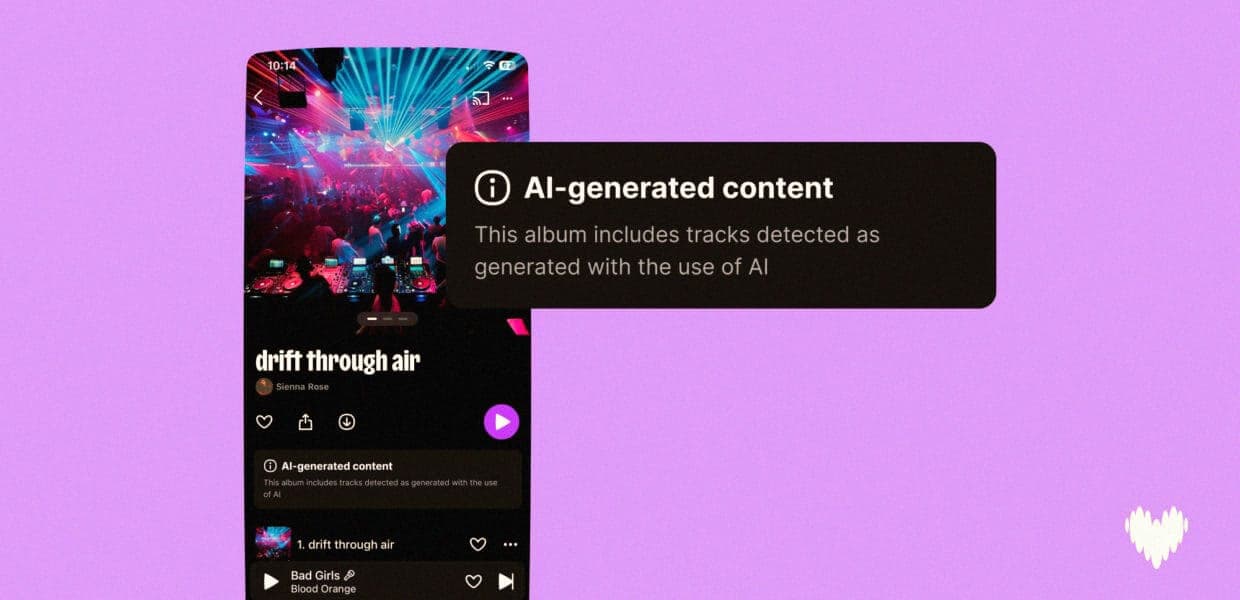
Deezer is now fielding close to 90,000 AI-generated tracks every single day. That is more than half of everything uploaded to the platform, up from one in ten uploads as recently as January 2025. Deezer CEO Alexis Lanternier put it plainly: "Now that half of all daily uploads are AI-generated tracks, we are taking additional steps to safeguard the rights of artists." The company says it is now removing AI tracks tied to fraudulent streaming patterns, or left unstreamed for six months or more.
That is the supply side. The demand side is just as rigged. Spotify had to delete more than 500,000 fraudulent streams from Malcolm Todd's song "Earrings" after it spiked 70% overnight in June, a textbook bot pattern. The platform caught it. The problem is how many spikes nobody catches, and how many real artists get buried under manufactured ones that look identical on a chart.
Who actually pays for a fake breakthrough?
The marketing firm Chaotic Good Projects built fake fan accounts to manufacture engagement around Geese's breakthrough album Getting Killed. When frontman Cameron Winter found out, his reaction was blunt: "We were just like, 'Oh, my God. The whole f***ing thing is fake.'" The label's defense, that it hired the agency for "algorithmic assistance" rather than bot creation, is the kind of distinction that means nothing to a touring musician trying to figure out whether their own audience is real.
That is the actual stake here. Not whether AI tracks exist, everyone already knew that, but whether a working artist can trust their own numbers. If Malcolm Todd's spike needed a platform-level intervention to get flagged, how many smaller acts on smaller platforms never get that correction? The fraud and the real breakthrough look the same on a dashboard. Only one of them gets the gig offers.
"If you're an artist, remember that in 2026 there's not a single part of the system that isn't faked."
That is James Blake, posting in the same stretch that an artist persona called Betty Hammerschlag, who staged live performances with cassette tapes and built a cult underground following, was reported by journalist Shawn Reynaldo to actually be Tilman Hornig, a German producer in his 40s working anonymously. And it is also the stretch where the Rolling Stones put out an official video using AI-generated, de-aged versions of themselves, made by Deep Voodoo, the studio founded by the South Park creators.
Does any of this cancel out?
No. An AI deepfake video from a band as established as the Stones carries almost no risk to their career. A fabricated persona or a bot-inflated stream count carries enormous risk to someone still building one, because trust is the only asset an emerging artist actually owns. When fake engagement, fake personas and fake streams all get uncovered in the same few months, the cost does not land evenly. It lands hardest on the acts who had nothing to fake in the first place.