Polyend just moved the goalposts on what "open" means for a piece of groovebox hardware, and it did it twice in five months.
What exactly did Polyend open this time?
In June 2026, Polyend opened only the Tracker's file format, through a library called tracker-lib that let third-party software read and write Tracker project files without ever exposing how the device itself actually works. That was a narrow move: useful for tool builders, irrelevant to anyone who wanted to change what runs on the hardware.
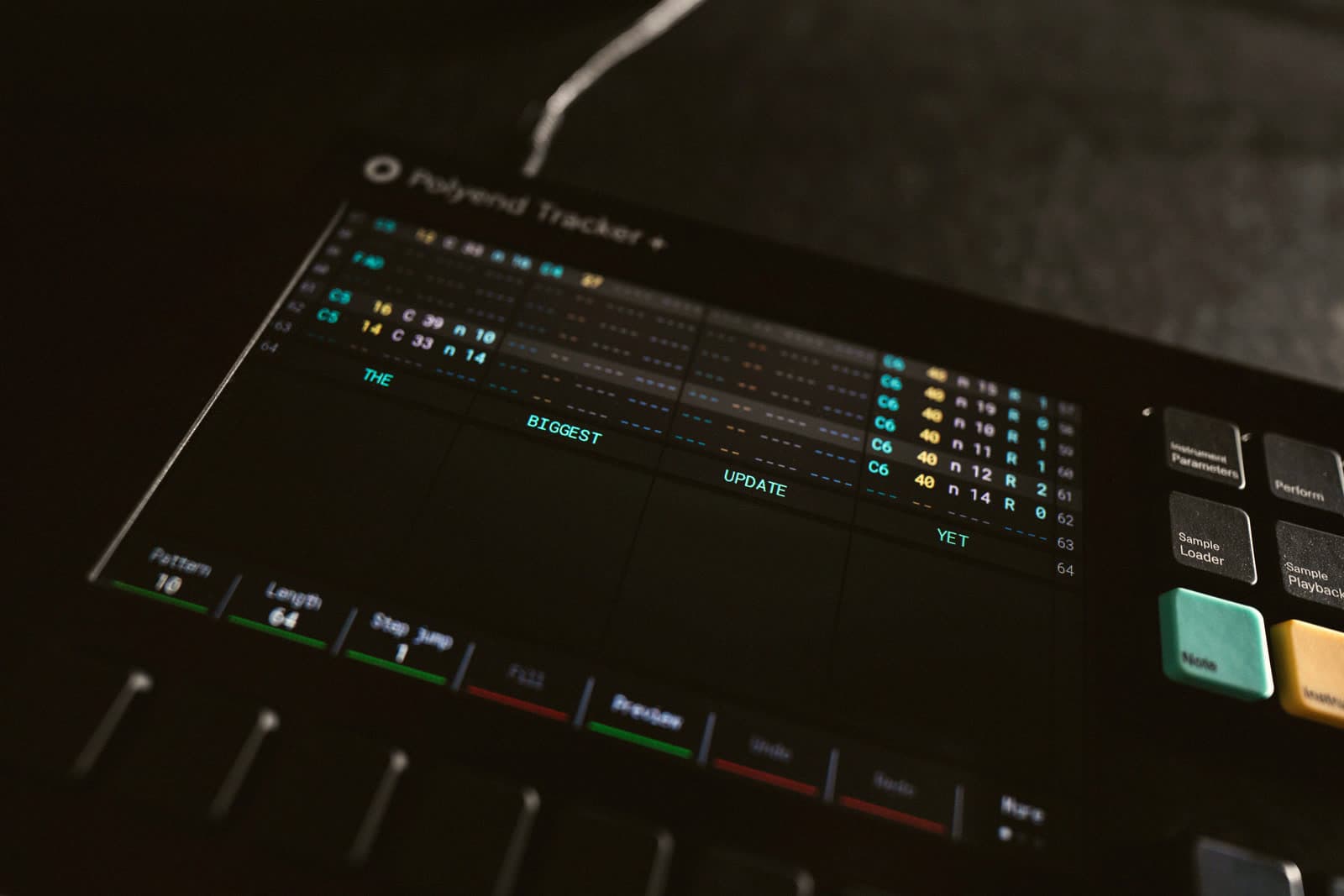
November's release is a different order of thing entirely. Polyend has put the complete firmware source code for its whole Tracker line, the original Tracker, the Tracker+ and the Tracker Mini, on GitHub as Community Edition 1.0. Anyone can now read, modify, compile and flash their own build of the software that actually drives the sequencer, the sample engine and the display. To keep that freedom from turning into a graveyard of bricked units, Polyend built in a recovery system specifically to let a device survive a bad custom build.
What do musicians actually get out of it?
The practical feature list is substantial on its own, independent of the source-code release. Tracker+ and Tracker Mini pick up two new synth engines, CHIP and DIRT, alongside a development kit that lets users build their own effects, generators and even new engines, and sell them if they want to. All three models can now stream long stems, loops and field recordings straight off microSD instead of loading them whole into memory, which opens the door to much longer samples than the hardware's RAM would otherwise allow. Wavetable envelopes and LFOs land across the whole family, project loading and saving got faster, MIDI clock timing tightened up, and there is now a browser-based editor for custom themes and fonts.
"Maybe you want to build an entirely new instrument on the Tracker hardware. Or maybe there's just one thing you wish your Tracker did differently."
That is Polyend CEO Piotr Raczynski, framing the release squarely around the unofficial mods and community firmware projects (track3r-os among them) that have circulated on Polyend's own Backstage forum for years.
Open source, or just open enough?
Read the GitHub repository's license terms and the picture gets more interesting. The firmware itself is released under the PolyForm Noncommercial License 1.0.0 with Polyend's own additional permissions, not a permissive license like MIT or GPL. Polyend's added permissions carve out an explicit exception for commercial music production and monetized content made with a modified Tracker, so nobody loses the right to sell a track made on a hacked device. But the firmware code and the precompiled libraries that talk to the actual hardware remain Polyend's property, not freely redistributable or commercially repackaged by a third party. The one piece that is unambiguously open is the Sample Editor plugin SDK, licensed MIT, which is also the part Polyend most wants a marketplace of third-party plugins to grow around.
Does this pressure the rest of the gear industry?
The Tracker launched back in 2020, and six years is a long time for a piece of music hardware to stay commercially relevant without a sequel. Handing firmware development to the community that already builds unofficial mods for free is also a way to keep a mature product line alive without Polyend's own engineers carrying the whole load. Whether that reads as hacker-friendly generosity or as a manufacturer offloading R&D onto its most devoted users probably depends on which side of the open-hardware debate a given producer already sits on. Either way, the gap between Polyend's approach and the locked-down firmware on most CDJs, mixers and grooveboxes from the bigger manufacturers just got a lot more visible, and that contrast is exactly what the people pushing for repairable, extensible gear will keep pointing at.