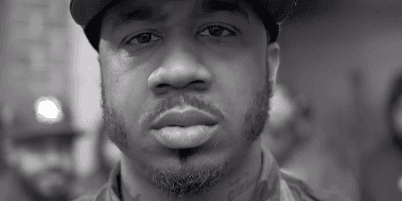
Who was The Butcher?
For thirty years, if you cared about Detroit's smaller rooms rather than its festival stages, you ran into Sean Tate. He made his production debut as executive producer on Terrence Parker's 1995 track "Love's Got Me High," one of Parker's signature house records, before stepping behind the decks himself under the name DJ 1315. By the time he settled on The Butcher, he was booking regular dates across Europe and the US. Most of his own productions went out on Mollison Folson's Detroit Techno Records, and the two also recorded together as the duo Folson & Tate. Tate contributed tracks to Rick Wilhite's compilations for Rush Hour, the Amsterdam label that has spent two decades keeping Detroit's deep catalogue in circulation.
Why did Detroit's underground need him off the decks too?
Tate's other job was law, and for decades he worked as a community activist fighting poverty in his city, the kind of unpaid, unglamorous work that never makes an artist bio. It shaped how he treated the scene around him. In 2018 he founded RWYS, short for Remember Why You Started, a label that made room for Strand, Spacetime Distortion and his old partner Folson alongside his own records. Four years earlier, in 2014, he and Folson had already launched The Bassment, a livestream running every Sunday out of a Detroit basement, years before streamed DJ sets became a pandemic-era default everywhere else. Suburban Knight, Los Hermanos, Mark Flash and Egyptian Lover all played it.
What did he leave in the music itself?
Tate built a recurring series around the phrase "A Matter of...": "A Matter of Creation," "A Matter of Pain," "A Matter of Respect." "A Matter of Creation," first released on Detroit Techno Records and later pressed on his own RWYS, doubled as a birth announcement for the label and for his first child in the same track.
In a 2026 interview and mix for BassAgenda, he said Detroit itself was the real instrument on every record he played.
The main element is production. It's what every producer has put in each and every track. You can hear Detroit in every single track: the streets, the sounds, the police and ambulance sirens, the kids playing, the cheers from the old Tiger Stadium, the water running at Belle Isle.
That same attention got him photographed for Marie Staggat's "313ONELOVE," the Berlin photographer's portrait project on Detroit's techno and house pioneers, alongside names like Juan Atkins, Kevin Saunderson and Mike Banks, the kind of company that marks someone as foundational rather than merely active.