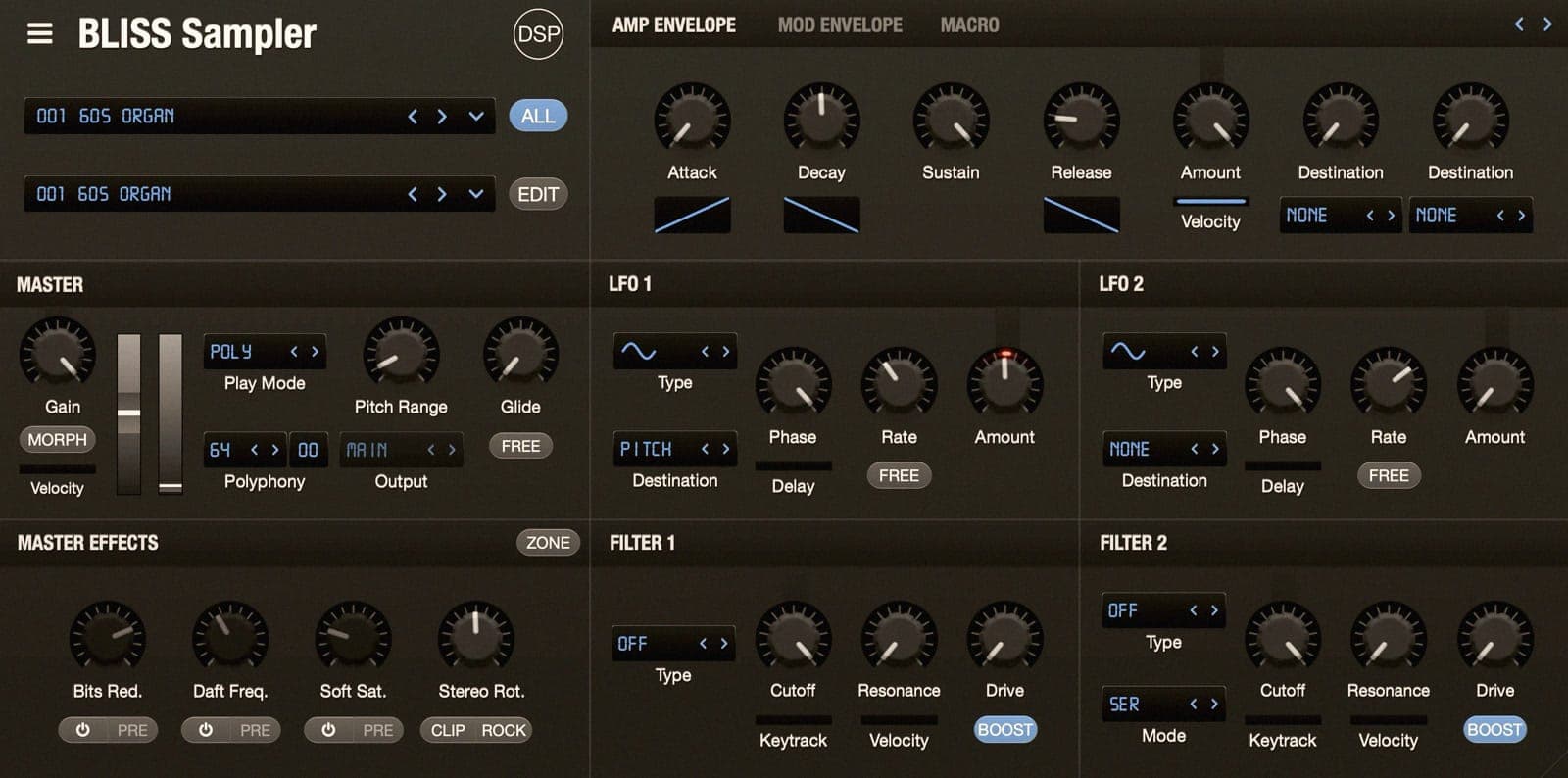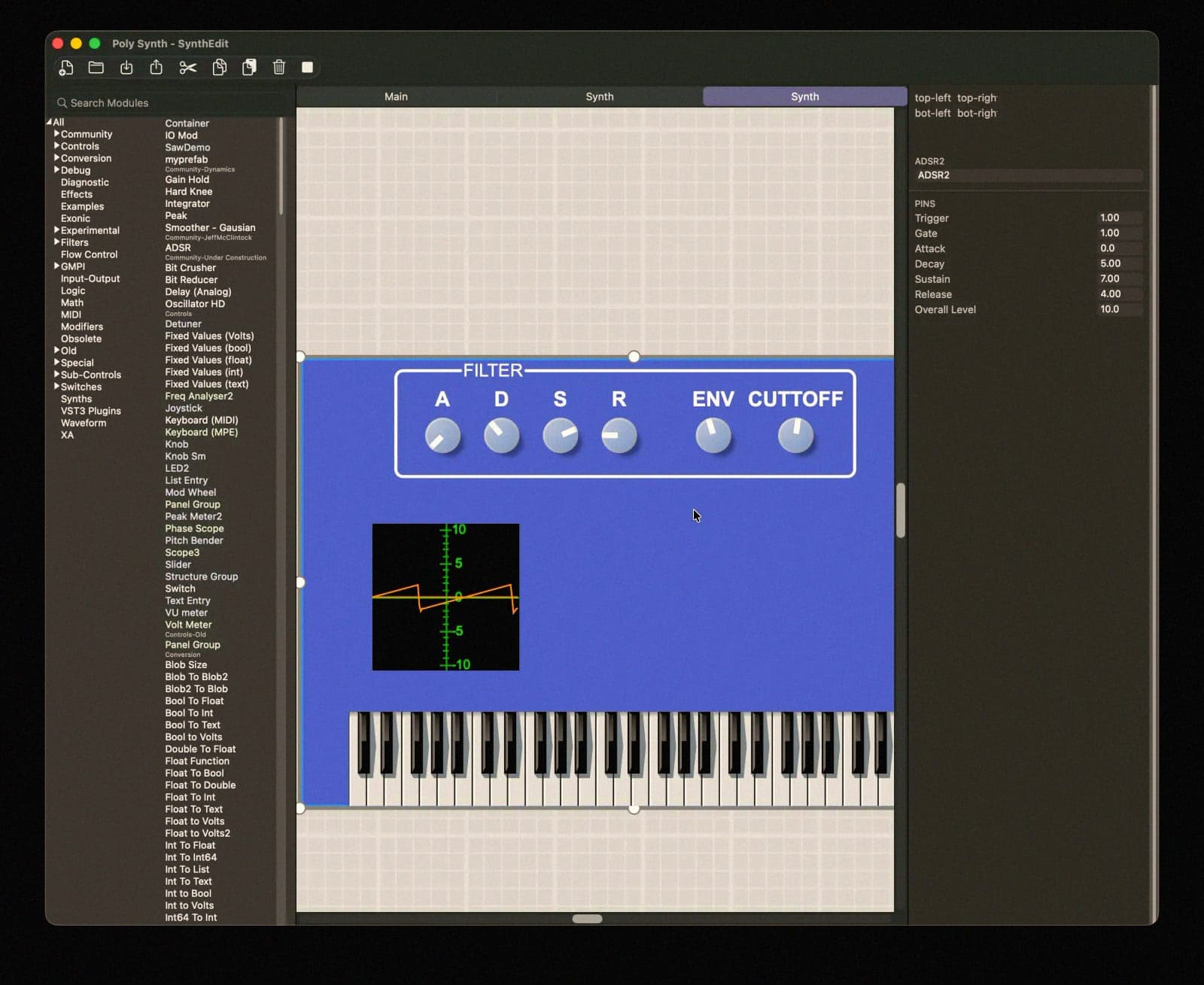
Jeff McClintock built SynthEdit as a Windows tool, and for the better part of three decades that's exactly what it stayed. Patch an oscillator into a filter, wire up an envelope, tweak the routing by dragging cables on screen, then export the whole thing as a real plugin without writing a line of C++: SynthEdit has done that job for hobbyists and small plugin houses since the late 1990s, provided you owned a PC. The huge slice of the production world running Logic Pro, Ableton Live or Bitwig on a Mac simply couldn't touch it.
Why did it take thirty years?
There's no dramatic story here, just a long-running platform gap that outlived several generations of Mac hardware. SynthEdit's no-code, drag-and-patch workflow made it a quiet on-ramp for a lot of small, scrappy plugin companies, the kind that start with one guy sketching a synth on a laptop before anyone hires a DSP programmer. Every one of those companies had to own or borrow a Windows machine to get in the door. Version 1.6, now in public beta, finally removes that requirement: SynthEdit runs natively on macOS for the first time, on both Apple Silicon and Intel hardware, packaged as a single signed .dmg installer.
What's actually new in 1.6?
The Mac build isn't a stripped-down port. SynthEdit 1.6 exports both VST3 and Audio Unit plugins, so a synth designed on a Mac drops straight into Logic's AU format or any VST3 host without conversion. The update also brings a new wavetable oscillator with a set of built-in test waveforms, saw, sine, square, noise and more, and an anti-aliasing mip at the top end so high harmonics don't fold into digital noise. Plugin windows are now resizable and DPI-aware, scaling cleanly when a host's display setting changes, a detail that matters once you're squinting at knobs on a 5K screen. McClintock also quietly added experimental Linux (x64) support in the same release, though he's upfront that it isn't feature-complete yet.
Who gets access, and what does it cost?
Existing SynthEdit license holders can install the 1.6 beta for free right now. Anyone new to the tool gets a 60-day free demo through SynthEdit's redesigned website, enough runway to patch together a first synth and see whether the visual, no-code workflow actually clicks before committing to a license.
It's a small update in headline terms, a version bump and a new operating system. But for a tool that has quietly seeded a chunk of the indie plugin market for thirty years, opening the door to every Mac-based bedroom producer is the kind of shift that shows up in next year's plugin catalogs, not this week's news cycle.