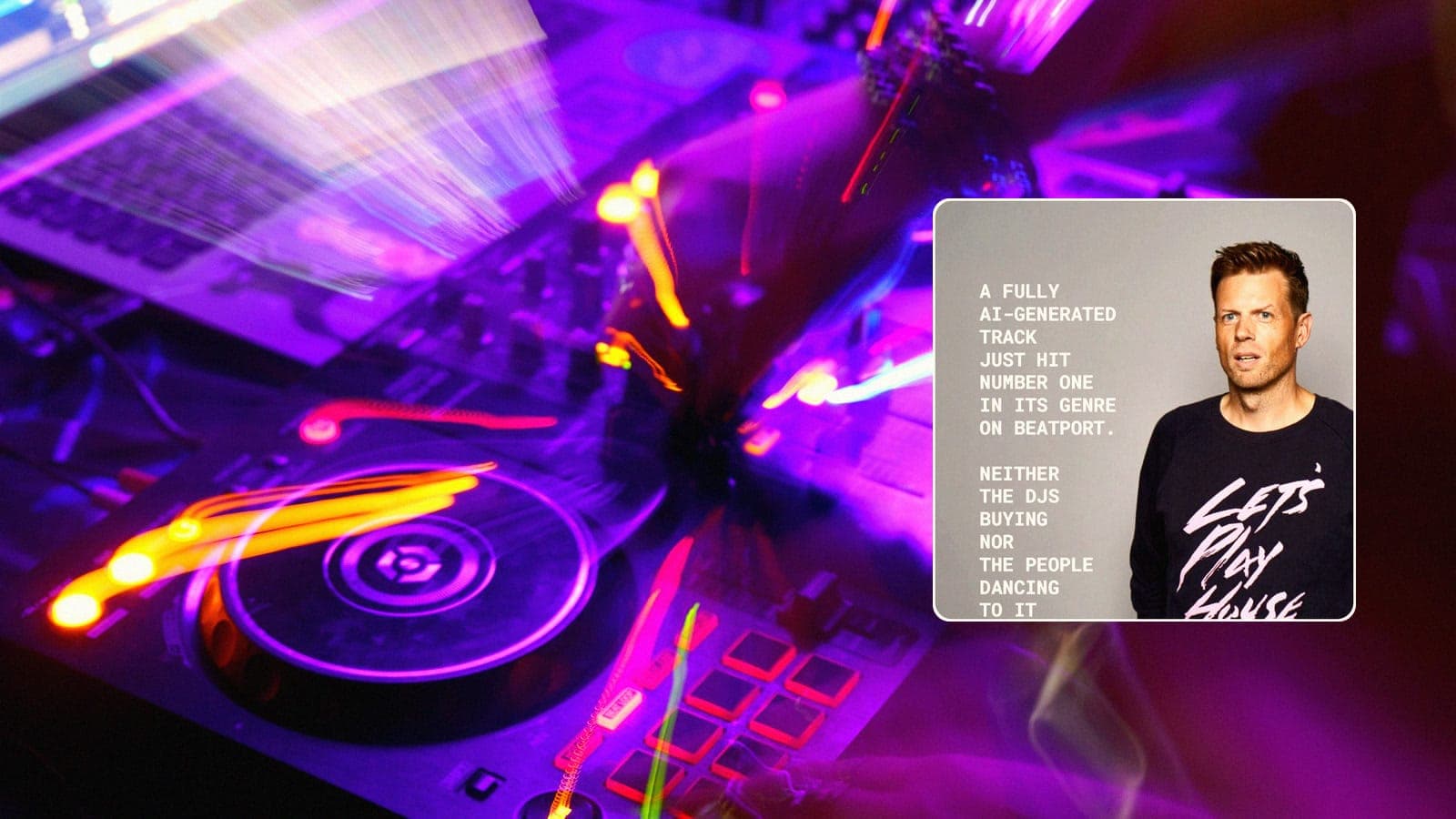
A track made start to finish by a machine just topped a Beatport genre chart, and according to Kevin McKay the people buying and playing it had no idea. The Glasgow Underground founder laid it out on Instagram on 24 June: a record had reached a Beatport No. 1 in its genre with no stems, no studio session, nothing but a Suno prompt behind it.
What exactly did Kevin McKay find?
McKay's account is blunt. "There was no stems. The whole thing was prompted by Suno," he wrote, describing a finished, chart-ready track generated from text. He was careful to say this wasn't "AI slop": "it's convincing, chart-topping music that sounds exactly like the rest." What rattled producers wasn't that AI exists, it was that this track cleared the bar undetected and sat at the top of its genre while real artists fought for the same spots.
He framed the post as a warning rather than a callout, declining to name the artist or the track. The mistake, in his telling, wasn't using the tool, it was hiding it: the music went out with no disclosure, and McKay says he caught it before a wider release.
"This isn't AI slop, it's convincing, chart-topping music that sounds exactly like the rest."
Why did nobody catch it?
Because there was nothing to catch it with. Beatport genre charts run on sales and DJ support, not on any check of how a track was made. A buyer scrolling the chart, a DJ dropping it at peak time, a dancer trying to Shazam it on the floor, none of them had a signal that the record came out of a prompt box. That is the uncomfortable part of the story: the gatekeeping the underground assumes is happening, on taste, on craft, on who actually made the music, simply wasn't.
What is Traxsource doing about it?
One day before McKay's post, Traxsource moved. On 23 June the store announced that from 1 July 2026 it will tag every release as either Human-Made or AI-Assisted, with fully AI-generated tracks flagged for removal. It is leaning on two detection firms, SH Labs and SoundPatrol, to sort uploads, and it is drawing a line between AI used as a tool, sound design, vocal processing, mastering, and tracks with no meaningful human authorship at all.
Co-founder and CTO Marc Pomeroy put it in grocery terms: "We envision a future where shopping for music is like shopping for food today, conventional products right next to certified organic." The store added that its community "deserves to know that the music they're buying, charting, and playing was made by real artists with real creative intent." It is the most concrete move yet from a specialist store, and it lands Traxsource alongside Apple Music, Deezer, Spotify and YouTube, all of which have pledged some form of AI labeling.