What was missing until now?
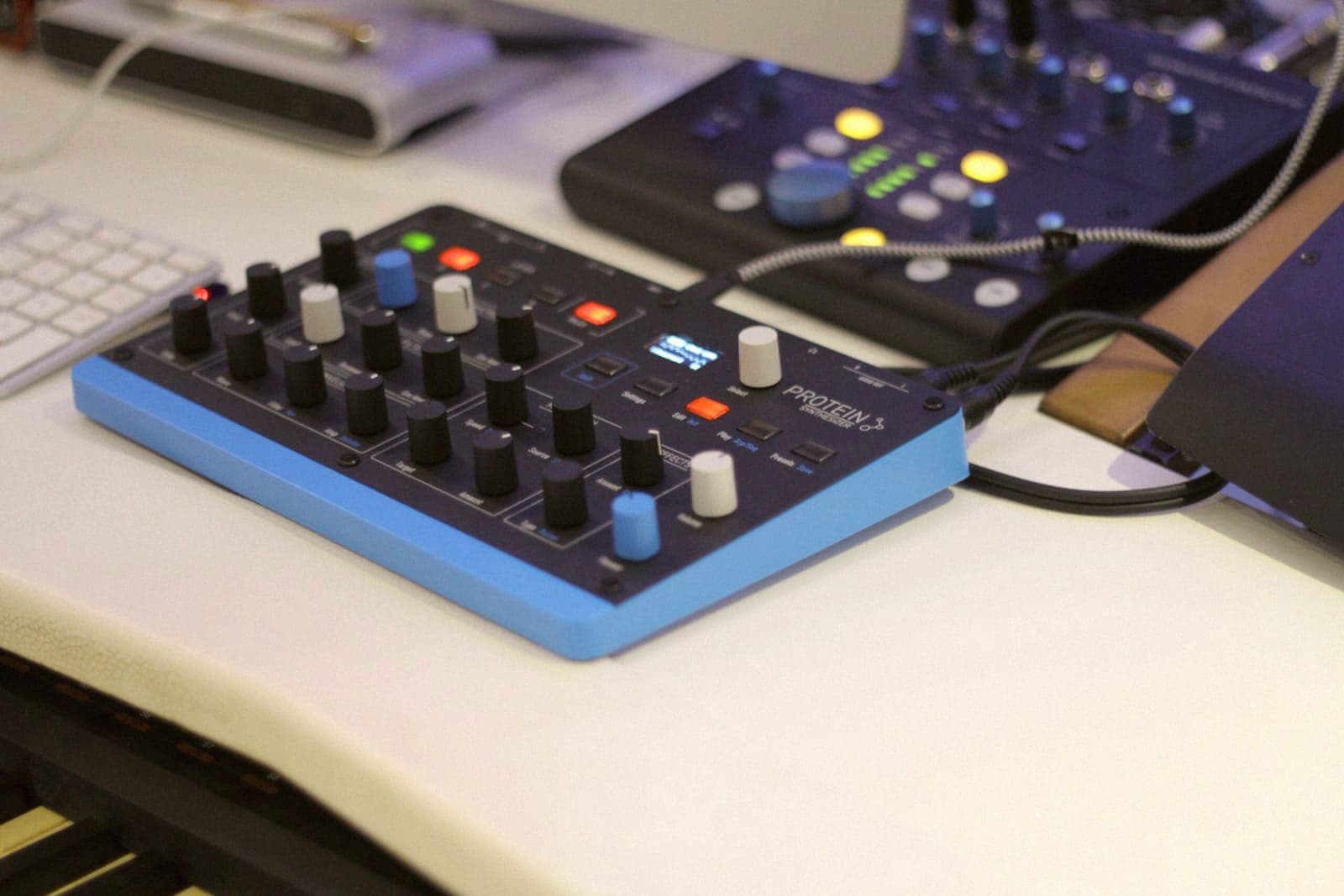
Waldorf's Protein arrived as one of the more charming hardware ideas the German synth maker has shipped in years: a compact, four-layer wavetable synth built around oscillators recreated from the 1989 Microwave, running at a 250kHz sample rate inside a box that barely clears a kilogram. What it didn't arrive with was a proper way to manage your own sounds. Protein owners who wanted to back up a patch, rename it, or shuffle it between slots had exactly one option: SysEx dumps, the decades-old MIDI data format nobody enjoys touching unless there's genuinely nothing else on offer.
What does Chutney actually do?
Waldorf's fix is called Chutney, a free standalone app for macOS and Windows that gives the Protein a real librarian for the first time. Connect the synth over USB MIDI and Chutney lays out all 360 onboard preset slots on screen at once, something the hardware's own tiny display was never going to do. From there it's drag and drop: pull a patch off the synth to archive it, drop one back on, reorder slots, give a sound an actual name instead of guessing at a handful of characters, or restore something deleted by mistake. It swaps SysEx for an interface a human can read without a manual.
Connect easily via USB MIDI, browse all 360 preset slots, drag and drop presets between your computer and Protein, rename, reorganize, delete and restore sounds.
Why does this matter for Protein owners?
It's not a glamorous update, and Waldorf isn't pretending otherwise: Chutney is librarian-only for now, no sound editing, no synthesis parameters, just preset housekeeping. But that housekeeping is the difference between a synth people patch cautiously, because losing a sound means losing it for good, and one people are willing to dig into. Waldorf has already signaled that a deeper editor, the kind that shapes sounds from the computer rather than just filing them, is coming down the line. Chutney reads like the first step of that plan, not the whole of it.