What exactly is Goldfinger?
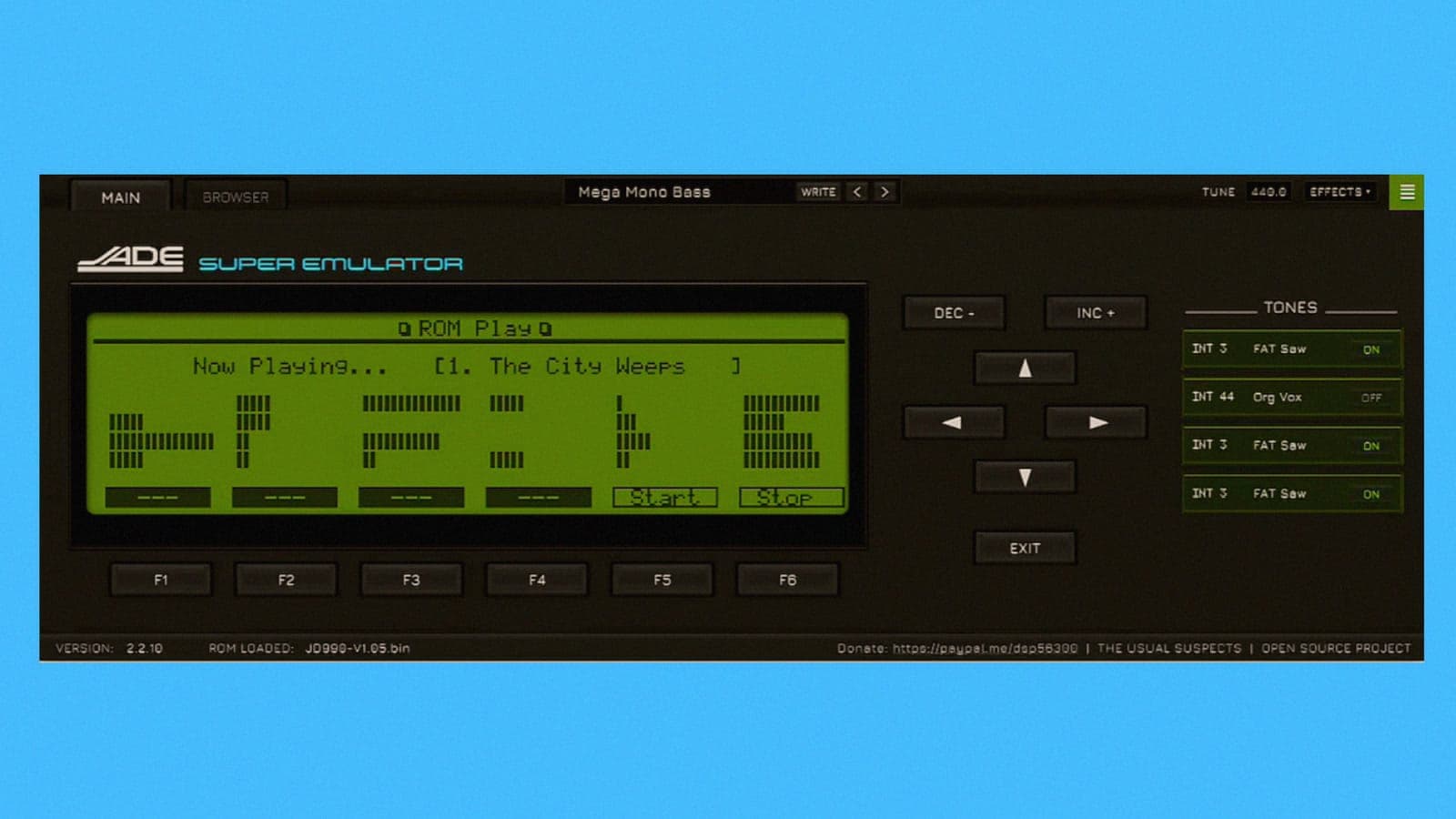
Goldfinger is a new plugin from developer The Usual Suspects that recreates the Waldorf Q, the German company's flagship virtual-analog synth from 2000, architecture for architecture. It's 16-timbral, built around three oscillators plus noise and ring modulation per voice, and pulls in the Q's PPG wavetable option, the same digital-oscillator technology that gave Waldorf's synths their signature sound. Under the hood sit dual multimode filters with FM and distortion, filter blending between parallel and serial routing, four ALDSDDR envelopes, three audio-rate LFOs, an Xmorph parameter-morphing function and eight effects processors covering chorus, flanger, phaser, overdrive, AM, delay and reverb. A built-in sequencer runs two 16-step banks, expandable to 256 notes, with per-step velocity and filter-cutoff control. The Usual Suspects is currently running it as a private beta, open to Discord supporters who pledge a minimum of £20.
Why does it need the original ROM?
Here's the catch: Goldfinger won't make a sound unless you feed it a ROM dump pulled from a real Waldorf Q. This isn't a clean-room recreation you install and play; it's a shell that reconstructs the Q's engine around code you have to own already, extracted from hardware you have to already possess. It's the same workaround console emulators have used for decades, where the emulator is legal but running it requires a BIOS you dump yourself from a machine you own. For a plugin maker without a licensing deal, that's the difference between a lawsuit and a grey-zone tool: The Usual Suspects isn't distributing Waldorf's firmware, it's asking you to supply your own.
Why does the Q's sound matter to house producers?
The original Q, and its PPG-descended wavetable engine, has been a deep house and minimal staple since the early 2000s for the same reason it's expensive and scarce now: it does a specific kind of digital-meets-analog texture nothing else quite replicates, somewhere between the harsh clarity of a PPG Wave and the warmth of true analog filtering. A used unit routinely sells for well over a thousand euros when one even shows up. Goldfinger doesn't lower that barrier so much as move it: instead of paying resale prices for the hardware, producers who already own a Q, or can access one, get to run it in a DAW, at the cost of proving they own it in the first place.