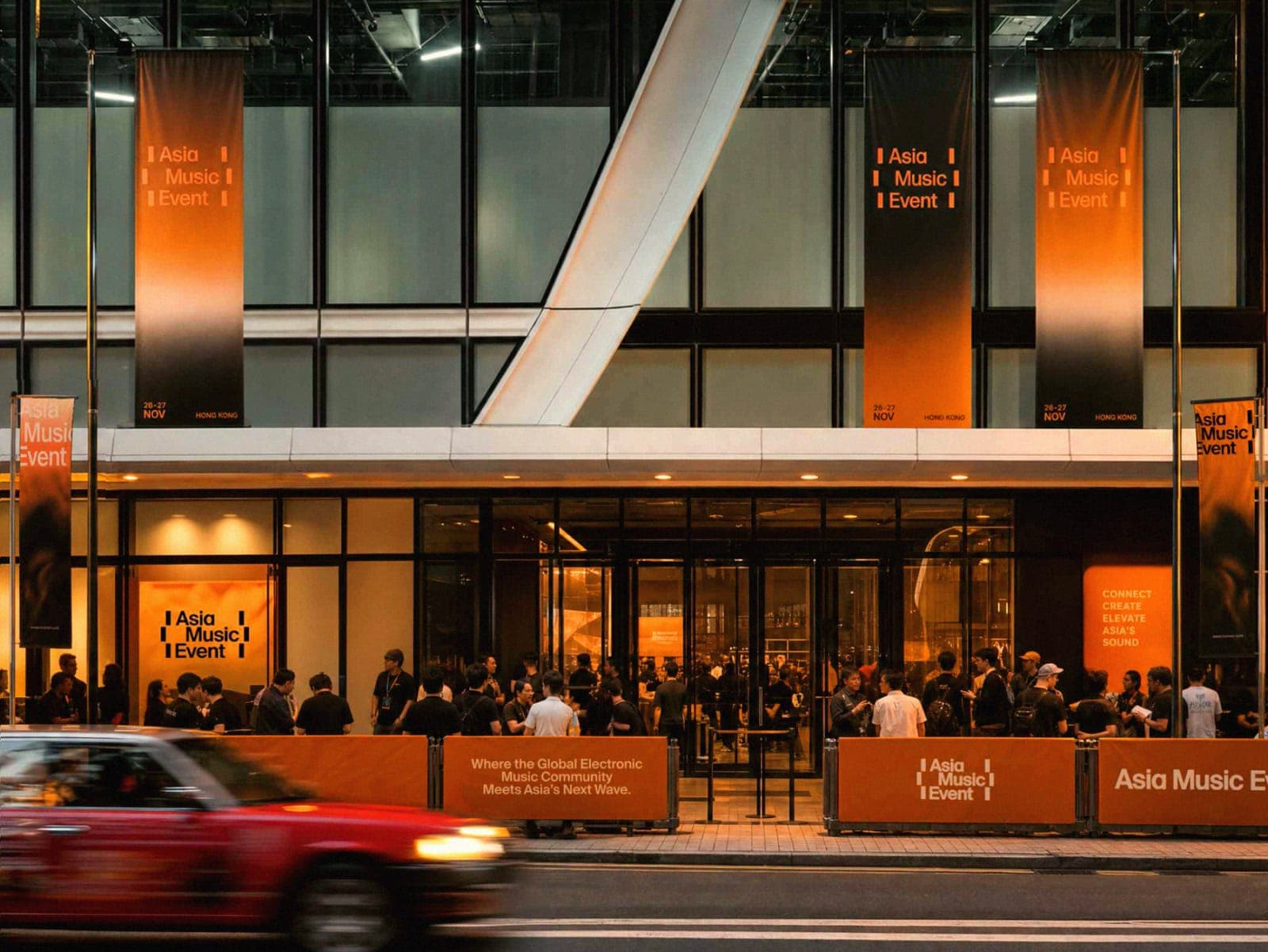
Asia has clubs, festivals and a growing roster of global-facing artists. What it has never had is its own trade floor: a single room where the people who book, sign, fund and tour electronic music across the region sit down with the people who run that business everywhere else. That changes on November 26 and 27, when the first Soho House Hong Kong hosts the inaugural Asia Music Event.
The numbers the organizers are pitching are deliberately trade-show-sized, not festival-sized: 1,000-plus industry attendees, more than 200 companies and over 50 sessions of panels, keynotes and workshops, according to Mixmag Asia. That is the scale of a serious conference, not a showcase bolted onto a party weekend, and the closing act is explicitly structured as the reward at the end of the business, a two-floor takeover rather than the main event.
Why does the guest list matter more than the party?
The speaker roster is the real story. Meindert Kennis, the former CEO of Amsterdam Dance Event, is on the bill alongside current ADE programmer Gary Smith, which means the organization that effectively invented the modern electronic-music conference model is sending its own people to help build Asia's version rather than just licensing a logo. Live Nation Electronic Asia's Jim Wong and Wonderfruit Music Director Ouissam Mokretar add the touring and festival-booking side, while Beatport CCO Alex Branson and Warner Music's Becky Yeung bring the distribution and major-label perspective.
That mix is the pitch: a two-way bridge, not a regional satellite event where Asian promoters pay to watch Western executives talk. Great Wall Festival co-founder Justin Zhou, Lisbon Dance Summit co-founder Jesper Skibsby, and DWP's Ayudita Hariadi sit on the same programme as the ADE and Live Nation names, putting festival founders from mainland China, Indonesia and Europe in direct contact with each other, not just with a single Western gatekeeper.
"Asia has a lot of incredibly diverse music scenes which come with challenges, but foremost with many exciting prospects."
What does Asia actually get out of it?
Access, mainly. A regional promoter or label head who wants a booking slot with a Live Nation Electronic Asia tour, a sync deal through Warner, or a Beatport chart push currently has to find that relationship through festivals, DMs or a lucky meeting at ADE itself. AME is designed to compress that into two days in Hong Kong, with the Hong Kong Tourism Board's backing signalling that the city wants to own this positioning the way Amsterdam owns ADE and Miami owns the Winter Music Conference circuit.
The organizers are explicit that this is a multi-year bet: AME's own stated goal is to become Asia's flagship annual electronic-music gathering within three to five years, not an instant rival to ADE. For now, the test is simpler, whether 200-plus companies actually close deals in that room, or whether it stays a networking exercise with good panels.
Why it matters
Every major electronic-music market eventually gets a conference that becomes its de facto power center, Amsterdam for Europe, Miami for North America. Asia's labels, bookers and festivals have never had that single annual room, which has kept deal-making scattered across individual relationships and one-off festival sidebars. A credible AME changes who Asian promoters and artists can reach without a Western intermediary.
What we think
The guest list is the tell here, not the attendee count. Getting a former ADE CEO and a sitting ADE programmer to show up in year one is a real signal that the global conference establishment sees Asia as underserved infrastructure, not a market to be managed from Amsterdam. Whether AME becomes essential or stays a nice-to-have networking weekend depends entirely on whether the deals actually get made in that room, and that will take two or three editions to prove, not one.
Sources: Mixmag Asia (September 1, 2026); WeRaveYou (November 6, 2026).