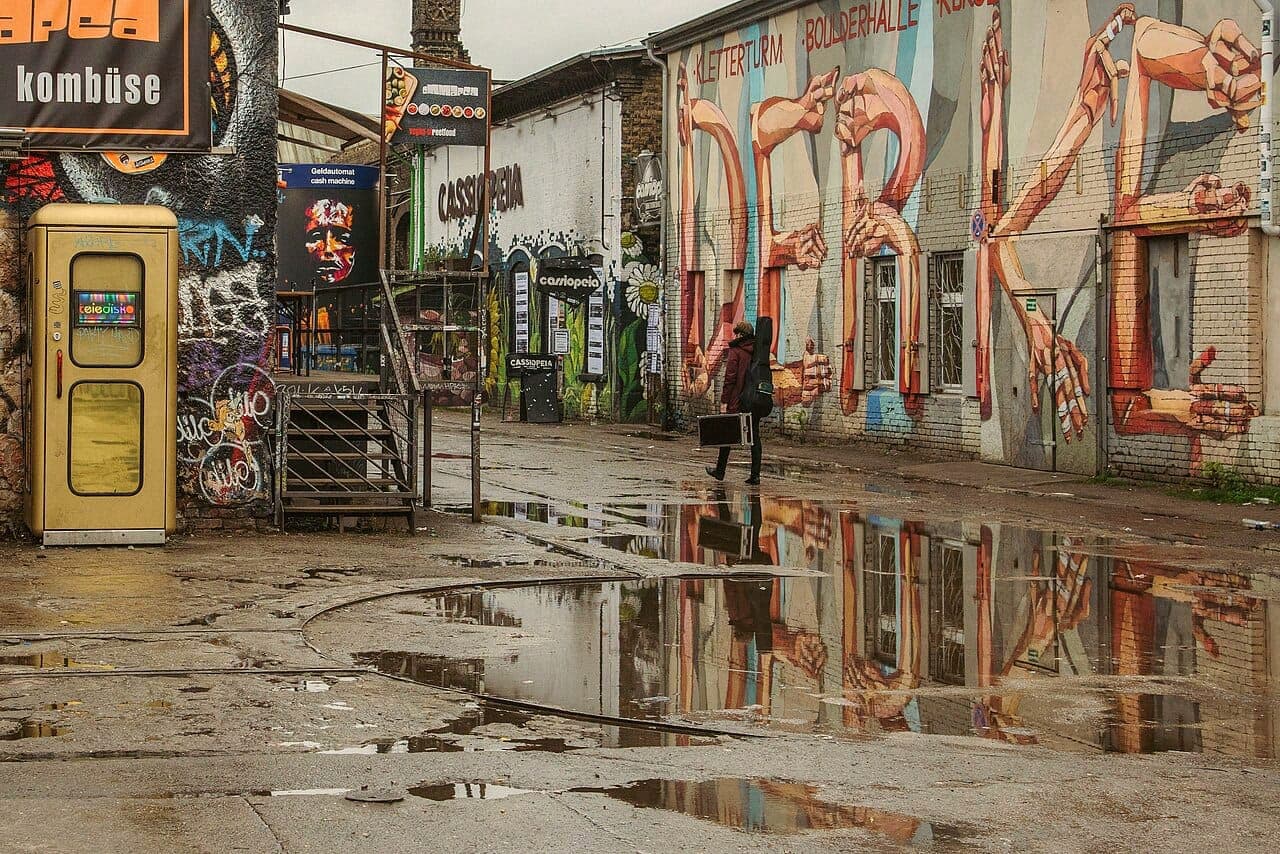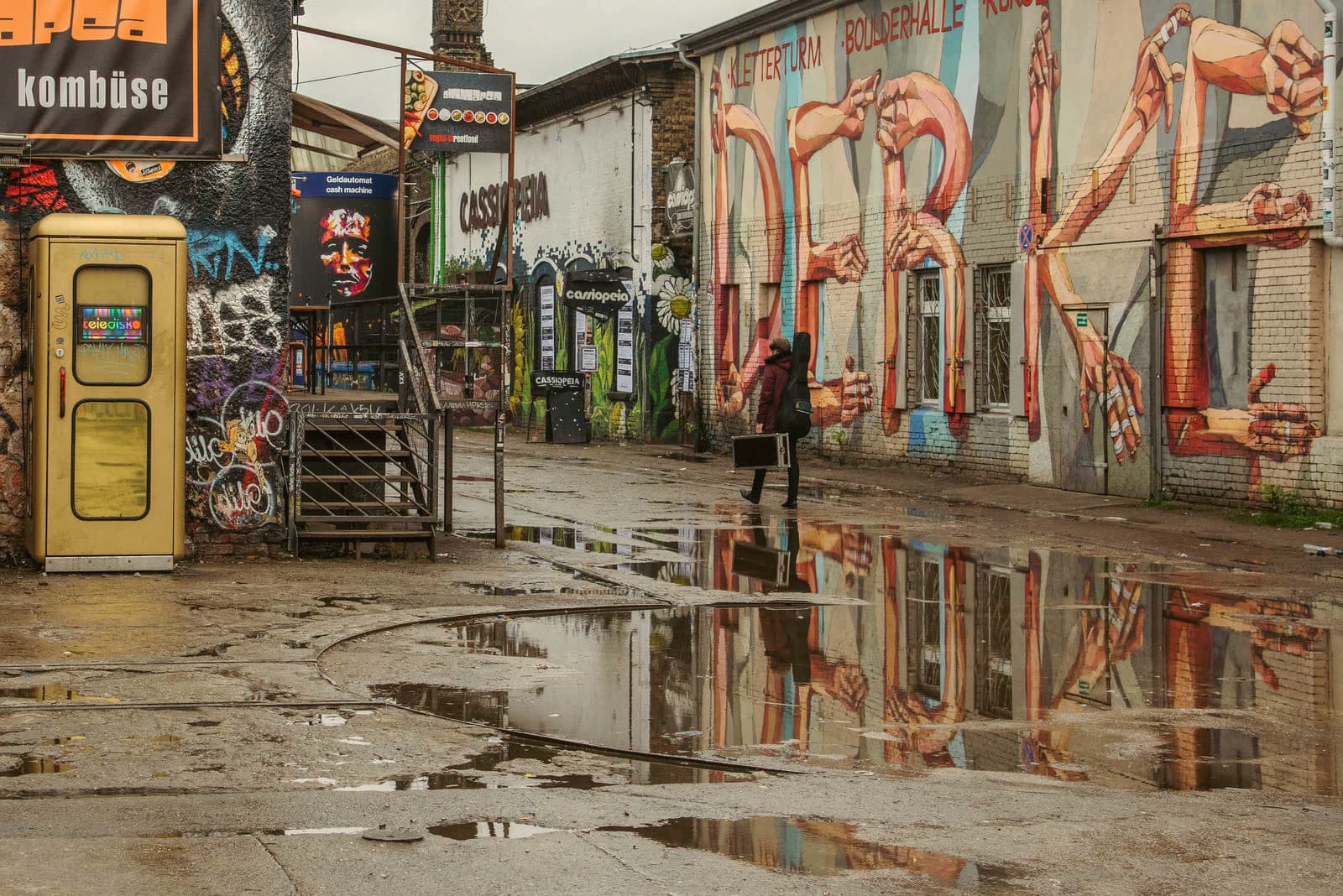
What does 'general tenant' actually mean for RAW-Gelände?
Since September 17, 2026, the Friedrichshain-Kreuzberg district government is the Generalmieter, the general tenant, of the entire RAW-Gelände site in Berlin. Practically, that flips who controls the subleases inside the former railway-repair yard: instead of a commercial landlord deciding who gets to stay and at what rent, the district itself now holds the master lease and subleases space to the venues and projects on site, including Cassiopeia and Crack Bellmer, the skate hall, and various youth projects. The district assembly approved the move on September 9, 2026, and it's backed by 2 million euros in public funding plus a further 1 million euro state reserve set aside specifically for maintenance.
It's a two-year interim lease with an option for a third year, not a permanent takeover of the site, but it's still one of the more direct interventions a German city government has made to keep independent club culture in place.
Why did it take months of uncertainty to resolve?
RAW-Gelände has spent years as exactly the kind of site Berlin techno culture keeps losing: former industrial land in a gentrifying district, sitting on real estate that developers would very happily turn into something more profitable than a skate hall and two clubs. That pressure had put Cassiopeia and Crack Bellmer's future in genuine doubt, the kind of slow-motion threat that has already closed or displaced venues elsewhere in the city over the past decade. The district stepping in as general tenant removes the commercial landlord from the equation entirely for the length of the lease, a different kind of protection than the usual scramble to raise a venue's profile enough to make eviction politically costly.
What's still unresolved?
Berlin's Clubcommission welcomed the deal but was clear it isn't the finish line: it's pushing for long-term sound insulation and noise-emissions protections for Cassiopeia and Crack Bellmer, the kind of infrastructure fix that outlasts any individual lease and that neither a two-year nor a three-year deal guarantees on its own. And the lease itself is finite. Two years, with an option for a third, buys the site real breathing room and sets a precedent other German cities under similar development pressure could look at, but RAW-Gelände's long-term future is still being negotiated, not settled.