Gashouder spent 21 months closed, and when Amsterdam's old gas holder reopened on October 30 with Dutch artist Mula's "DOMUS Live", it came back as a different kind of venue entirely. The room is the same cylindrical steel shell from 1885. The business underneath it is not.
What actually changed underground?
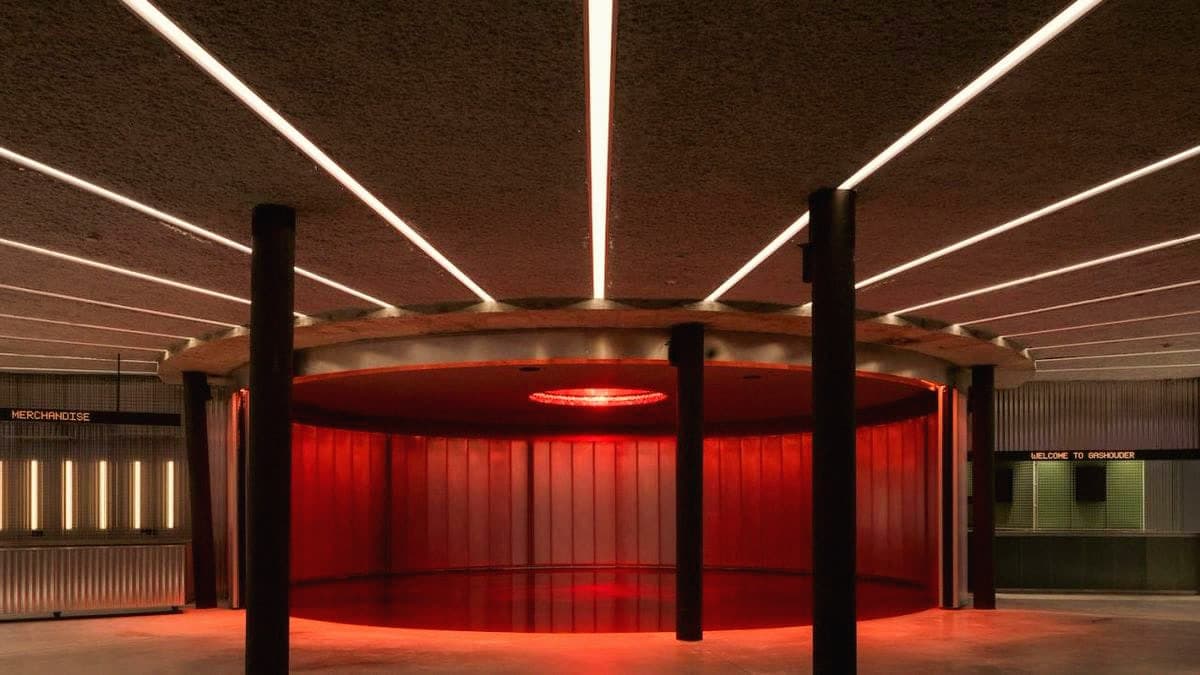
The renovation, which began in January 2025 after a pre-opening season running club nights from June through October while the real construction continued below, dug an entirely new level beneath the monument itself, matching the full footprint of the circular hall above. Cloakrooms, lounges, kitchens and artist dressing rooms all moved down there, out of a room that for decades had to cram every function into one ground-floor circle. The roof got reinforced for acoustics and sound insulation too. Above ground, nothing about the monument changed: the exposed steel frame, the roughly 100-metre diameter, the 14.5-metre ceiling, the 2,500 square metres of floor, all stayed exactly as industrial as when the building stopped holding gas in 1967. Capacity holds at 3,500 plus.
"Our ambition was never to reinvent the monument, but to prepare it for generations to come," said Lennart Rottier, the co-owner who led the redevelopment. "By literally creating space beneath the building, we have been able to preserve Gashouder's original character while introducing an entirely new experience."
Why does going independent matter more than the concrete?
Here's the actual pivot: Gashouder now runs its own curatorial team instead of renting the hall out to whichever promoter booked it that weekend. That's a structural change, not a cosmetic one, and it shows immediately in the lineup. Of the first 49 shows booked since reopening, only 7 carry a dance-music tag. The rest spans Bonobo, Skepta, Overmono, Puscifer and JPEGMAFIA, with a 2027 date already locked for the Royal Concertgebouw Orchestra performing Stravinsky's "The Rite of Spring" inside the same steel cylinder that hosted Awakenings raves in the 1990s.
"We want to create a venue with a distinct identity," said Boye 't Lam, Gashouder's managing director. "Gashouder has a scale and character unlike anywhere else in Amsterdam." He added the venue wants "to become a cultural anchor within the ring of Amsterdam", language that reads less like a club relaunch and more like a kunsthal with a soundsystem.
"Gashouder has a collective memory. You don't have that with a black box venue."
That's Amsterdam Dance Event's own framing of the building, and it cuts to what's actually at stake. ADE has leaned on Gashouder for decades of its programming, and the venue's history runs through Holland Festival's rediscovery of the space in the 1990s and Awakenings' techno nights that followed. Mercedes Coco, ADE's head of brand and partnerships, put it more plainly: "We welcome people here who have been making memories for 30 years." The opening weekend itself leaned on that memory bank, with The Opposites selling out October 31 and November 1 right after Mula's launch show.
So is this still a dance music room?
Technically, yes: it still has the sound insulation, the floor space and the booking slots for club nights, and dance acts will keep playing there. But a venue that curates its own calendar and stacks it with an orchestra, a grime MC and a nu-jazz producer ahead of straight techno bills is telling you where its ambitions sit. Gashouder isn't betting its future on one genre's next cycle. It's betting on being the room, whatever fills it.