What did Hügelton actually clone?
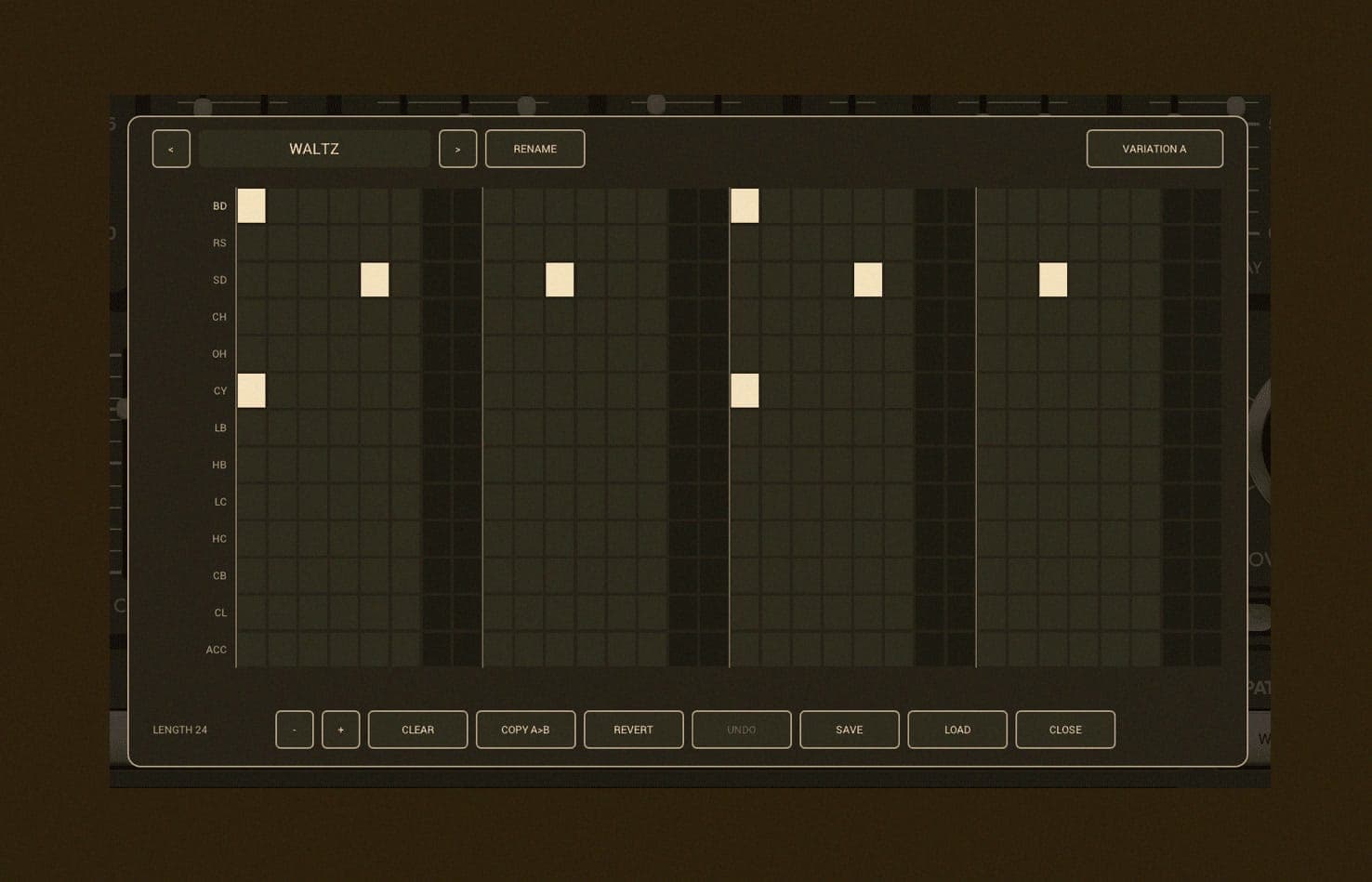
Trix, out August 22, 2026, recreates the Roland TR-66 Rhythm Arranger, a box that came out in 1973, five years before Roland's CompuRhythm CR line and the better part of a decade before the TR-808. Roland never called it a drum machine, and for good reason: the TR-66 gives you 18 fixed drum patterns built from kick, snare and hihat, which you then layer against nine style buttons along the bottom, waltz, cha-cha, bossa nova, rhumba among them, for 27 combinable patterns and three variation modes (A, B, Auto) across 11 analog voices. There is no programming a beat from scratch. You pick and combine. Depeche Mode and Roxy Music both ran one in the studio, which is about as much attention as the TR-66 has gotten in fifty years.
How do you emulate a machine with almost nothing written about it?
By opening one up. Hügelton's process for Trix started with an original 1973 unit on the bench: circuits traced, measured and analyzed one voice at a time, then rebuilt as real time DSP models rather than sampled and looped. Trix ends up with 12 independently synthesized voices, bass drum, rim, claves, snare, hihat, cymbal, conga, bongo, cowbell and a low conga the original never had, plus tuning, decay and character controls per sound that the 1973 hardware simply didn't offer. On top of the original arranger patterns, Trix bolts on a step sequencer and a pattern editor, plus Noise, Metal, Master Tone and Overdrive controls. The developer says generative AI tools handled some of the coding, while the circuit analysis, sound design and interface were done by hand, an honest enough split for a one person operation working this deep in the archive.
Why does one small studio matter here?
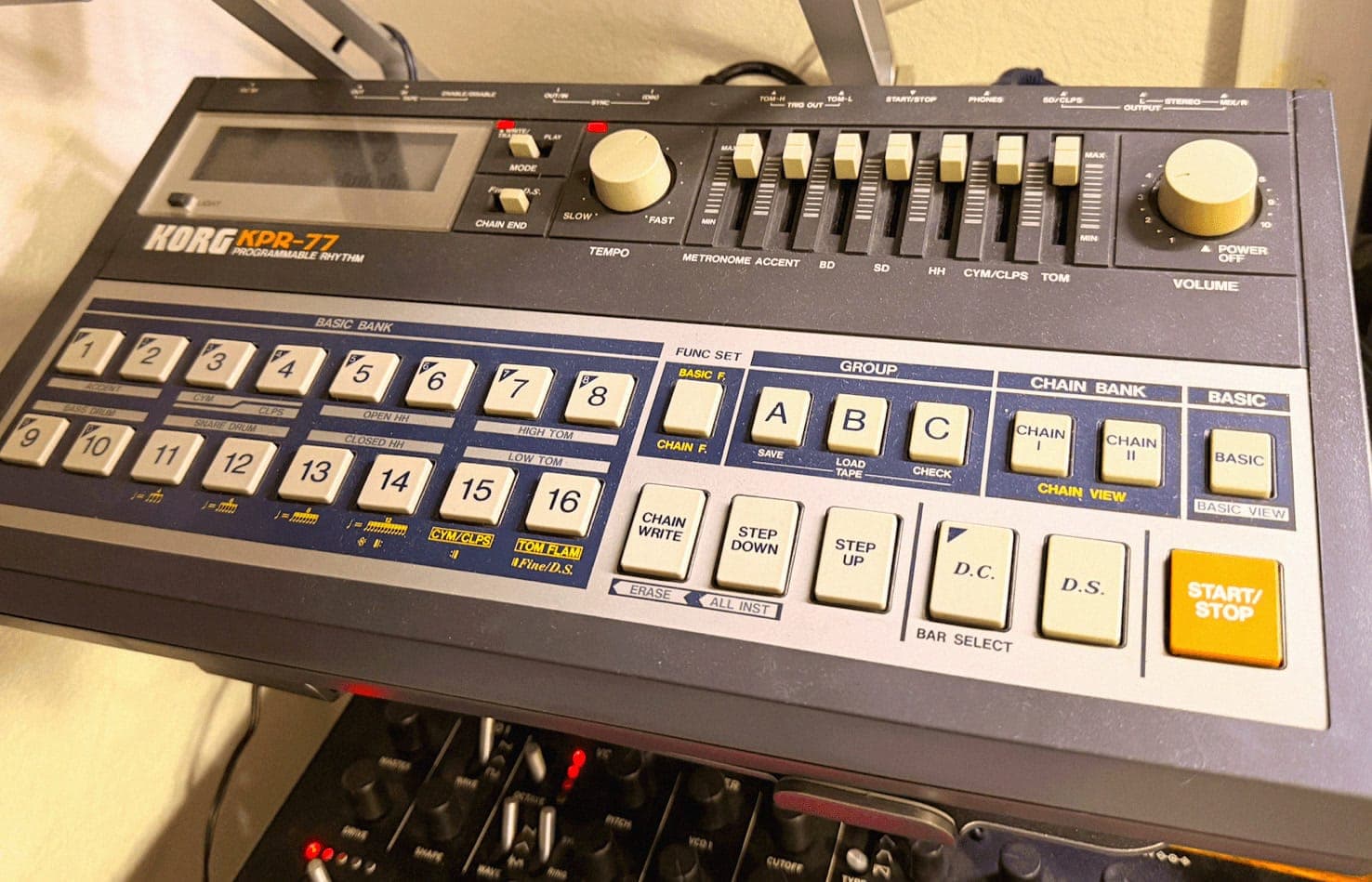
Because Trix is not a one off. It follows Kepra, Hügelton's emulation of the Korg KPR-77, an analog rhythm machine from 1983 that was essentially Korg's answer to the TR-606, released just weeks earlier. Two obscure, unloved drum machines cloned by the same small outfit inside one month, each priced at three dollars rising to five, the cost of a coffee rather than a plugin bundle. The big plugin houses keep circling the TR-808, the TR-909 and the CR-78, machines already cloned a dozen times over. The TR-66 and KPR-77 sat forgotten precisely because they were never going to sell a bundle on their own. That gap is where independent developers like Hügelton actually move, and it is good news for anyone chasing groove box texture that hasn't already been sampled to death.