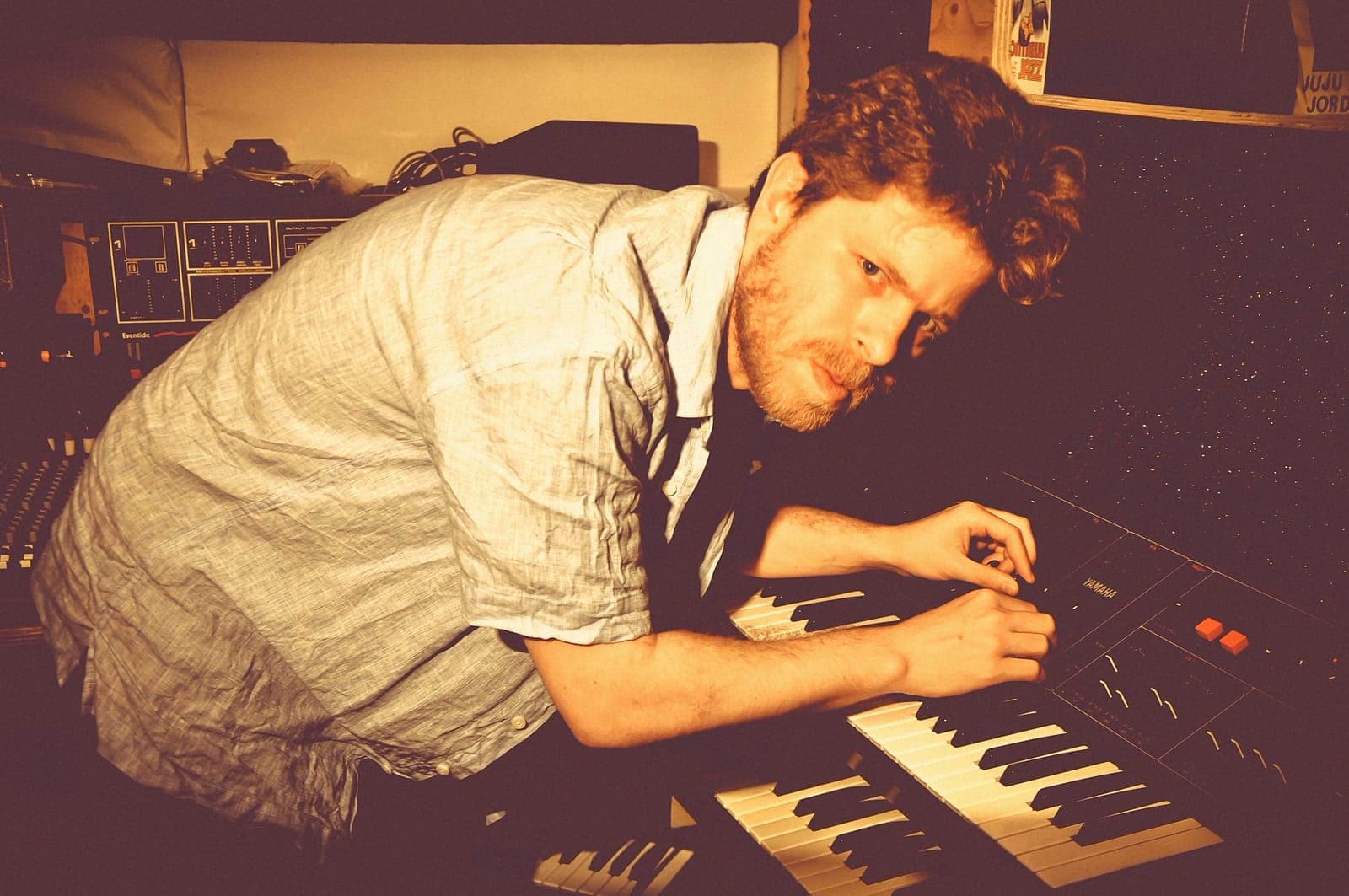
Why is a Juju & Jordash man playing with a saxophonist?
Because the two worlds were never as far apart as the scene pretends. Jordan GCZ, the Amsterdam-shaped, now Toronto-based producer behind half of Juju & Jordash and a third of Magic Mountain High with Move D, has spent his career in the long-form, hardware-jam corner of dance music, where a track is a take, not a grid. His Mei Honeycomb project with saxophonist Jeff Hollie pushes that instinct further, swapping some of the machines for breath.
The album, Clairvoyant Dimensions, came out in May on the Belgian label Meakusma. It is five tracks of improvised, mostly hardware sessions cut in Amsterdam before Jordan moved continents, with the best live moments kept and almost nothing overdubbed. One piece brings in Ilya Ziblat Shay on double bass and electronics. It is closer to humid, contemplative ambient than to a club record, and the saxophone is the point, not a garnish.
Why does techno still flinch at a saxophone?
This is the part that travels. In the interview, Jordan is blunt about a snobbery that runs both ways. Most of the techno crowd he met, he says, "hated saxophones ... unless it's a synth saxophone," while plenty of jazz musicians have long dismissed electronic music as primitive. He remembers genuine backstage mockery the first time Hollie walked out with a real horn at a Dekmantel show, and likens the reaction to the way prog-rock fans once sneered at punk.
A real saxophone on a techno stage still reads as a provocation. That tells you more about the audience than the instrument.
The taste line is real. Dance music spent decades defining itself against the live-band, virtuoso tradition, so an acoustic instrument played by hand can feel like a betrayal of the machine. But house and techno were always magpie forms, built on disco strings, jazz-funk keys and gospel voices. The horn is not the intruder here. The reflex against it is.
What does the record actually sound like?
Slow, warm and a little narcotic. Hollie's saxophone melts into the synth haze rather than soloing over it, so the divide the interview describes is, on the record itself, already settled. This is not fusion in the slick 1980s sense; it is two improvisers listening hard in a room, with the tape running. For anyone who came up on Magic Mountain High's marathon jams, it will feel familiar, just with more air in it.
That is the quiet argument Jordan is making. The barrier between jazz instrumentation and electronic process is a habit, not a law, and the people still policing it are guarding a border that the best players crossed long ago.