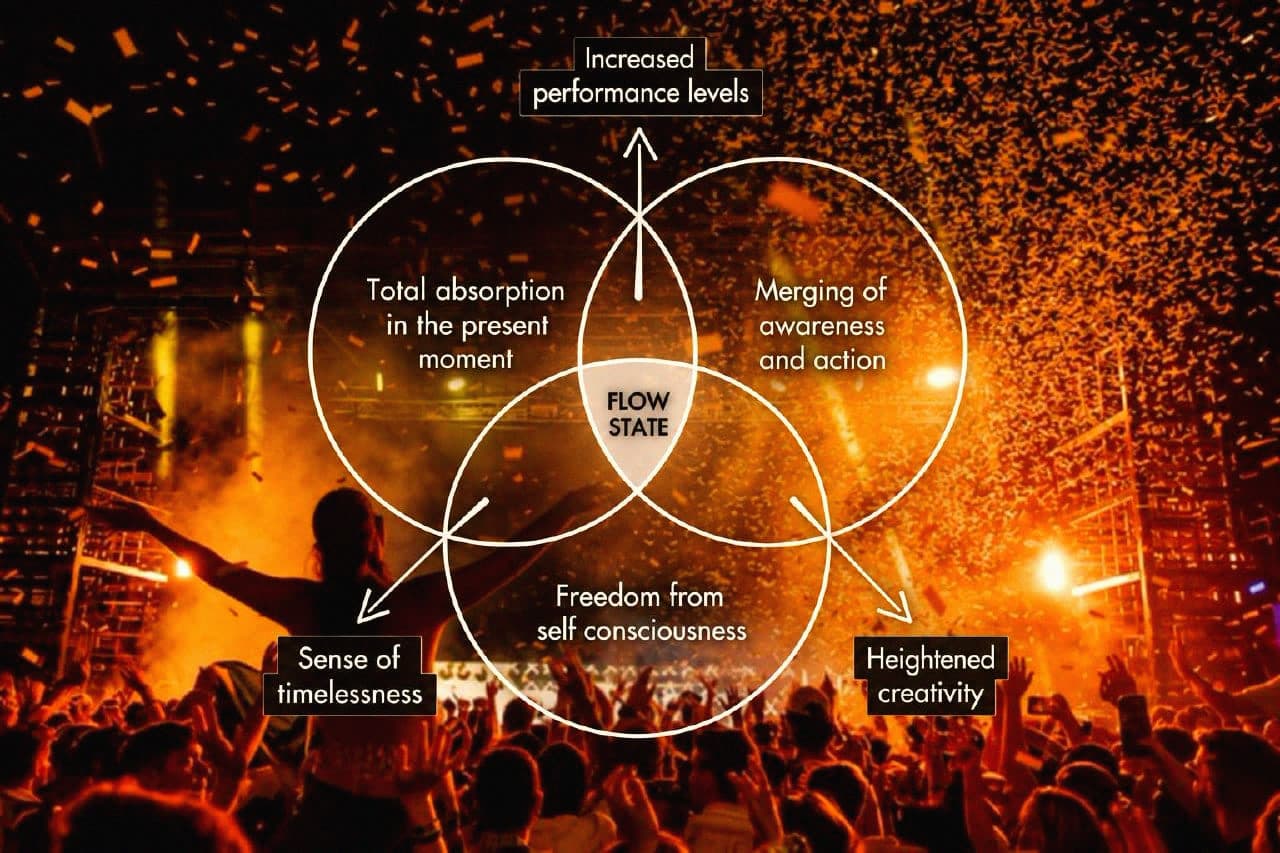
Flow is a mental state where you become so focused on what you are doing that you stop overthinking, lose track of time and your actions start to feel natural. Psychologist Mihaly Csikszentmihalyi described it as a state where challenge, skill and concentration come together.
DJs can enter flow when they have enough time to settle into the set, understand the room and stop thinking about every small decision. They start reacting naturally to the music and the crowd. Instead of planning every move, they begin to feel what should happen next.
Producers can experience the same thing in the studio. After working for a while without interruption, they may stop judging every sound and start following ideas more freely. Hours can pass without them noticing. The technical skills are still there, but the creative process starts to feel less forced.
Musician Kenny Werner writes about a similar idea in Effortless Mastery. His view is that musicians perform best when they stop trying so hard to control everything. The goal is to practise until your skills are strong enough that you can relax, trust yourself and let the music happen.
That does not mean flow requires less skill. It usually requires more. Think about learning to drive. At first, you consciously think about every movement. Years later, you can drive a familiar route almost automatically. DJs and producers practise until many technical decisions become instinctive, leaving more mental space for creativity.
This is why flow can be so important for great DJ sets. When the DJ stops worrying about every transition and trusts their experience, they can take more risks, react more deeply to the crowd and follow unexpected ideas. The performance becomes less about following a plan and more about discovering where the music can go.
Longer sets can help because flow usually takes time to develop. A DJ may need to understand the sound system, the energy in the room and what the crowd responds to before they fully relax. A one-hour set can be great, but more time gives the relationship between DJ and dancefloor more room to grow.
Interruptions can break that state. Conversations, selfies, track requests or people constantly trying to get the DJ's attention force their brain to switch away from the music. Flow depends on sustained focus, so protecting the DJ's space is not just about etiquette. It can directly affect the performance everyone came to hear.
The crowd can enter that loop too. The DJ plays something, the crowd reacts, the DJ notices and responds. Eventually, both sides begin trusting each other. The DJ becomes more adventurous, the crowd follows, and the room can start to feel like one connected experience. Clubbers often call this simply “the journey.”
At its deepest level, flow may be the point where mastery meets surrender. You know your craft well enough to stop controlling every second of it. Michael Jackson, Prince and many other artists have described music as something that seems to come through them. Maybe flow is what makes that kind of openness possible.
Longer sets, fewer interruptions and years of mastering your craft can create the space to “let go and let God.” You still know what to do, how to do it and when, but you no longer need to think about every step. That trust and openness is often where the best art happens, for the DJ and the crowd.