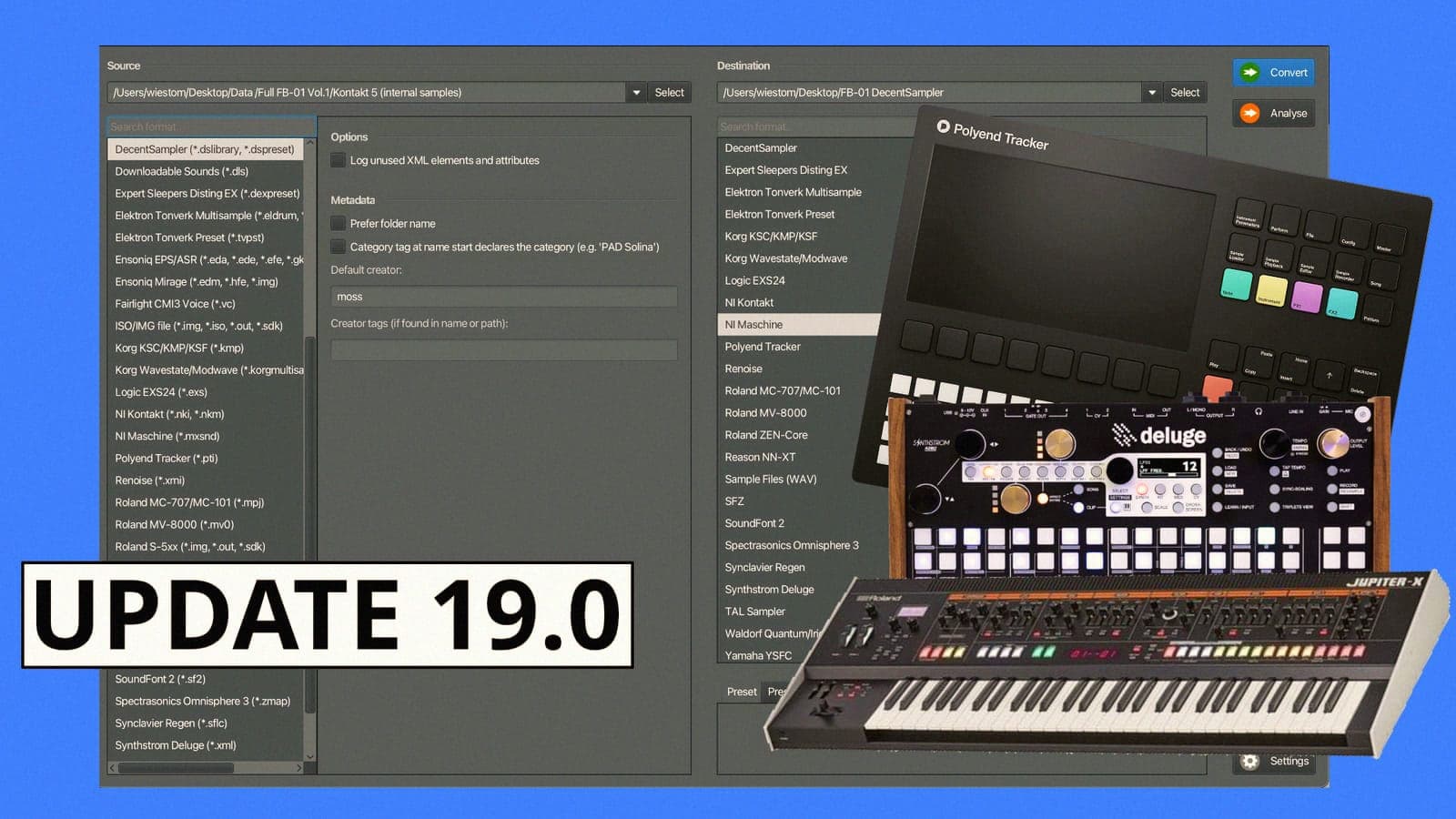
Sample formats don't talk to each other. A bank built for a 1990s E-mu Emulator has nothing in common with a project folder from a Roland SP-404mk2, and moving sounds between the two has meant manual re-sampling, guesswork, or just giving up. ConvertWithMoss, the free open-source converter built by German developer Jürgen Moßgraber, exists to close exactly that gap, and its version 20 release, out August 2, is its biggest format expansion yet.
What actually changed in version 20?
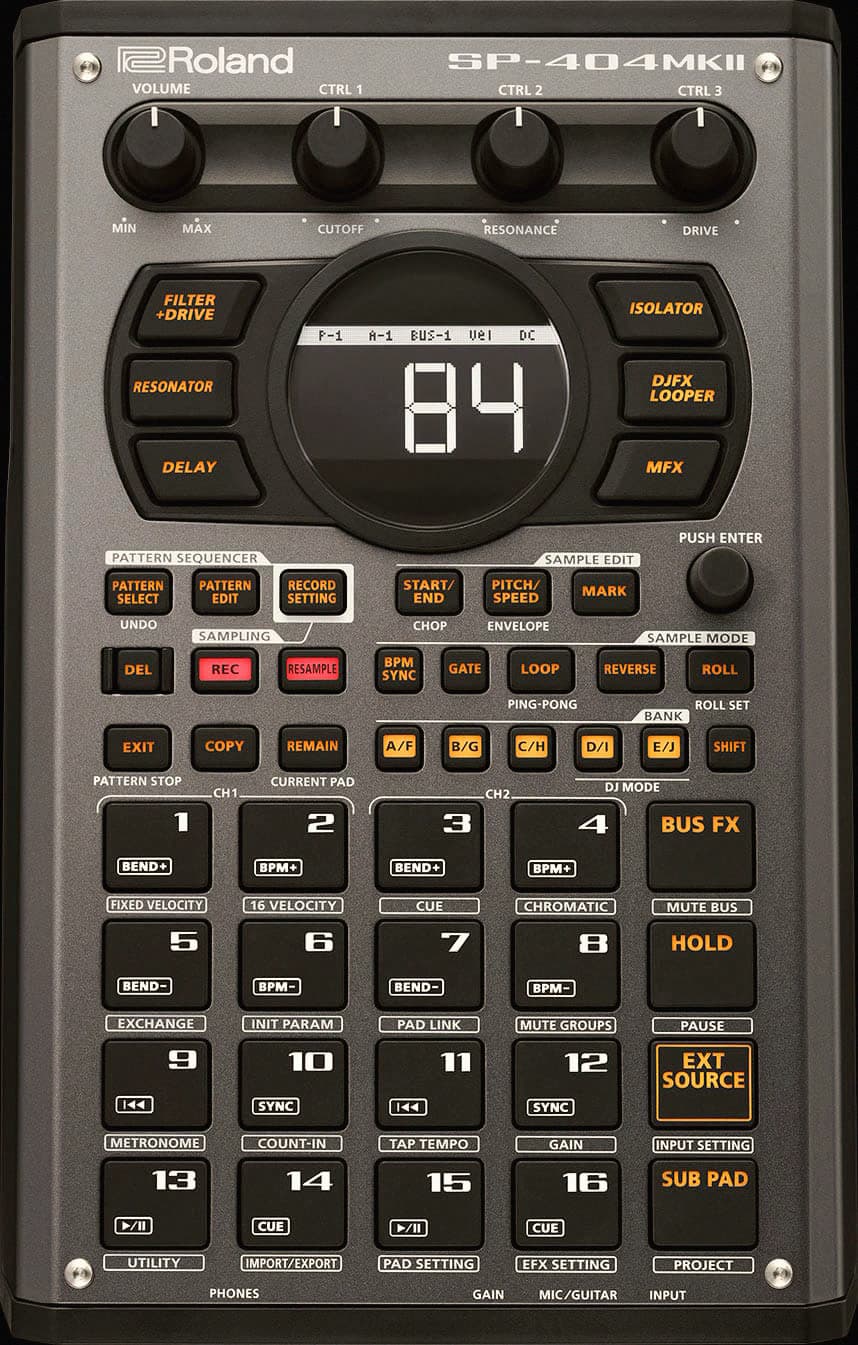
The headline addition is native read and write support for the Roland SP-404mk2, the pad sampler that has become close to standard kit in beatmaking and DJ sets over the past few years. Each bank of pads on the unit now converts directly into a multi-sample the tool can move elsewhere. On the other end of the timeline, ConvertWithMoss added support for E-mu's Emulator III, IIIX and ESI bank formats (E3B, E3X, ESI), plus the later Emulator IV (E4B) and Emulator X (EXB, with EBL sample pools). The EOS-based E-mu machines stored their libraries on removable media, so the tool can now read banks straight off CD-ROM and hard-disk disk images (ISO, IMG, HDA) instead of requiring the physical drive. Arturia's software recreation of the Synclavier also gets dedicated support, reading and writing SYNX preset and bank files, and Roland's older S-550 format gains read-only CD-ROM import.
Sound design got an upgrade too: a new LFO modulation module adds pitch vibrato and volume tremolo, each with adjustable rate, depth and delay, and it carries across the output formats ConvertWithMoss already writes to, including SFZ, DecentSampler and SoundFont 2. On the workflow side, a new toggle switches the tool between batch-converting whole folders and picking single files, and a redesigned contents dialog lists a bank's zones and key ranges before you commit to converting it.
Why does bridging these two ends of sampler history matter?
The SP-404mk2 sits in working setups worldwide precisely because it's cheap, compact and everywhere in current house and hip-hop production. E-mu's Emulator line, by contrast, is the sound baked into decades of sample-based dance music, still prized for libraries that never got officially reissued in any modern format. Until now, getting a sound from one world to the other meant re-recording it by ear or hunting for a converter that handled just one side of the trade. ConvertWithMoss removes that bottleneck for free, which matters more in a scene where plenty of producers are working from a laptop and a couple of hardware boxes, not a studio budget for proprietary format bridges.
Who is actually behind this tool?
ConvertWithMoss is a one-developer project: Jürgen Moßgraber builds and maintains it as free, open-source software under the LGPLv3 license, distributed for macOS, Windows and Linux through his own site, mossgrabers.de, with source and release notes on GitHub. The tool already handled formats for Akai's MPC and Force, Native Instruments' Kontakt (NKI), Bitwig, Roland's Wave/Modwave/KMP files and 1010music's Blackbox, Bitbox and Tangerine samplers before this update, and the KVR Audio forum thread tracking its development runs to dozens of pages of producers reporting formats they'd like added next.
A free converter maintained by one developer is now doing the format-bridging work that entire hardware ecosystems used to lock producers out of.