How did Halim El-Dabh pioneer tape music in Cairo?
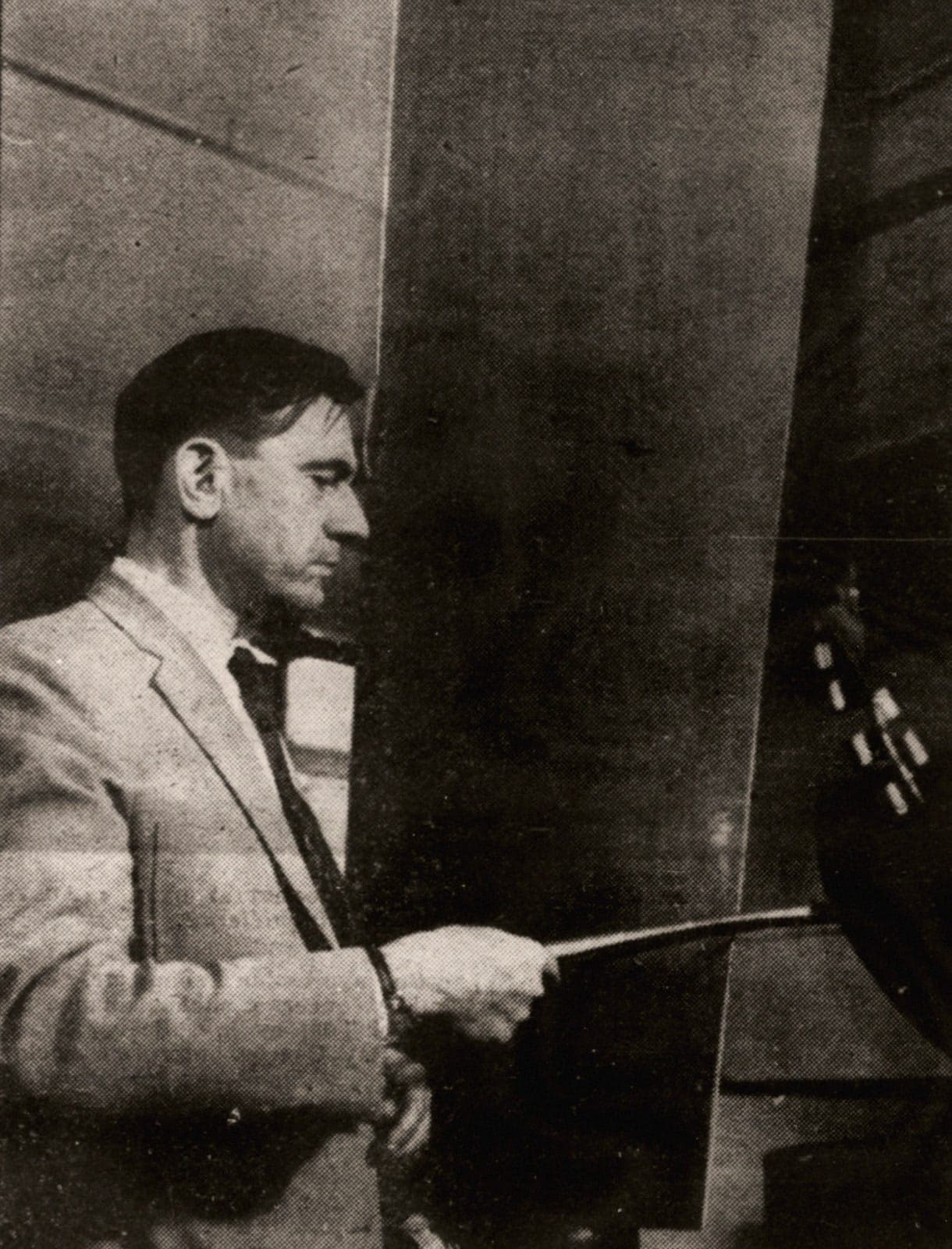
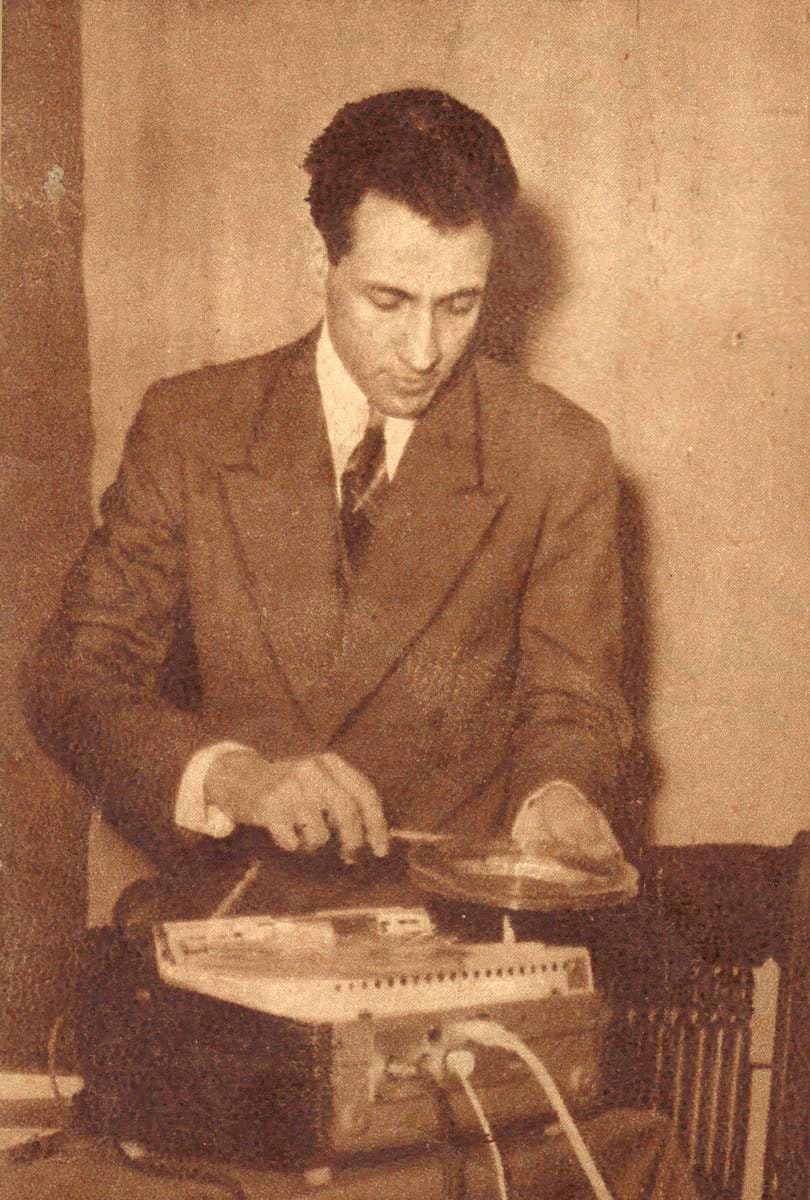
In 1944, the Cairo-born composer Halim El-Dabh borrowed a wire recorder from the offices of Middle East Radio and took it to a Zaar, a public healing and exorcism ceremony built on trance, chanting and drumming. To get close enough, he reportedly disguised himself in a niqab to record women's voices up close. Back at the station, he manipulated the recording by hand: stripping out the fundamental tones to isolate the overtones, reshaping the reverberation, layering clashes and beats until the ceremony's sound became something else entirely. He titled the result Expression of Zaar and presented it that same year at a Cairo art gallery.
“I concentrated on those high tones that reverberated and had different beats and clashes.”
El-Dabh later ran the tape studio at Columbia-Princeton's Electronic Music Center in New York from 1959 to 1961, then taught music and Pan-African studies at Kent State University for over two decades. He died in 2017 at 96, credited by many historians as one of electronic music's true pioneers, a legacy built entirely from a wire recorder, a Cairo street ceremony and his own ear for sound.
What did Africa's other pioneers build before it had a name?
Cairo wasn't alone. Francis Bebey, a Cameroonian writer, broadcaster and musician working out of a Paris apartment, started distorting a sanza (thumb piano) electronically in 1974 and released his first synth-and-keyboards album, Savannah Georgia, the following year. By 1976, on Fleur Tropicale and La Condition Masculine, he was recording everything himself, sanza and flute set against synthesisers, electric keyboards and programmable drum machines.
In Nigeria, engineer William Onyeabor took a stranger route entirely. Starting in 1977, he wrote, played, recorded, pressed and distributed nine albums of synth-funk on his own label out of his own record plant in Enugu, heavy on drum machines and analogue bass, closer in spirit to Parliament-Funkadelic than to his countryman Fela Kuti's Afrobeat. He never toured them and rarely explained himself. In 1985 he became a born-again Christian, walked away from music completely, and turned down nearly every interview request until his death in 2017, two years after Luaka Bop's Who Is William Onyeabor? reissue finally introduced his catalogue to a global audience that had never heard of him.
Three countries, three completely separate men, working without contact with each other: Egypt, Cameroon, Nigeria. That is not a coincidence of three isolated eccentrics. It is a continent's parallel head start.
How did this African head start feed into house music?
None of El-Dabh, Bebey or Onyeabor set out to invent house music, and none is a direct link in Chicago's own chain: disco's electronic pulse, the Roland drum machines, Frankie Knuckles' tape edits at the Warehouse. But the underlying instinct is identical: take a recording or a machine built for something else, bend it, loop it, strip it down, and let the manipulation itself become the music. That instinct took root on a Cairo street in 1944, moved through a Paris apartment where a Cameroonian recorded Fleur Tropicale, and through a record plant in Enugu that answered to nobody, decades before Chicago's DJs independently discovered the same instinct in disco breaks and drum machines. Reissues like Luaka Bop's Who Is William Onyeabor? have since carried that African lineage directly into the deep, tech and afro house scenes still sampling and citing it today.