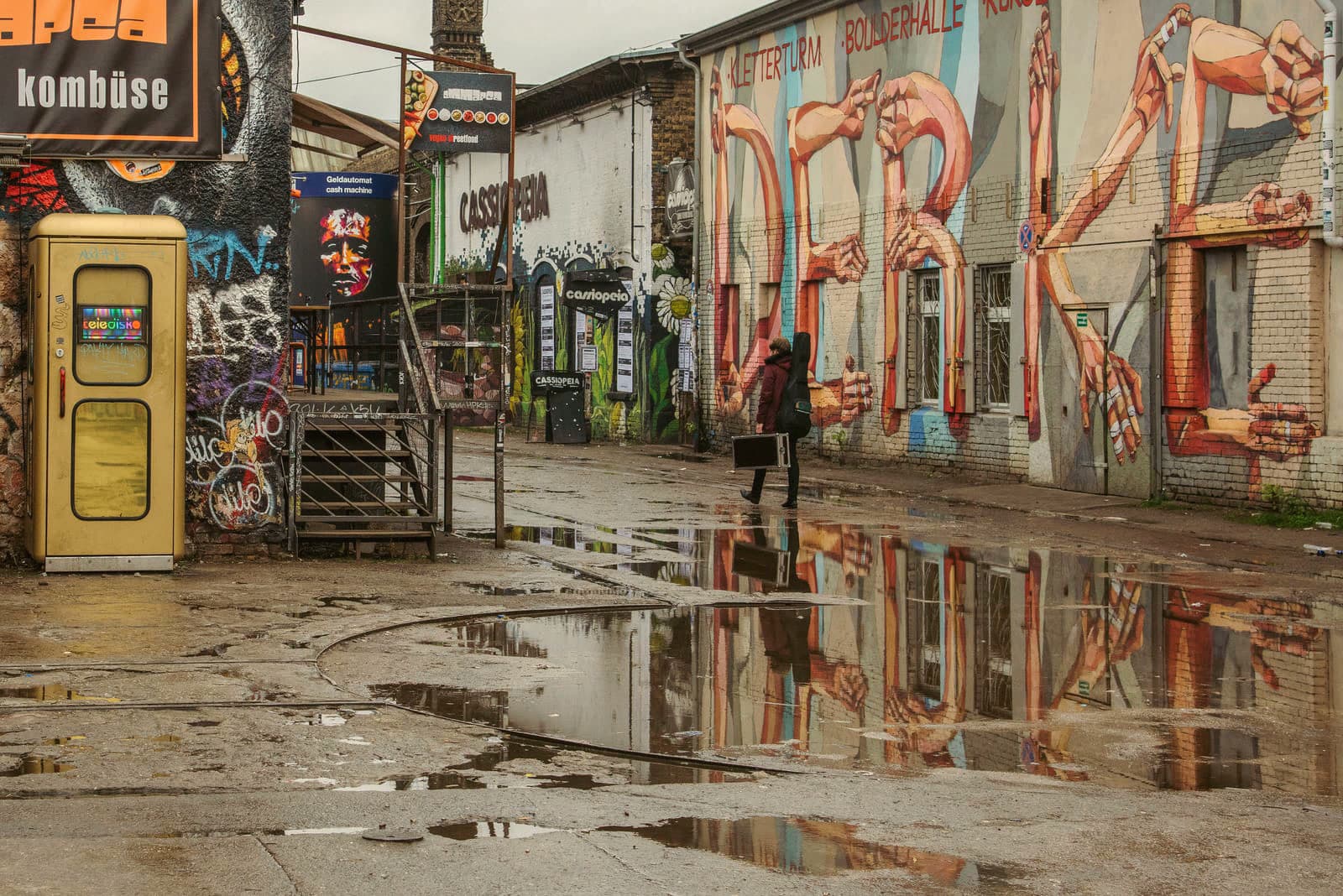
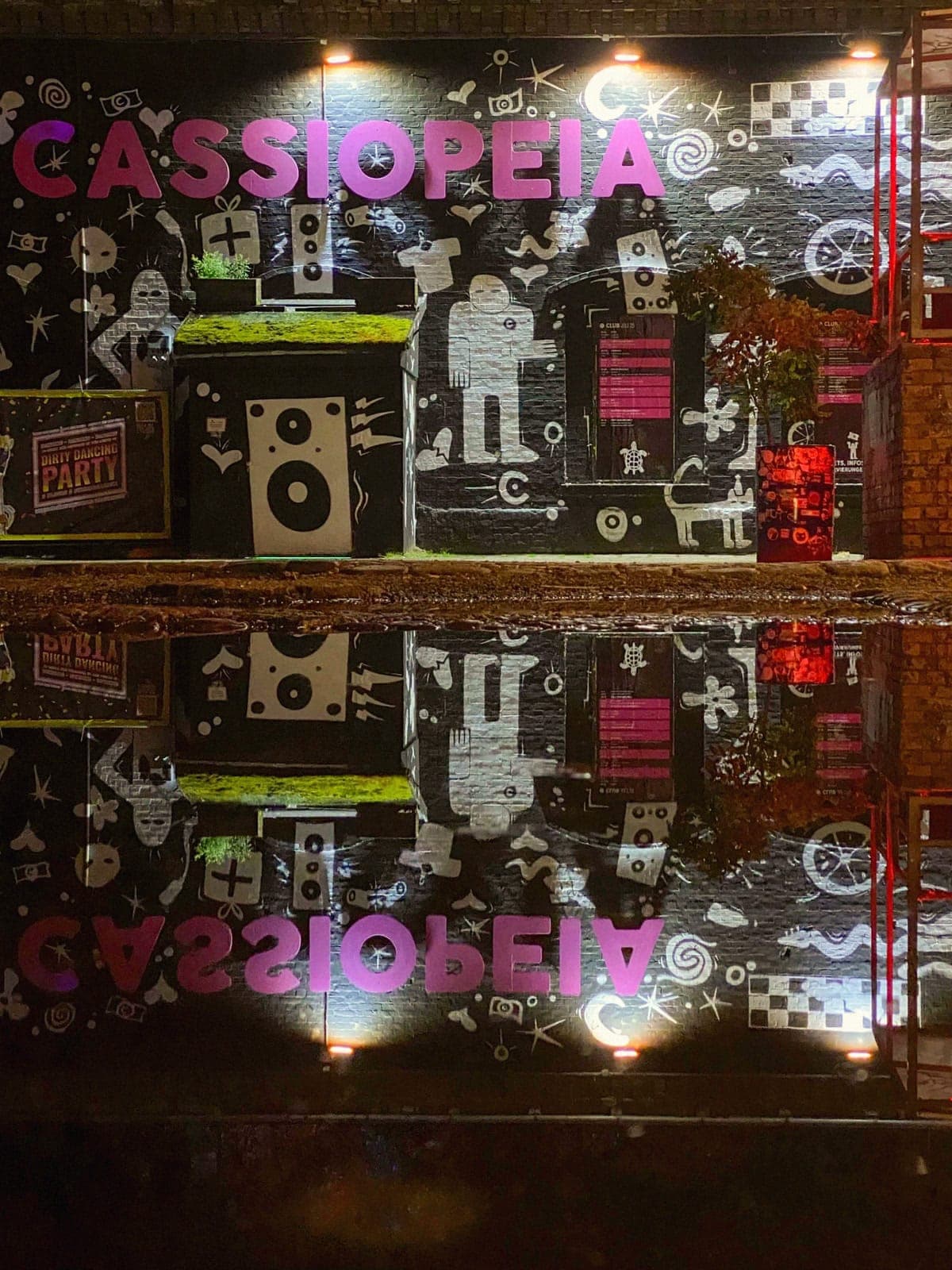
Two months ago, Cassiopeia had two weeks to get out. Now the club, and everything else stacked into R.A.W.-Gelände's Sociocultural L zone, has a lease running at least until 2028.
The Friedrichshain-Kreuzberg district government has signed a rental contract with Kurth-Immobilien, the property group that has owned the former railway repair yard since 2015, covering the site's cultural core for roughly one million euros a year starting this September. The agreement runs two years with an option for a third, and about 40 percent of that rent goes straight back into maintaining buildings that have been patched together by squatters, promoters and artists since the late 1990s.
Why was Cassiopeia facing eviction at all?
Kurth-Immobilien has spent a decade pushing to redevelop R.A.W.-Gelände into offices, retail and housing, while the district and Berlin's cultural scene fought to keep the site's clubs, studios and rehearsal spaces intact. Lawmakers accused the investor of using the venues as leverage, threatening closure to force the district's hand on planning approval. In June 2026 the company walked away from talks entirely, declared the process failed, and gave Cassiopeia two weeks to vacate. The scene answered with a rave-and-protest campaign, and the Berlin Senate publicly pushed back, echoing the fight that shut down Griessmuehle in 2020 and priced Watergate out in 2024.
Cassiopeia and Crack Bellmer are the anchor clubs on the leased plot, alongside Skate RAW, artist studios, rehearsal rooms and a children's circus and youth club, all folded into the same industrial hall complex that used to repair Reichsbahn train cars.
"Das R.A.W.-Gelände hat sich über Jahrzehnte zu einem wichtigen Areal für die Soziokultur Berlins entwickelt," State Secretary for Construction Alexander Slotty said, calling the site a decades-long anchor for Berlin's cultural scene.
Is a two-year lease actually a win?
District Councillor Florian Schmidt called the signing the end of "a difficult phase of negotiations," and it is: after a decade of standoffs and a summer of eviction notices, the clubs have paper certainty instead of a two-week countdown. The contract also sketches an actual endgame. If Berlin grants zoning approval by March 2029, Sociocultural L becomes rent-free for 30 years under a general tenant structure, with the individual venues holding sub-leases, while Kurth-Immobilien gets to build roughly 300 apartments elsewhere on the plot, 30 percent of them social housing. Marcel Weber, chair of the Berlin Club Commission, flagged a real friction point in that plan: soundproofing standards for clubs sitting next to future residential blocks, the same conflict that has throttled venues near new-build housing across the city for years.